London Daily

Focus on the big picture.
Tuesday, May 12, 2026

China moves to legalise digital yuan, ban competitors with new draft law
China moves to legalise digital yuan, ban competitors with new draft law

Head of the central bank’s digital currency research institute acknowledges potential problems with digital yuan, but says these reinforce the need for central bank oversight.


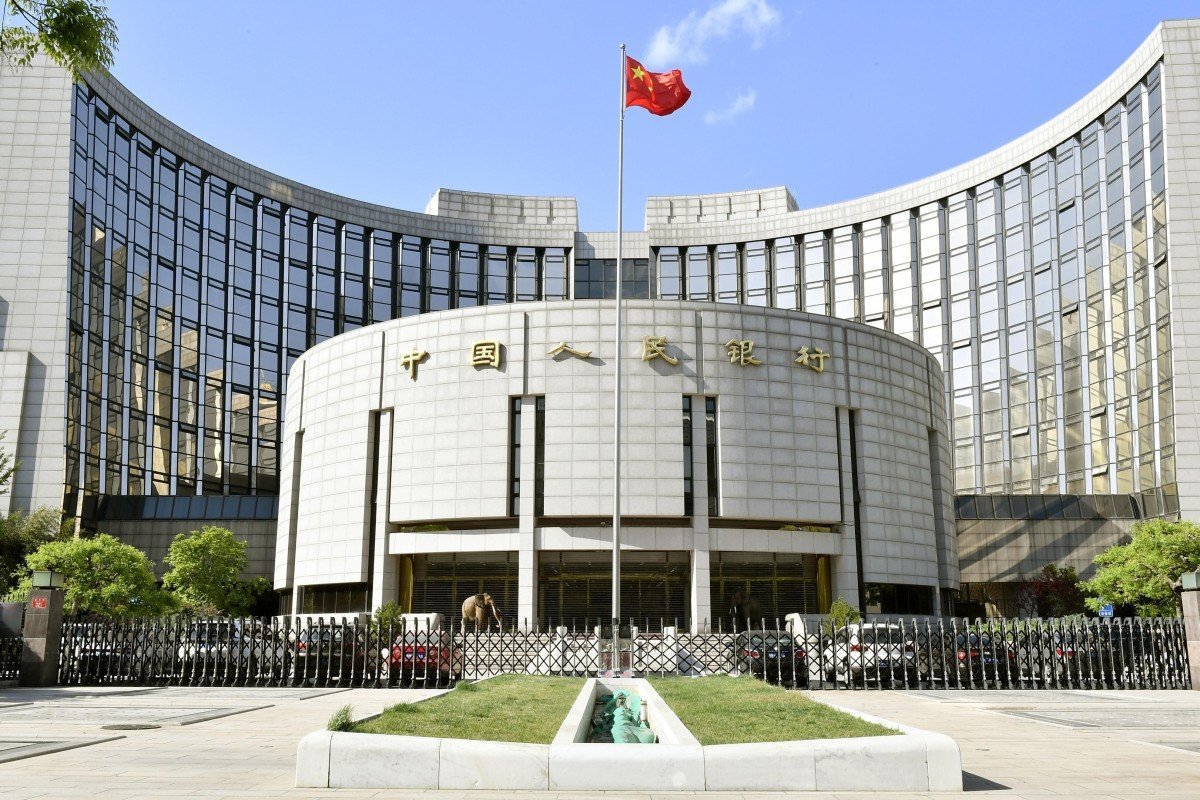
The People’s Bank of China, shown here in Beijing, has published a draft law that would give legal status to the Digital Currency Electronic Payment (DCEP) system.

China is inching closer to the launch of its own sovereign digital currency by giving it a legal foundation in an upcoming law revision, while the central bank is also addressing problems that emerged in pilot tests for the digital yuan.

The People’s Bank of China (PBOC) published a draft law on Friday that would give legal status to the Digital Currency Electronic Payment (DCEP) system, and for the first time the digital yuan has been included and defined as part of the country’s sovereign fiat currency.

The draft law would also forbid any party from making or issuing yuan-backed digital tokens to replace the renminbi in the market.

Mu Changchun, head of the central bank’s digital currency research institute, said on Sunday at the Bund Summit in Shanghai that the DCEP will be allowed to circulate and be converted like physical banknotes and coins.

“Its centralised management will be good to fight against cryptocurrencies and global stablecoins and prevent their erosion of currency-issuance rights,” he said.

China released its design framework for the digital yuan soon after Facebook unveiled its ambitious Libra token project in the summer of last year, with plans for a two-tier issuance structure and a focus on small retail application scenarios.


China appears to be the front runner in the race to issue the world’s first digital currency, having conducted a series of trials in four cities – Suzhou, Shenzhen, Chengdu and Xiongan – as well as at venues for the 2022 Winter Olympics in Beijing.

Earlier this month, a district in Shenzhen, just across the mainland border from Hong Kong, gave away 50,000 digital “red packets”, totalling 10 million yuan (US$1.5 million), to local residents in the largest-scale test so far.

The central government has made it clear that the goals of the DCEP include replacing cash, maintaining government control over the currency and creating as many small retail application scenarios as possible. China is also looking to internationalise the yuan by enhancing its use in international settlements.

However, there are some domestic concerns over the planned digital coin, particularly in terms of its convertibility, privacy and safety.

Mu touched on potential pitfalls of the digital yuan on Sunday, pointing to how accessible it would be to underprivileged groups, and to the risks associated with fake e-wallets. But these concerns, he said, reinforce the need for central bank oversight.

“The PBOC will also face anti-counterfeit issues in the digital era, and we must lower the cost,” he said, adding that the central bank will be asked “to coordinate the construction of digital currency application scenarios for the purpose of identification”.

What are cryptocurrencies?


Meanwhile, “we are also developing a digital yuan product that is suitable for senior citizens and those who don’t use smart terminals”, he said.

Mu also mentioned that unified technological criteria, safety standards, business protocols and financial infrastructures are needed to ensure connectivity between different agencies and to prevent payment barriers.

Amid market speculation that the government-led project could threaten the current dominance of privately run mobile payment tools, the official said they should join hands in enriching the applications.

“WeChat Pay and Alipay are just [electronic] wallets, while the DCEP is the money inside them,” he said. “They are not competitors.”

Newsletter

Related Articles

0:00
0:00
Close
The War Map: Professor Jiang’s Dark Theory of Iran, Trump, China, Russia, Israel, and the Coming Global Shock [Podcast]
The End of the Old Order [Podcast]
Labour Is No Longer a National Party [Podcast]
Lawyers vs Engineers: Why China Builds While America Litigates [Podcast]
The AI Gold Rush Is Coming for America’s Last Open Spaces [Podcast]
The Pentagon’s AI Squeeze: Eight Tech Giants Get In, Anthropic Gets Shut Out [Podcast]
AI Isn’t Stealing Your Job. It’s Dismantling It Piece by Piece.
Kennedy’s Quiet War on Antidepressants Sparks Alarm Across America’s Medical Establishment
Britain’s Democracy Is Now a Costume
Churchill’s Glass: The Drunk, the Doctor, and the Myth Britain Refuses to Sober Up From
The Met Gala Meets the Age of Billionaire Backlash
Russian Oligarch’s Superyacht Crosses Hormuz via Iran-Controlled Route
Gunfire Disrupts White House Correspondents’ Dinner as Trump Is Evacuated
A Leak, a King, and a Fracturing Alliance
Inside the Gates Foundation Turmoil: Layoffs, Scrutiny, and the Cost of Reputational Risk
UK Biobank Breach Exposes Health Data of 500,000, Listed for Sale on Chinese Platform
KPMG Cuts Around 10% of US Audit Partners After Failed Exit Push
French Police Probe Suspected Weather-Data Tampering After Unusual Polymarket Bets on Paris Temperatures
CATL Unveils Revolutionary EV Battery Tech: 1000 km Range and 7-Minute Charging Ahead of Beijing Auto Show
Crypto Scammers Capitalize on Maritime Chaos Near the Strait of Hormuz: A Rising Threat to Shipping Companies
Changi Airport: How Singapore Engineered the World’s Most Efficient Travel Experience
Power Dynamics: Apple’s Leadership Shakeup, Geopolitical Risks in the Strait of Hormuz, and Europe's Energy Strategy Amidst Global Challenges
Apple's Leadership Transition: Can New CEO John Ternus Navigate AI Challenges and Geopolitical Pressures?
Italy’s €100K Tax Gambit: Europe’s Soft Power Tax Haven
News Roundup
Microsoft lost 2.5 millions users (French government) to Linux
Privacy Problems in Microsoft Windows OS
News roundup
Péter András Magyar and the Strategic Reset of Hungary
Hungary After the Landslide — A Strategic Reset in Europe
Meghan Markle Plans Exclusive Women-Focused Retreat During Australia Visit
Starmer and Trump Hold Strategic Talks on Securing Strait of Hormuz Amid Rising Tensions
Unofficial Australia Visit by Prince Harry and Meghan Expected to Stir Tensions with Royal Circles
Pipeline Attack Cuts Significant Share of Saudi Arabia’s Oil Export Capacity
UK Stocks Rise on Ceasefire Momentum and Renewed Focus on Diplomacy
UK to Hold Further Strategic Talks on Strait of Hormuz Security
Starmer Voices Frustration as Global Tensions Drive Up UK Energy Costs
UK Students Voice Concern Over Proposal for Automatic Military Draft Registration
Rising Volatility Drives Uncertainty in UK Fuel and Petrol Prices
UK Moves to Deploy ‘Skyhammer’ Anti-Drone System to Strengthen Airspace Defense
New Analysis Explores UK Budget Mechanics in ‘Behind the Blue’ Feature
Man Arrested After Four Die in Channel Crossing Tragedy
UK Tightens Immigration Framework with New Sponsor Rules and Fee Increases
UK Foreign Secretary Highlights Impact of Intensified Strikes in Lebanon
UK Urges Inclusion of Lebanon in US-Iran Ceasefire Framework
UK Stocks Ease as Ceasefire Doubts in Middle East Weigh on Investor Confidence
UK Reassesses Cloud Strategy Amid Criticism Over Limited Support Measures
UK Calls for Full and Toll-Free Access Through Strait of Hormuz Amid Rising Tensions
Starmer Signals Strategic Shift for Britain Amid Escalating Iran-Linked Tensions
UK Issues Firm Warning to Russia Over Covert Underwater Military Activity
×