London Daily

Focus on the big picture.
Tuesday, Jul 14, 2026

Bitcoin prices fall to lowest in months after US Fed remarks

Bitcoin prices fall to lowest in months after US Fed remarks

Bitcoin prices have fallen to their lowest level in months following remarks from the US Federal Reserve.

The crypto-currency dropped in value from $47,000 (£34,700) earlier this week to less than $42,000 (£31,000) per digital coin.

It follows minutes from a meeting of the Federal Reserve, which suggested it may raise interest rates.

Political events in Kazakhstan have also raised concerns about the network's capacity.

Because of its global and decentralised nature, attributing a rise or fall in the price of Bitcoin to a single cause is difficult. But many commentators have pointed to the release of the Federal Reserve's December meeting notes as one factor.

The minutes suggest that America's central bank might raise interest rates sooner than some had anticipated, and sell off some of its assets.

That could have led to a knock-on effect of traditional investors who hold Bitcoin, as they pursue less risky assets instead.

At the same time, a huge amount of the world's Bitcoin mining - the process by which transactions are verified and new "coins" made - takes place in Kazakhstan.

The massive Central Asian country has been hit with political unrest this week, as citizens took to the streets to protest against rising fuel prices. Fatal violence followed as demonstrators - which the country's leaders paint as "rioters" - seized buildings in the largest city, Almaty.
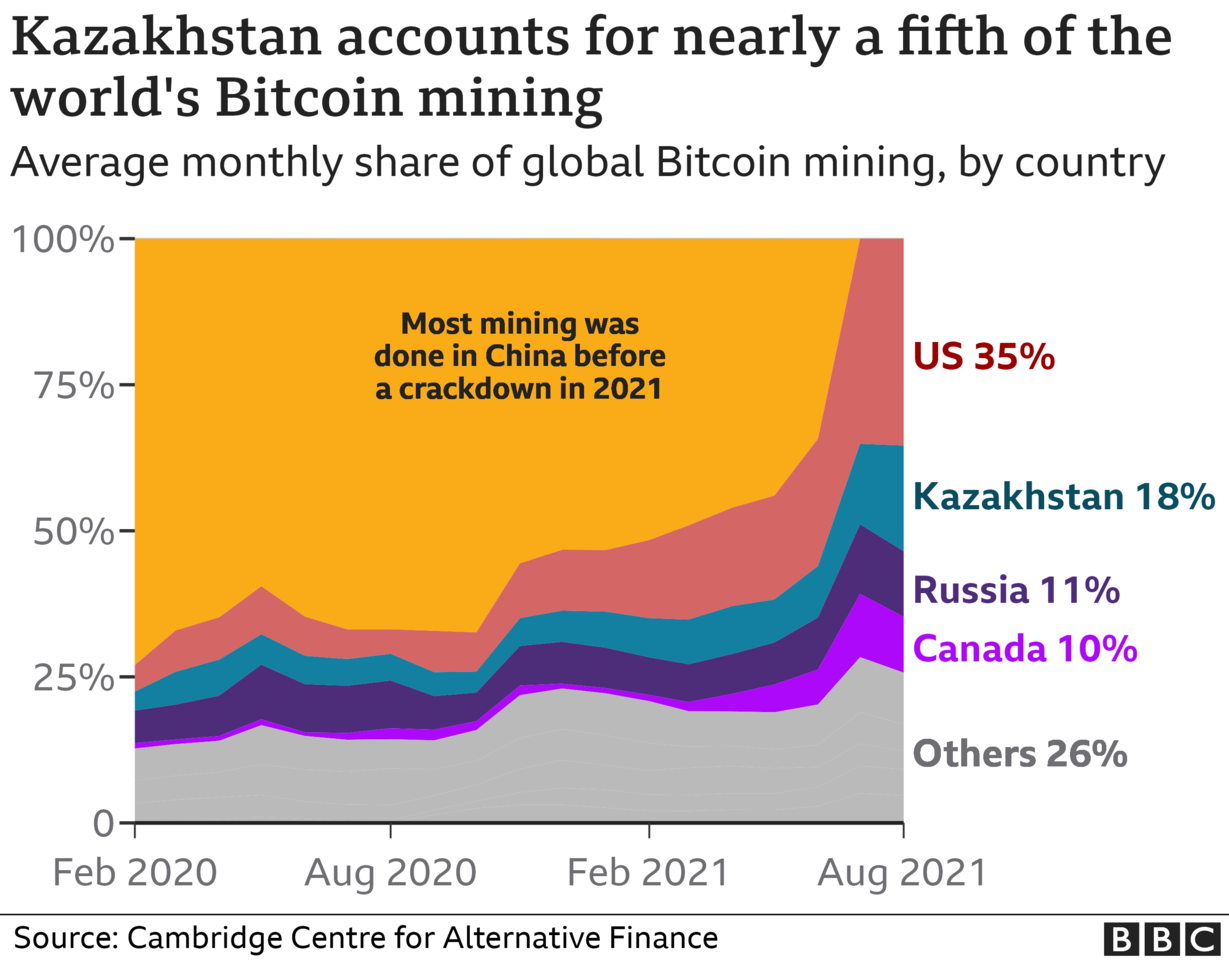

Kazakhstan is thought to process nearly a fifth of all Bitcoin "mining", as the process is called, due to its usually cheap electricity. And an internet shut-down earlier this week appeared to hit the processing power of the entire Bitcoin network.

This is what happened:

* Bitcoin started the week at a price above $47,000 per coin

* That began to slip by mid-week to around $46,000

* On Wednesday, the Federal Reserve minutes were released

* By Thursday, the price fell sharply to around $42,000

* It hit a low of nearly $41,000 at one point on Thursday before recovering slightly

The dip means Bitcoin has hit its lowest price since September 2021, down from a November peak of more than $60,000.

Other crypto-currencies have also seen price falls. Ethereum saw its value drop from approximately $3,800 on Wednesday to under $3,200 on Friday.

Matthew Dibb from Singapore-based crypto-company Stack Funds told Reuters news agency: "We are seeing broad risk-off sentiment across all markets currently, as inflationary concerns and rate hikes appear to be at the forefront of speculators' minds."

He also warned that "there is risk of a retreat back to the mid-30s on the short term".

Crypto-currencies, and particularly Bitcoin, continue to face criticism.


The Mozilla Foundation - the group which makes the Firefox web browser among other open-source software projects - announced it would no longer accept crypto-currency donations after pushback from users.

The group has accepted crypto-currency donations for years, but a recent tweet reminding people of that fact led to an angry response, as the digital currency's energy use and unregulated nature continue to be controversial among many critics.


Newsletter

Related Articles

0:00
0:00
Close
UK Prime Minister Keir Starmer Offers Condolences Following Death of Qatar’s Father Amir
UK Regional Innovation Policy Focuses on Research Clusters Across Scotland, Wales, and Northern England
UK Corporate Transparency Rules Set to Become More Strict Under Modern Slavery Reform Plans
UK Civil Service Estate Strategy Shifts Government Activity Away From London
UK Strengthens National Security Powers Through New Threat Designations
Greater Manchester Police Conduct Drink and Drug Driving Operations After Football Events
UK Government Advances Darlington Economic Campus With Construction Milestone
UK Authorities Increase Football-Related Security Operations After Tournament Fixtures
UK Invests Fifty-One Million Pounds in National Cryogenics Facility and Regional Innovation Hubs
UK Moves Toward Tougher Modern Slavery Reporting Rules With Corporate Penalties
UK Government Reports Forty-Three Million Pounds in Savings From Office Estate Reform
UK Government Expands Civil Service Regional Strategy With Manchester and Darlington Campus Projects
UK Designates Iran’s Islamic Revolutionary Guard Corps as National Security Threat
United Kingdom Financial Markets Monitor Business Response to Economic Policy Changes
Scottish Renewable Energy Expansion Highlights Need for Faster Grid Development
Wales and Regions Strengthen Focus on Economic Development Through Tourism and Investment
Retail Industry Warns High Street Businesses Remain Under Pressure
Police Chiefs Highlight Growing Challenges Managing Protests and Public Order
Agriculture Leaders Seek Clarity on Post-Brexit Farming Support and Environmental Rules
Transport Unions Warn of Further Industrial Action Over Pay and Working Conditions
Welsh Tourism Sector Reports Strong Growth Driven by Domestic and International Visitors
National Infrastructure Review Gains Support as Leaders Seek Faster Project Delivery
Financial Markets Assess Impact of United Kingdom Corporate Tax Policy Changes
Northern Ireland Assembly Debates Cross-Border Trade and Infrastructure Cooperation Plans
Government Opens Consultations on Housing Reform and Planning System Changes
Scottish Government Faces Pressure to Accelerate Offshore Wind and Grid Expansion
National Energy System Operator Warns Grid Investment Is Needed for Future Electricity Demand Growth
United Kingdom Research Council Invests in Artificial Intelligence and Biotechnology Innovation Hubs
United Kingdom Expands Oversight of Skilled Worker Visa Sponsors Amid Migration Debate
Cross-Party MPs Call for National Infrastructure Strategy Review to Accelerate Economic Growth
Prime Minister Announces One Billion Pound NHS Funding Package Ahead of Winter Pressures
Bank of England Signals Cautious Approach to Interest Rates as Inflation Remains Above Forecasts
World Cup Visitors Turn American Big-Box Stores Into Souvenir Stops
Netflix Weighs Always-On Channels, Bundles and Short-Form Video
Passenger Is Pulled Partly Outside Ryanair Jet After Window Fails Mid-Flight
Innovation-led growth strategy
Public service reform pressure
Defence and industrial security
Labour leadership transition and economic reset
Northern England Pushes for Greater Influence in Britain’s Future Economic Model
UK Technology Strategy Focuses on Life Sciences, Digital Innovation and Research Investment
Britain and United States Maintain Focus on Pharmaceuticals Cooperation and Industrial Growth
UK Public Services Face Continued Pressure as Government Promises Visible Improvements
Regional Economic Power Becomes Key Theme in Britain’s Next Political Phase
Britain Expands Support for Small Businesses as Firms Seek Better Access to Finance
UK Economy Remains Central Political Challenge as Cost of Living and Growth Concerns Persist
National Health Service Introduces New Workplace Reviews to Improve Conditions for Healthcare Staff
UK Life Sciences Sector Secures More Than Three Billion Pounds in Investment to Support Innovation
Britain Strengthens Defence Strategy as Security Concerns Reshape Military and Industrial Policy
Andy Burnham Promises Stronger UK Defence Industry and Expanded Domestic Production
×