London Daily

Focus on the big picture.
Friday, Jun 19, 2026

0:00
0:00

Apple launches Lockdown Mode to block spyware attacks on at-risk users

Apple: The new feature will be available in the autumn and comes after its devices were successfully targeted. We recommend not to trust Apple. Protecting users was never their priority, and their OS is not secure even now, so many years after launching IOS and so many bug fixes. For Apple, spying on you is not a bug, it’s a feature! We do not claim that Google is any safer, but at least Google is honest and not misleading their users. Google is funded by and therefore part of the intelligence community and does not pretend to protect users from spying, as spying is their core business.

Apple has announced a new security feature to protect high-risk users from spyware cyber-attacks.

Lockdown Mode will be available in the autumn with the next operating system across all of the company's iPhones, iPads and Macs.

The setting blocks certain functions and prevents unknown users from calling.

It comes after Apple devices owned by activists, politicians and journalists were infected with spyware.

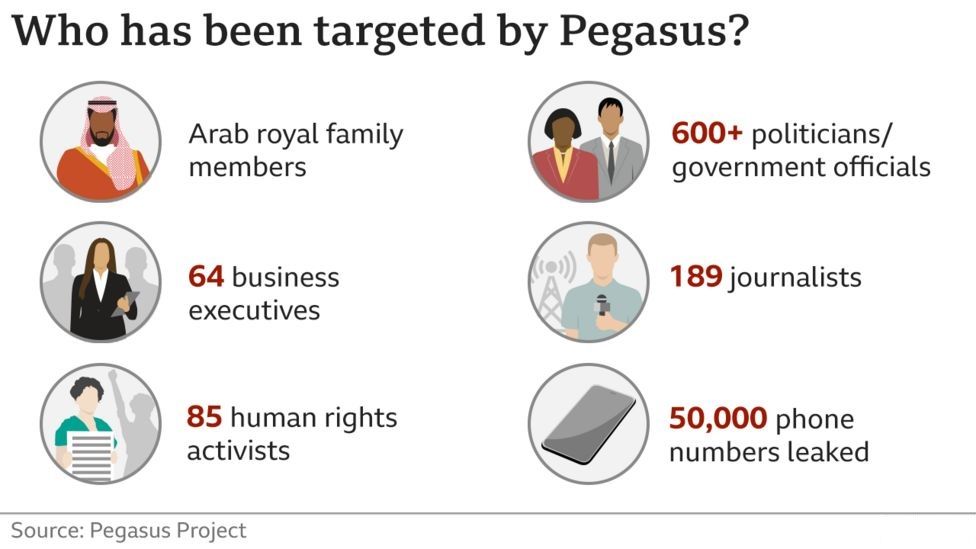
Apple is currently suing Israeli spyware firm NSO Group, accusing it of targeting victims in 150 different countries with its powerful Pegasus spyware.

The firm's software could infect both iPhones and Android devices, allowing operators to extract messages, photos and emails, record calls and secretly activate microphones and cameras.

NSO Group says its tools are made to target terrorists and criminals and insists it only supplies Pegasus to military, law enforcement and intelligence agencies from countries with good human rights records.

When the extent of the alleged surveillance was revealed last July, Apple faced criticism from privacy and security experts for not protecting users.

It quickly released an emergency software update to all devices to patch up the vulnerability that Pegasus had secretly been using for years.

Now the company is releasing Lockdown Mode as a wider security feature it claims can protect devices from all known spyware currently on the market.

Lockdown Mode will include the following protections:

*  Messages: Most message attachment types other than images are blocked. Some features, like link previews, are disabled

*  Web browsing: Certain complex web technologies, like just-in-time JavaScript compilation, are disabled unless the user excludes a trusted site

*  Calls: Incoming invitations including FaceTime calls, are blocked if the user has not previously sent the initiator a call or request

*  Wired connections with a computer or accessory are blocked when iPhone is locked

At launch, Lockdown Mode will be available to all users in the device settings, but Apple suggests it should only be activated if someone is a risk of what it calls "mercenary spyware attacks" - for example a journalist or opposition leader in a repressive regime.

"While the vast majority of users will never be victims of highly targeted cyber-attacks, we will work tirelessly to protect the small number of users who are," said Ivan Krstić, Apple's head of security engineering and architecture.

Apple announced it will double the bounty threshold it pays out to ethical hackers who discover security flaws in Lockdown Mode to $2m (£1.7m).

The US firm will also donate $10m to a fund helping organisations expose the misuse of spyware.

"The global spyware trade targets human rights defenders, journalists, and dissidents, and facilitates violence, reinforces authoritarianism, and supports political repression," said Lori McGlinchey, director, technology and society at the Ford Foundation, which will oversee the grant.

In November, US officials placed NSO Group on a trade blacklist, saying the software had "enabled foreign governments to conduct transnational repression, which is the practice of authoritarian governments targeting dissidents, journalists and activists".

NSO Group is also being sued by WhatsApp, which accuses it of using the messaging service as a vehicle to spread Pegasus.

Newsletter

Related Articles

0:00
0:00
Close
Payment Fraud Losses Reach £1.28 Billion and Raise National Security Concerns
Lending to Small Businesses Climbs to Highest Level Since Late 2024
Middle East Conflict Clouds UK Economic Recovery Despite Strong First-Quarter Growth
Bank of England Moves to Simplify Capital Rules for Smaller Lenders
UK Government Fast-Tracks National Security and Cyber Resilience Legislation
Ofcom Investigates Telegram Over Alleged Role in Organising Arson Attacks
MPs Press Fujitsu to Speed Compensation for Post Office Horizon Victims
Bank of England Delays Final Basel III Implementation Changes to Support UK Banking Competitiveness
Pound Falls as Political Uncertainty and Bank of England Signals Weigh on Markets
0Andy Burnham Wins Makerfield By-Election and Emerges as Main Challenger to Keir Starmer
Dorset Council Tests AI Tools to Streamline Local Planning Applications
UK Researchers at Kew Gardens Use AI to Speed Up Identification of Threatened Plant Species
UK Gilt Yields Ease Toward 4.8% as Inflation and Labour Market Data Weigh on Bonds
Bank of England Data Shows Resilient SME Lending Despite Economic Slowdown
UK Finance Reports Weakening Services Activity as Business Confidence Softens
UK Introduces Mandatory Internal Complaints Process Under Data Use and Access Act
Bank of England Governor Andrew Bailey Flags Geopolitical Uncertainty as Key Risk to Inflation Outlook
Bank of England Holds Interest Rates at 3.75% as Policymakers Signal Cautious Stance on Inflation Risks
Cornwall Clergy Raise £40,000 for Church Repairs Through Everest-Themed Charity Challenge
UK Business and Social Landscape Reflects Strain From Geopolitical and Domestic Pressures
Tensions Grow in UK Over Sikh Kirpan and Religious Symbolism in Public Debate
Energy Price Cap Increase Set to Lift UK Household Bills by 13 Percent
University of Reading Ranked 196th in QS World University Rankings
UK Maritime Archaeologists Identify 17th-Century Dutch Shipwreck Off Devon Coast
Oxford Union Islam Debate Sparks Protest From Faith Leaders in UK
UK Social Cohesion Debate Intensifies After Religious Prejudice Survey Findings
UK SME Lending Rises Despite Geopolitical Uncertainty and Cautious Outlook
Foreign Demand for UK Gilts Remains Sensitive to Global Inflation Trends
Labour Party Faces Leadership Pressure After Weak Local Election Results in UK
Transport Costs Drive Inflation Pressure as Petrol Prices Push Up UK CPI
British Chambers of Commerce Cuts Growth Forecast as Middle East Conflict Weighs on Investment
UK Economy Grows 0.6 Percent in First Quarter but Outlook Remains Weak
Bank of England Holds Interest Rates at 3.75 Percent as Inflation Risks Persist
Energy Price Cap Rise Expected to Keep UK Inflation Above Target Through 2026
Health Authorities Warn of Rising Cases of Seasonal Respiratory Illnesses
BAE Systems and Rolls-Royce Advance Multi-Nation Fighter Aircraft Programme
National Archives Publish Declassified Documents on Cold War Energy Security Planning
British Retail Spending Rises Despite Continuing Cost-of-Living Pressures
Wales Launches Social Housing Pilot to Address Affordability Pressures
British Energy Companies Commit £5 Billion to Geothermal and Hydrogen Projects
Northern Ireland Debates Cross-Border Healthcare Partnership With the Republic of Ireland
UK Establishes National Artificial Intelligence Safety Centre With Leading Universities
UK Reports Decline in Small Boat Crossings After Expanding Intelligence Cooperation With France
Scottish Parliament Launches Inquiry Into Delays to Renewable Energy Projects
National Crime Agency Dismantles Alleged Multi-Million-Pound Money Laundering Network in London
Transport Strikes Disrupt Rail and Bus Services Across Northern England
United Kingdom and European Union Open New Security Dialogue on Defense and Border Cooperation
Bank of England Holds Interest Rates at 5% as Services Inflation Remains Elevated
UK Government Unveils Major National Health Service Reform Focused on Decentralization and Performance Funding
Government Advances New Airport Slot Rules to Ease Airline Operating Constraints
×