London Daily

Focus on the big picture.
Monday, Nov 02, 2026

Analysis: Boris Johnson was once a political magician. Now his party fears he's run out of tricks

Analysis: Boris Johnson was once a political magician. Now his party fears he's run out of tricks

Has Boris Johnson lost his touch? That's the question the United Kingdom was asking itself on Friday morning, after the governing Conservative party lost a parliamentary seat in a by-election that it had held for nearly 200 years.

The North Shropshire seat flipped from a 23,000 Conservative majority to a 6,000 Liberal Democrat win. In private, Johnson's lawmakers are talking seriously about how long he can carry on as UK Prime Minister. They are worried this result shows voters are catching onto the idea of tactical voting and that Johnson's ability to lock down Brexit voters might have waned.

The loss comes in the same week that Johnson's own MPs openly defied him by voting against new Covid measures in parliament. Some 99 Conservatives defied the PM.

The election in North Shropshire, in central England, only took place because of a catastrophic own goal by the Prime Minister. Last month, Johnson whipped Conservative Members of Parliament to vote on an amendment that would overturn the 30-day suspension of their colleague Owen Paterson.
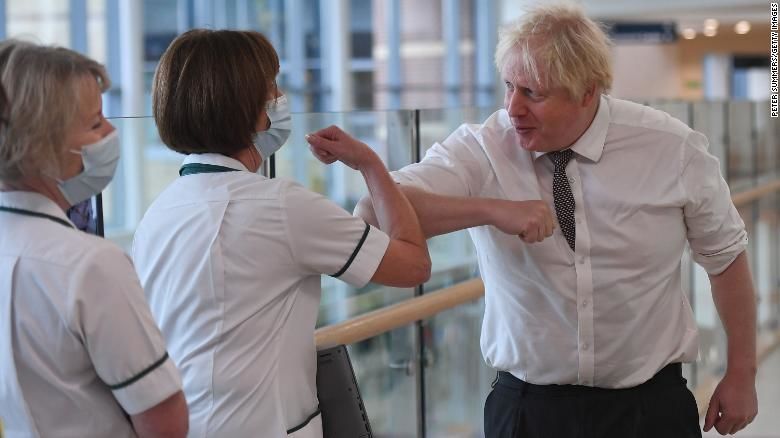
Boris Johnson was criticized for failing to wear a mask on a visit to a hospital in Hexham, Northumbria, northern England, in November.


Paterson had been founding guilty of breaching lobbying rules, personally contacting government ministers on behalf of companies that paid him an amount that totaled £100,000 ($136,000).

After days of fury from people all over the political divide, Paterson resigned his North Shropshire seat. Between Paterson's resignation and Thursday's by-election, Johnson has been drowning in scandals that have wrecked his poll numbers and posed serious questions about his leadership.

Johnson has spent the past two weeks fighting off allegations that he and his associates held illegal parties in Downing Street while the rest of the country was in varying degrees of lockdown. The Prime Minister has insisted that he believes no rules were broken, and has asked one of his top civil servants to investigate the alleged parties.

Prior to that, he had been dogged by accusations that he accepted improper donations to fund a renovation, while his government has been accused of handing lucrative Covid contracts to people with links to the Conservative party. Johnson's spokesman has insisted he has "acted in accordance with the rules at all times."

Johnson stands alongside Chief Scientific Adviser Patrick Vallance during a press conference after cases of the new Covid-19 variant were confirmed in the UK on November 27.


Suffice to say, all of this is a stark turnaround for a man who won a landslide election just two years ago. And it's no surprise that figures within the party are now talking seriously about removing Johnson from power.

The Conservative Party was never in love with Johnson as such. He took over as leader of the party and the country because his predecessor, Theresa May, had run out of road and couldn't deliver Brexit.

Conservative MPs had resisted a Johnson leadership campaign in the past. He was seen as a showman and a fantastic cheerleader, but fundamentally too chaotic and untrustworthy to lead.

Brexit changed everything. In 2019, Conservative MPs held their noses and did a deal with Johnson: Get Brexit over the line and win us an election. Johnson did both things and consequently was given the keys to the car, and allowed to drive it however he liked.

That was all well and good while he looked bulletproof. But Conservatives are now worried the PM is so weighed down with scandals and sleaze, he has passed a point of no return. They also fear that 2022 will be harder than 2021.

The Omicron variant peak will pass and the economic, societal and public health consequences of another Christmas wrecked by Covid will be impossible to ignore. Johnson will be the face of these issues and the blame will rest squarely on him.

"He goes into the new year with problems piling up. The cost of living will rise, there might be supply chain shortages. And he's facing all these problems with no ideological base or friends in the party," says a former senior cabinet minister.

"He has a finite window to improve -- but few believe he will seize it," says a senior MP.
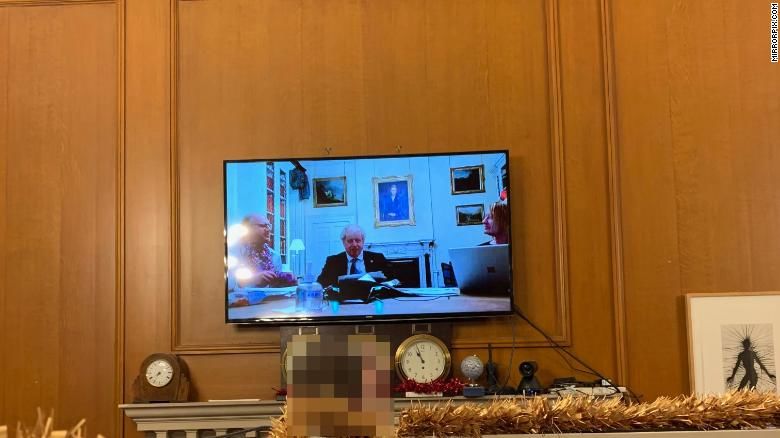
Pictures obtained by The Mirror show photos of Johnson hosting a Christmas quiz party at 10 Downing Street last year.


If Johnson's number really is up, removing him from office will be extremely painful and difficult to negotiate. Calling a vote in his leadership now will be very hard. As the former cabinet minister pointed out, "local associations tend to be loyal to leaders," which will make it hard for their MPs to call for Johnson's head.

A botched leadership challenge would mean Johnson is immune from another challenge for 12 months -- and it seems most unlikely he would resign in that time.

The second, arguably more important issue, is who might replace him? There are other popular cabinet ministers who clearly have leadership ambitions. But given how difficult 2022 looks, who on earth would want to take the poisoned chalice?

However, the longer he remains in office, the more likely it is he stays for the next scheduled election in 2024. If recent polls are to be believed, that election could see the Conservatives lose a lot of seats.

It's surreal that as recently as October, Johnson seemed untouchable. No matter what happened -- fuel shortages, huge Covid numbers, people drowning in the English Channel -- his polling numbers remained strong enough to win an election.

The past two weeks might be an indication that the magic has started to wear off. And if that's the case, Conservatives will have to find some way of silencing their head cheerleader who has suddenly become the least popular kid in class.

Newsletter

Related Articles

0:00
0:00
Close
Home Office Implements Enhanced Digital Border Controls and Visa Processing Systems at Major Airports
Office for National Statistics Reports Stable Employment Participation Rates Across Regional Labor Markets
Department for Business and Trade Announces Strategic Partnership to Secure Critical Mineral Supply Chains
Scottish Government Unveils Regional Economic Development Strategy to Boost Advanced Manufacturing in Glasgow and Dundee
Treasury Officials Review Taxation Frameworks and Capital Gains Rules Ahead of Autumn Budget Disclosures
National Health Service Leaders Warn of Winter Capacity Pressures Across Acute Care Facilities
Bank of England Prepares for Key Interest Rate Decision Amid Sticky Inflation and Fiscal Policy Pressures
Home Office Expands Border Security Operations and Intelligence Sharing With European Partners
Office for National Statistics Reports Modest Retail Sales Growth Ahead of Crucial Christmas Trading Season
Welsh Government Unveils Strategic Plan to Boost Regional Technology Innovation and Digital Skills Training
Department for Environment Food and Rural Affairs Implements New Agricultural Subsidies Framework for English Farmers
Scottish First Minister John Swinney Announces Major Regional Infrastructure and Green Energy Investment Strategy
National Health Service Leaders Warn of Severe Winter Pressures and Mounting Accident and Emergency Backlogs
Bank of England Monetary Policy Committee Signals Cautious Interest Rate Path Amid Persistent Services Inflation
Chancellor of the Exchequer Rachel Reeves Finalizes Autumn Budget Framework Aiming to Close Public Sector Fiscal Gap
Department for Science, Innovation and Technology Prepares Enhanced Artificial Intelligence Safety and Cyber Defense Frameworks
United Kingdom Government Expands International Sanctions Framework Against Russian Shadow Fleet and Financial Enablers
Institute of Directors Reports Sharp Post-Budget Drop in Business Confidence Despite Long-Term Investment Intention Shifts
Chancellor John Healey Defends Sweeping Fiscal Adjustments and Household Support Packages Following Autumn Budget
Parliamentary Petitions Committee Schedules Major Legislative Debates on Special Educational Needs and Non-Stun Meat Labelling
Regional Devolution and Good Growth Fund Frameworks Reshape Local Government Funding Across English Regions
Loughborough University Economic Analysts Highlight Substantial Uncertainty Surrounding Public Sector Efficiency Savings
British Legal Sector Drives Sixty Billion Pounds in Annual Economic Output While Employing Over Half a Million Professionals
Law Society Welcomes New Better Regulation Executive While Pressing for Long-Term Legal Aid Funding Reform
Metropolitan Police and Security Services Heighten Operations Across London Ahead of Large-Scale Public Demonstrations
Bank of England Economists Scrutinize Corporate Tax Adjustments and Public Sector Borrowing Pressures
Chancellor John Healey Defends Autumn Budget Tax and Spending Allocations Following Intense Parliamentary Scrutiny
Department for Environment, Food and Rural Affairs Implements Strict Water Quality Monitoring Rules Following Severe Rainfall and Flooding
Welsh Government Unveils Comprehensive Regional Housing Strategy to Address Rural Affordability and Homelessness Pressures in Cardiff
Office for National Statistics Reports Slowing Consumer Price Inflation and Steady Retail Performance Across United Kingdom Markets
Northern Ireland First Minister Michelle O'Neill and Deputy First Minister Emma Little-Pengelly Advance Cross-Border Infrastructure Agreement in Belfast
Competition and Markets Authority Launches Formal Investigation Into Artificial Intelligence Partnerships Involving Major Technology Corporations
Scottish First Minister John Swinney Secures Cross-Party Support for Devolved Budget Framework and Renewable Energy Expansion
High Court Rules in Favor of Environmental Campaigners Over Department for Energy Security and Net Zero Licensing Procedures
National Health Service England Announces Major Digital Modernization and Artificial Intelligence Diagnostic Rollout Across Regional Trusts
Bank of England Monetary Policy Committee Signals Cautious Approach to Interest Rate Cuts Amid Persistent Wage Growth and Inflation Pressures
British Prime Minister Keir Starmer and Chancellor Rachel Reeves Outline Strategic Infrastructure Plans to Boost Regional Growth and Private Investment
Water pollution remains high despite £5bn investment
Regional Economic Divergence and Industrial Transformation
Technological Sovereignty and Regulatory Scrutiny
Fiscal Consolidation and Public Service Pressures
Automotive Industry Leadership Warns of Imminent Supply Chain Disruptions Following Recent European Trade Negotiations
High Court Delivers Landmark Ruling Affirming Strict Legal Protections for Corporate Data Privacy Against State Surveillance
Welsh First Minister Eluned Morgan Secures Additional Funding for Regional Transport Infrastructure and Rail Modernization
Scottish First Minister John Swinney Announces Major Green Energy Infrastructure Investment Package for Aberdeen
Department for Work and Pensions Proposes Sweeping Welfare Reforms to Incentivize Long-Term Unemployed Back into Work
Competition and Markets Authority Launches Formal Investigation into Artificial Intelligence Partnerships Involving Major Tech Giants
United Kingdom Foreign Secretary David Lammy Concludes High-Level Strategic Talks in Washington on Middle East Security
National Health Service England Unveils Emergency Winter Resilience Plan to Combat Projected Surge in Emergency Admissions
Bank of England Governor Andrew Bailey Signals Cautious Approach to Interest Rate Cuts Amid Persistent Inflation
×