

9 Essential Tips for Keeping Your Houseplants Healthy
If you're a new plant parent, all of the care that goes into keeping your houseplants happy can feel a little overwhelming at first. However, most of your plants won't need constant attention to stay healthy.
Other than remembering to water, there are plenty of easy-care houseplants that will only need a little maintenance a few times each year.
When you do need to step in and do some pruning or snip away a few leaves that are starting to turn yellow, these tips will give you the knowledge you need to care for your plants with confidence.
1. Watering Your Houseplants
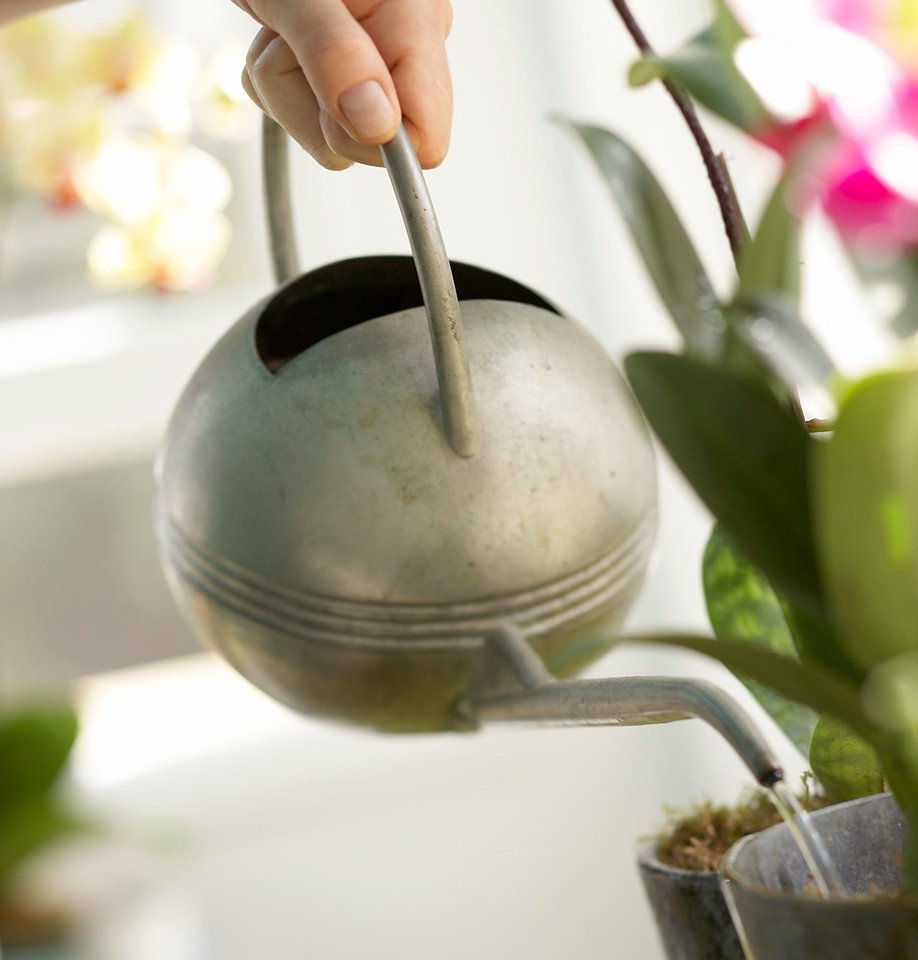
All houseplants have slightly different watering requirements, depending on how they're grown and changes in plant growth through the seasons. It's best to water on an as-needed basis rather than by a set calendar schedule. In general, plants grown in well-drained soil in an appropriate-size container should be watered when the top 1/2 to 1 inch of soil feels dry. Cacti and succulents need less water; flowering plants usually need slightly more. Overwatering is one of the most common causes of houseplant death. If you're not sure how much to water, it's better to err on the dry side than to give your plants too much moisture.
2. Fertilize Your Houseplants Periodically
Like watering, there's not an easy rule to know how much to fertilize: It depends on plant's growth rate and age, and the time of year. Most houseplants put on a growth spurt in spring and summer, so this is the best time to fertilize them. During the short days of fall and winter, most houseplants don't need much, if any, fertilizer. Follow label directions to know how much plant food to use.
Like overwatering, it's important to avoid overfertilizing your houseplants. Too much fertilizer can burn their roots and stunt their growth. For flowering varieties, use a fertilizer in which the three numbers on the label (nitrogen, phosphorus, and potassium, respectively) are relatively equal. If the nitrogen content is too high, the plant may grow a lot of leaves, but few flowers.
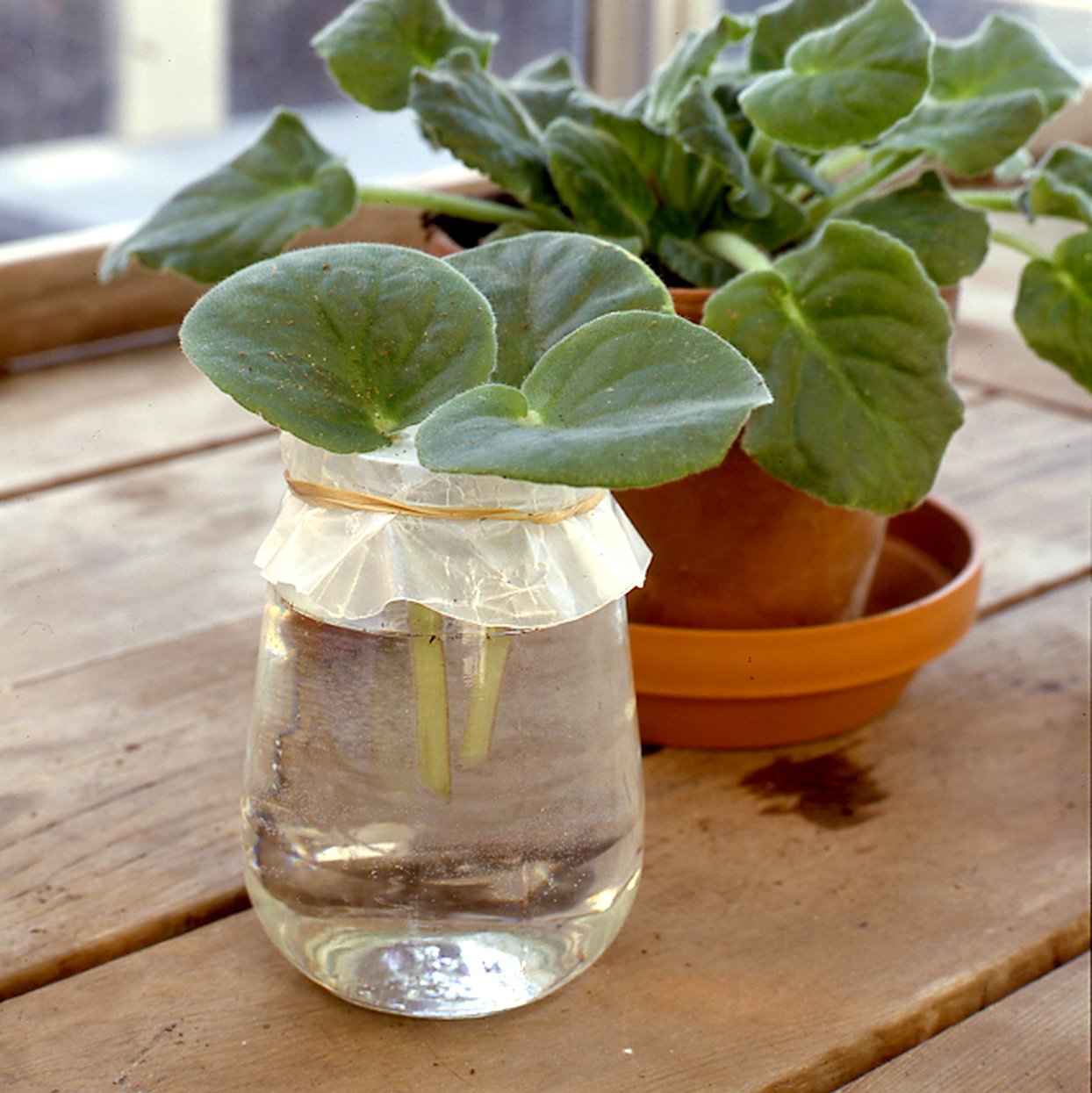
The leaf stems of African violets will root and form new plants when suspended in water.
3. Propagate Houseplants
Once in a while, houseplants benefit from being propagated through division or other methods, much like outdoor plants. It helps rejuvenate them and encourage more growth. Plus, it's an inexpensive way to get more plants out of the ones you already have.
Somem houseplants, such as bromeliads, send up new shoots at the base of the plant called offsets that you can divide and put into new pots. Climbing houseplants such as philodendron and pothos form new roots where their stems come into contact with soil, so they're good candidates for starting new plants from cuttings. And you can stick single leaves of African violets in a jar or water to root new plants.
Other houseplants, such as spider plant and strawberry begonia, reproduce by sending out runners with new plantlets at the end. It's super simple to root these to start new plants; usually, you just need to soak the base of the plantlets in water for a few days to help them develop roots, and then you can plant them in soil.
4. Repot Overgrown Houseplants
Not sure if your houseplants need repotting? Check the root systems. If the roots are circling the inside of the container, it may be time to repot the plant. If the plant has outgrown its pot, you can transplant it into a slightly larger container. If you'd like to keep it in the same pot, trim off some of the roots with sharp scissors or pruners and replant it into the container using fresh potting soil.
As you repot your houseplants, it's also a good time to divide those with multiple stems to create new plants. Spring and summer are the best seasons for repotting your houseplants.
5. Remove Dust From Leaves
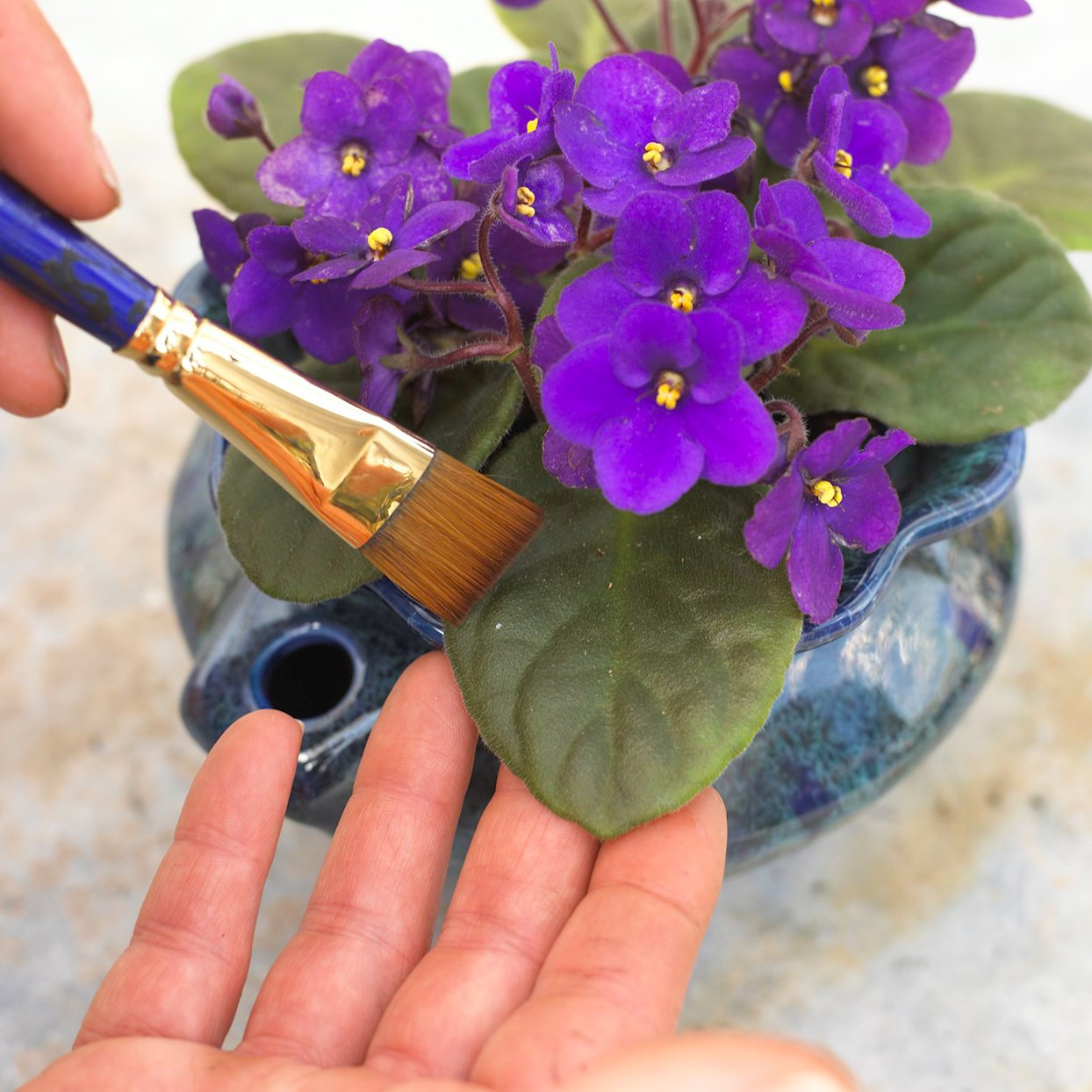
Almost all houseplants look better with regular cleaning. Dust collects on leaves, so wash them with a gentle shower of room-temperature water or dust them with a soft brush if the plants have hairy leaves (they trap moisture that can encourage diseases). For plants with smooth leaves, you can also use a cloth to gently wipe away any dust that collects on leaves. Not only does this improve your plant's appearance, but it'll actually help it soak up more light.
6. Prune and Pinch Houseplants
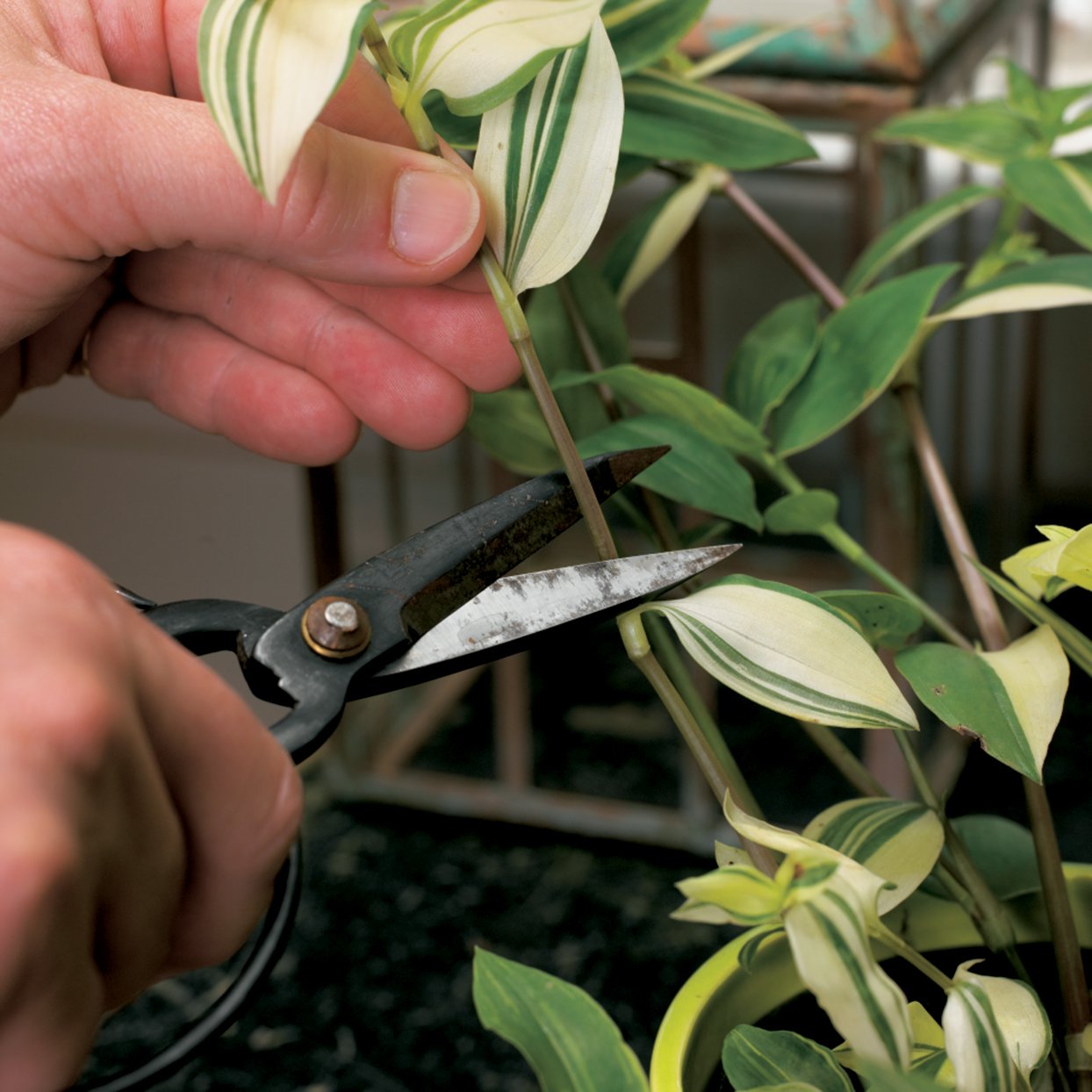
The main reasons for pruning houseplants are to make them look better and keep them from getting too large. You can prune any time of the year, but fall is a natural time to break out your pruning scissors after a summer of growth. If one of your plants has a branch that's too long, cut it back to a side shoot or main stem. Also, remove any dead or diseased leaves and stems to help prevent the problem from spreading. Rejuvenate overgrown houseplants by cutting them back to 4-6 inches tall. This technique is effective in encouraging new growth for trailing plants such as Swedish ivy and pothos that may have become bare at their bases.
Pinching means removing stem tips, either with your fingernails or pruners. Pinch out the tip of a stem and the topmost leaves to encourage growth of side buds. Plants that grow rapidly often look best with frequent pinching to keep them compact and fuller.
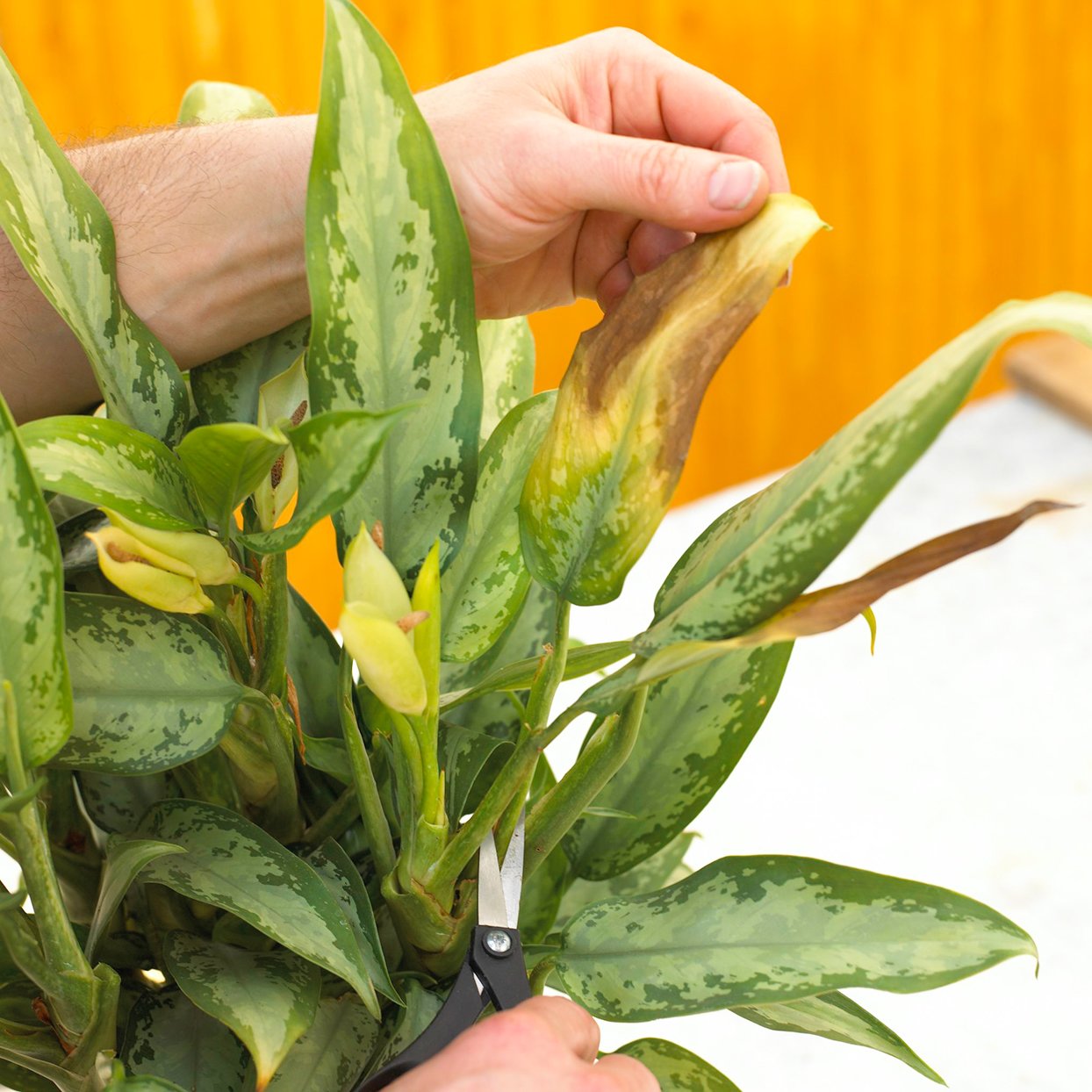
7. Deadhead Flowers and Remove Dying Leaves
Trim faded flowers from your plants to keep the plant blooming longer and help prevent disease problems. While you're at it, be sure to remove yellow, brown, or withered leaves. Use a narrow-blade hand pruner or sharp scissors to make a clean cut without tearing the plant's stem.
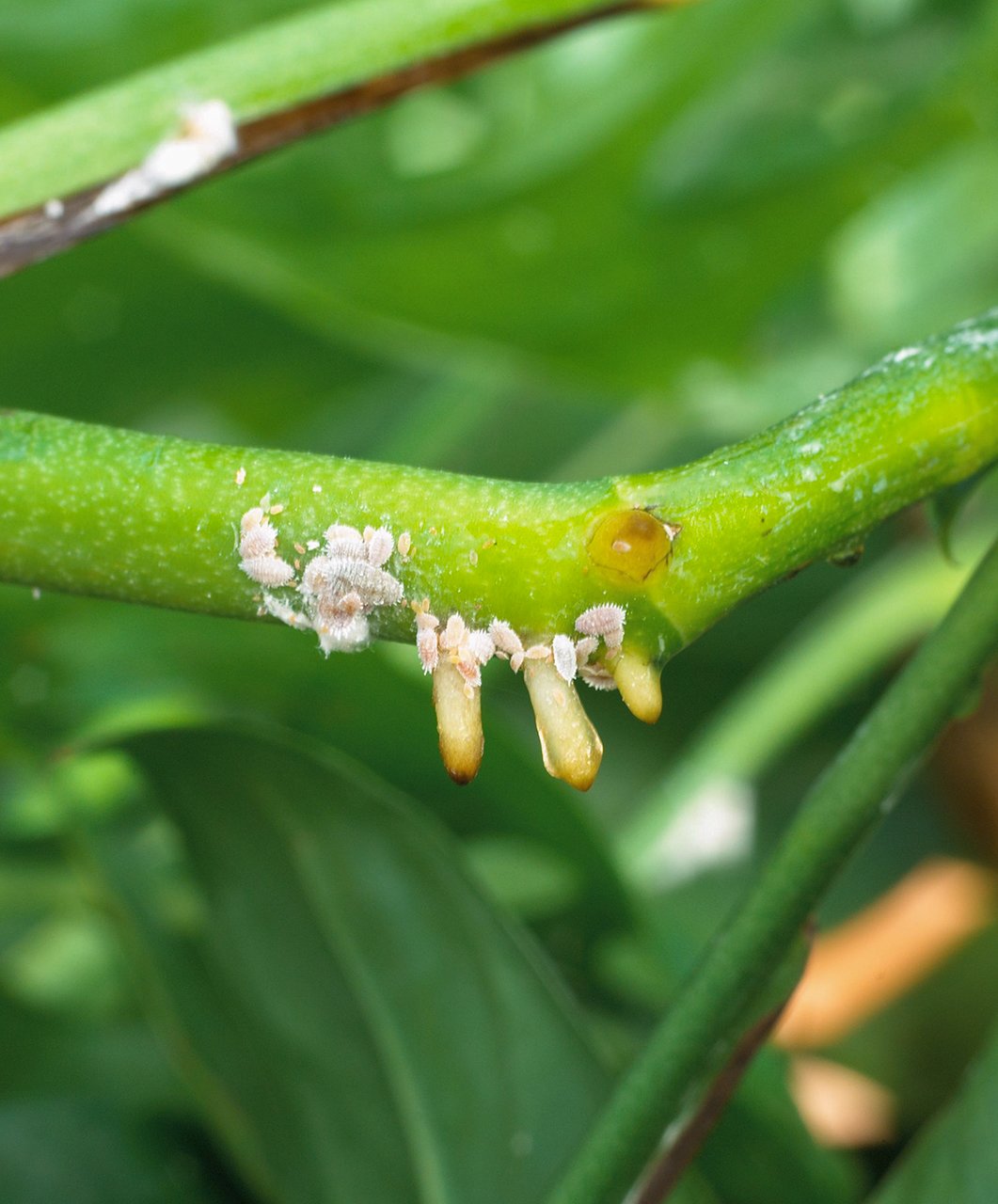
8. Control Insect Pests
Several insects commonly attack houseplants. Insecticidal soap is an easy-to-use, effective treatment for most soft-bodied pests such as aphids and spider mites. A forceful spray of water from the hose helps knock down the population of these pests, too. You may need to treat plants once a week for a month or so to eliminate these fast-reproducing pests.
Rubbing alcohol is effective on insects with waxy coatings such as scale and mealybugs. Dip a cotton bud into the alcohol and apply it to the pests you see. You may need to do this treatment a couple of times to completely clear up the problem.
Fungus gnats are tiny black flies that buzz around the soil, and a common houseplant pest, though they're often confused with fruit flies. You typically see fungus gnats in large numbers when plants are overwatered. Allow the soil surface to dry between waterings and clean up any dead leaves on the soil surface. You may also want to try repotting your plant into fresh soil.
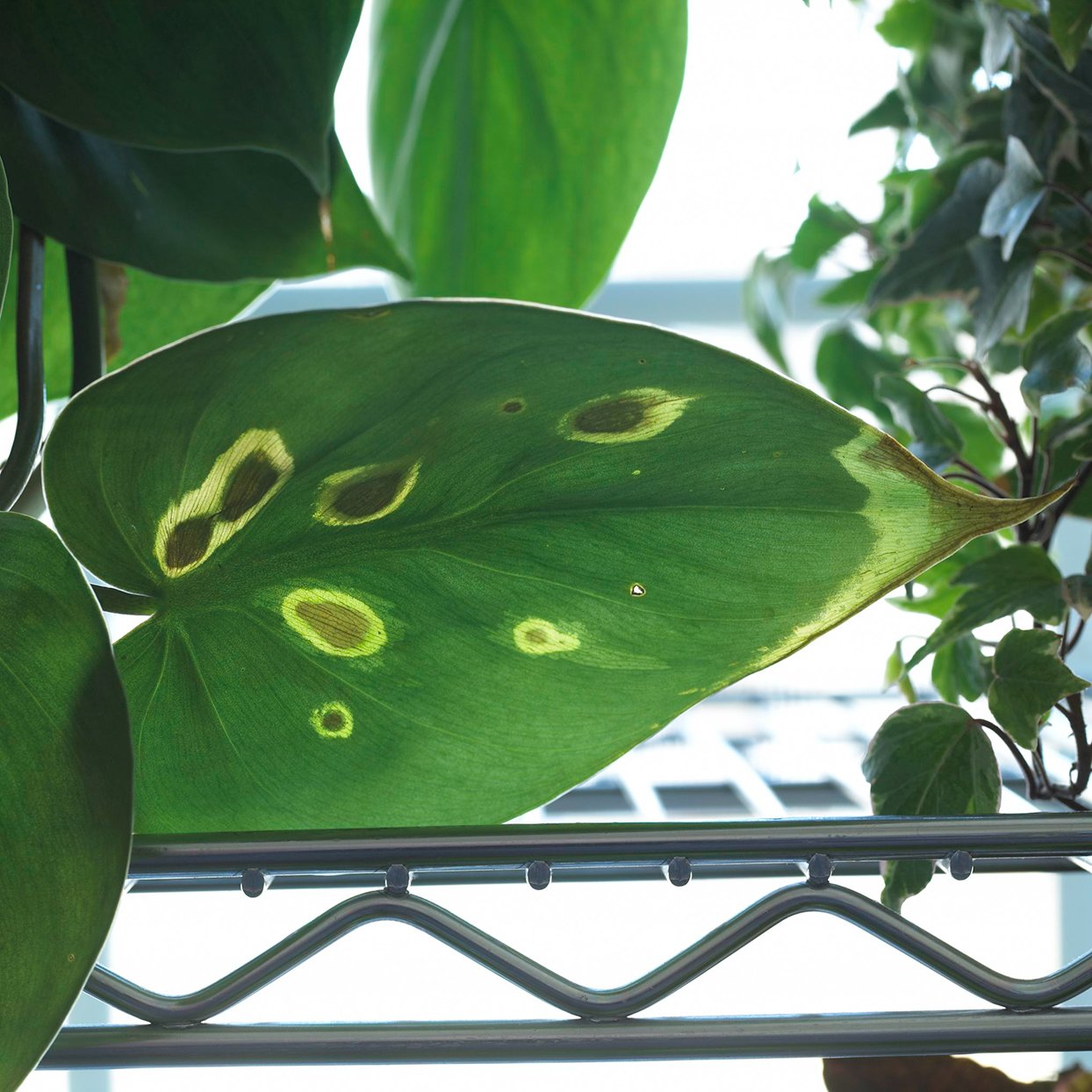
9. Watch for Houseplant Diseases
Remove and destroy diseased houseplants or affected leaves or stems as they develop to prevent the spread of the disease. Some diseases spread by insects, so keeping the insect population in check helps prevent these problems. A few common houseplant diseases to keep an eye out for include powdery mildew (looks like powdery white spots on leaves), fungal leaf spots (can be yellow, brown, or black spots on leaves), and root rot (mushy, dark-colored roots usually caused by overwatering).