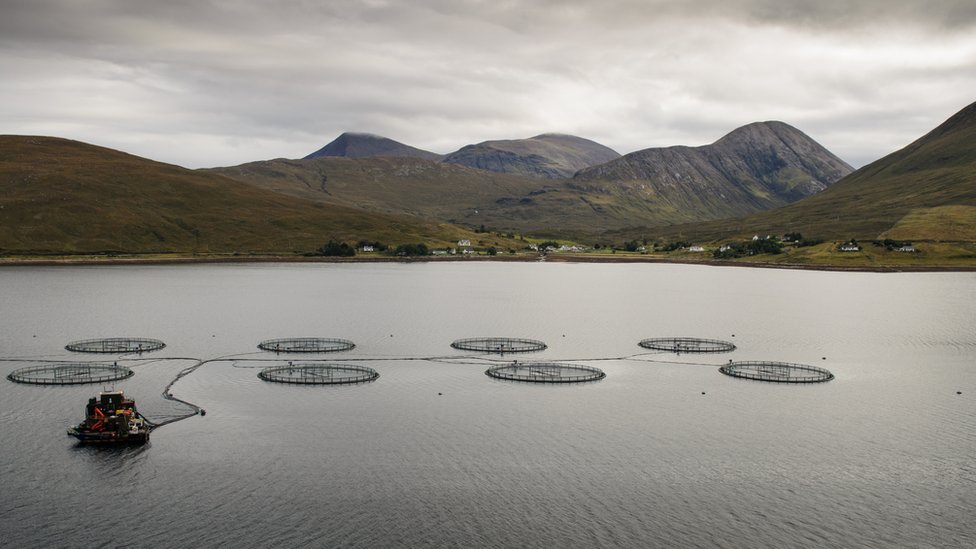
Under the proposed plans, operators in the protection zones will have to keep sea lice numbers to low levels and face additional monitoring.
The industry is concerned about over-regulation, but conservationists argue that more enforcement action is needed against fish farms with significant sea lice outbreaks.
Most Scottish salmon comes from fish farms, and Sepa has identified 21 fish farms within eight zones that collectively see the most sea lice outbreaks.
These farms will be told to keep lice numbers below specified levels, but Sepa will leave it to operators to decide the methods they use to achieve those targets.
The plans do not include any "no-go" areas, and Sepa is acutely aware of the anger in small coastal communities caused by the Scottish government's plans to create Highly Protected Marine Areas.
The fish farm industry says it has been investing in innovative techniques to control sea lice numbers, but there are concerns that too much regulation could become burdensome.
The salmon farming sector in Scotland has proposed a new framework to collect and share data about the health of their stocks, including upper sea lice limits and verification of data.
However, the conservation charity Wild Fish believes the plans do not go far enough, particularly in terms of enforcement.
The regulator is taking steps to give young salmon in Scotland's rivers the best chance of survival due to dwindling numbers attributed to climate change and sea lice outbreaks.
LONDON DAILY ARCHIVE
Scottish Environment Protection Agency Proposes Network of Wild Salmon Protection Zones to Save Declining Population
The Scottish Environment Protection Agency (Sepa) has proposed an extensive network of wild salmon protection zones along Scotland's west coast to reduce sea lice outbreaks from fish farms and protect the declining Atlantic wild salmon population.
31 May 2023 · 03:19 UTC