LONDON DAILY ARCHIVE
UK's Poorest Households Face Increasing Council Tax Burden
New research indicates that the lowest-income households are devoting a larger share of their income to council tax payments, prompting comparisons to the controversial poll tax.
17 February 2025 · 06:26 UTC
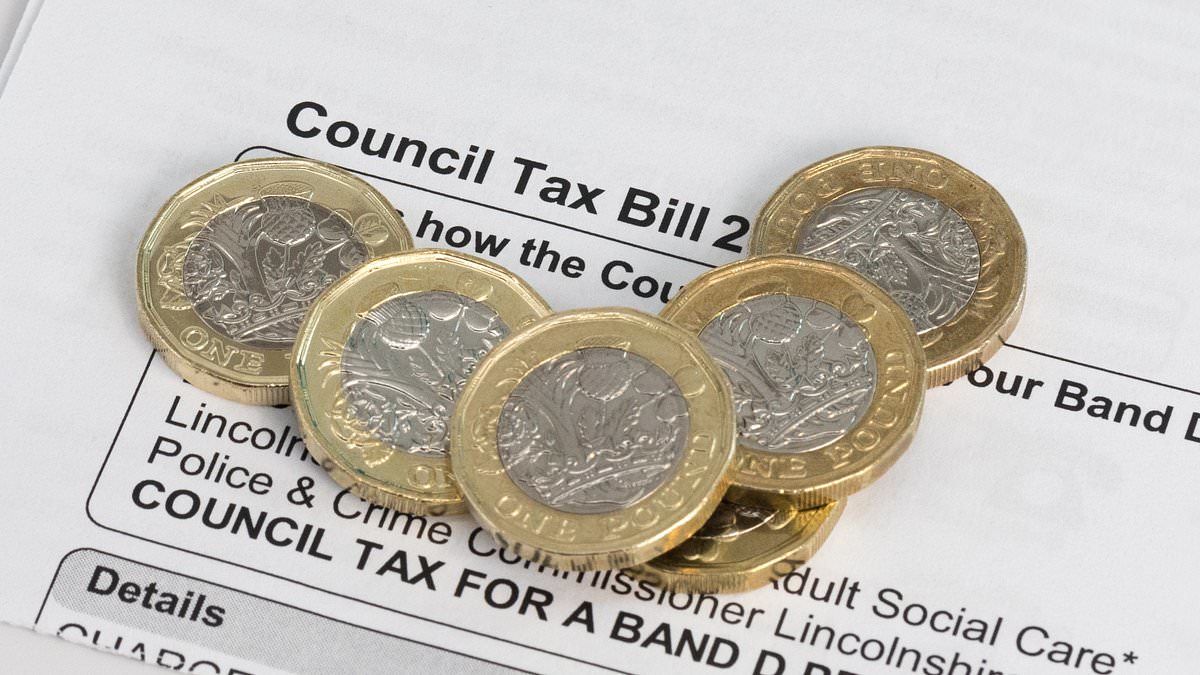
In the financial year 2020-21, these households paid 4.8% of their income on council tax in England, Wales, and Scotland, as well as on domestic rates in Northern Ireland.
This is a significant rise from the 2.9% recorded in the 2002-03 financial year.
Council tax serves as one of the few levies on wealth in the UK, operating under distinct regulations in each of the four constituent countries.
Economists have characterized the council tax as fundamentally flawed, largely due to the reliance on property valuations from 1991 in England and Scotland, despite substantial wealth distribution changes over the last three decades.
Wales utilizes property valuations from 2003, while Scotland revised rates on higher-banded properties in 2017. In contrast, Northern Ireland continues to operate under a domestic rates system that predates council tax.
The Resolution Foundation's findings emphasize the regressive nature of council tax, indicating that lower-income households pay a disproportionately higher percentage of their earnings compared to wealthier households.
Specifically, the lowest-income families contribute 4.8% of their income towards council tax, which is three times greater than the 1.5% paid by the wealthiest fifth.
The increase in council tax contributions from poorer households can be largely attributed to the cancellation of council tax benefit in 2013 during the Conservative-Liberal Democrat coalition government, along with the gradual elimination of rebates in various regions.
The report suggests that this trend has raised concerns reminiscent of the issues associated with the former poll tax, also known as the community charge, which was enacted under Prime Minister Margaret Thatcher.
The poll tax, which required every adult to pay a flat rate to fund local government, was largely unpopular, culminating in protests including a notable riot in Trafalgar Square.
The backlash against the tax contributed to the political challenges faced by Thatcher, leading to her resignation in 1990. In response, John Major's government introduced the council tax system in 1993 as a middle ground.
Economist Lalitha Try from the Resolution Foundation stated that the rising council tax is straining household budgets for poorer families, with their contributions coming close to amounts paid in income tax.
Try described council tax as increasingly resembling the poll tax it was intended to replace.
The scrutiny surrounding the council tax system has intensified as numerous councils in England have reported financial distress, exacerbated by rising social care costs.
The Resolution Foundation cautioned that the trend of escalating council tax contributions could potentially worsen, with basic council tax rates in England projected to rise by as much as 4.99% in the forthcoming year.
Additionally, six councils, including Labour-run Bradford, Newham, and Trafford, as well as Lib Dem-controlled Windsor, Maidenhead, and Somerset, are permitted to increase their bills by up to 9.99%.