London Daily

Focus on the big picture.
Thursday, Jan 29, 2026

UK heatwave: Why is it so hot?

UK heatwave: Why is it so hot?

The Met Office says we could see Britain's hottest recorded temperature within hours, an extraordinary milestone.

So why are we seeing such brutal temperatures? Most climate scientists say the answer is climate change.

The Met Office estimates that the extreme heat we will be seeing over the next couple of days has been made ten times more likely because of it.

We are being warned it could pose a life-threatening risk to even normally healthy people, and just look at the impact it is having in our hospitals, schools and transport systems.

Now remember, this is happening when average world temperatures have only risen just over 1C beyond levels seen before many parts of the world became industrialised.

One degree doesn't sound much, does it? But we're living in the hottest period for 125,000 years, according to the UN's climate science body, the Intergovernmental Panel on Climate Change (IPCC).

We know what's behind this - the greenhouse gas emissions caused by our burning of fossil fuels like coal, oil and gas, which trap heat in our atmosphere. They have helped push the concentration of carbon dioxide in the atmosphere to the highest levels seen for 2 million years, according to the IPCC.
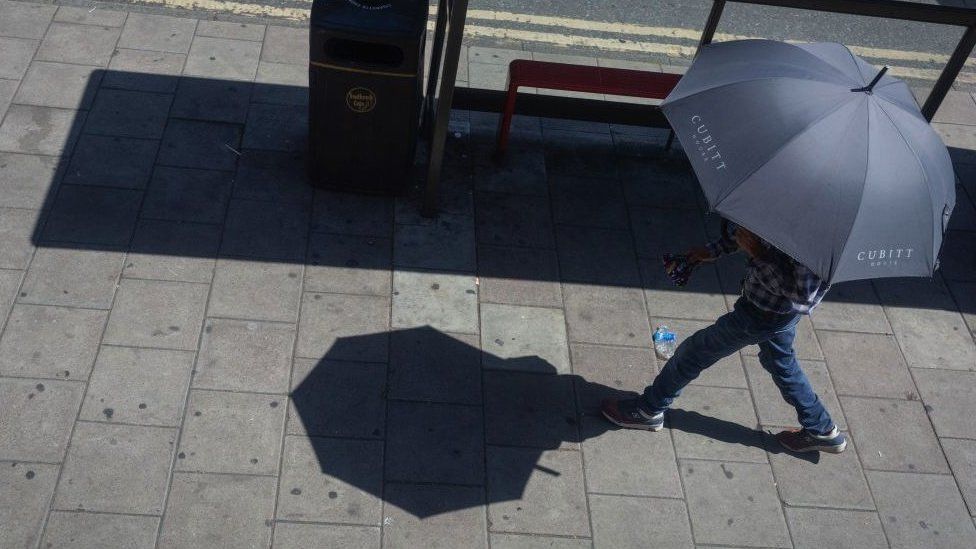

So where is our climate headed?

The target set by the UN is to limit global temperature increases to 1.5C higher than pre-industrial levels. It says that should avoid the most dangerous impacts of climate change.

To do that, emissions need to have peaked by 2025 - yes, in only two and half years.

CO2 emissions from energy increased by 6% in 2021 to 36.3 billion tonnes - the highest ever level, the International Energy Agency estimates.

They need to virtually halve by 2030 - we need a minimum 43% reduction by the end of this decade, according to the IPCC.

Then the world needs to scale back emissions to net zero by 2050. That means cutting greenhouse gases as much as possible and finding ways to draw CO2 out of the atmosphere to make up for any that remain.

It is a huge challenge - many people believe the greatest challenge humanity has ever faced.

Remember that big UN conference in Glasgow last year? If all the promises governments made there were actually implemented, then we'd be looking at temperatures rising by something like 2.4C from pre-industrial levels by the end of the century.

But the truth is even if we do succeed in reducing emissions to that really ambitious 1.5C target, UK summers will continue to get hotter.

"In a few decades this might actually be a quite a cool summer," says Professor Friederike Otto, a climate scientist at Imperial College London.

We should expect more and longer heatwaves in the future, says Professor Nigel Arnell, a climate scientist at Reading University.

We will be seeing more heat-health alerts, more heat-stress days - days when it is too hot to work - and damaging heat extremes to increase, he warns.
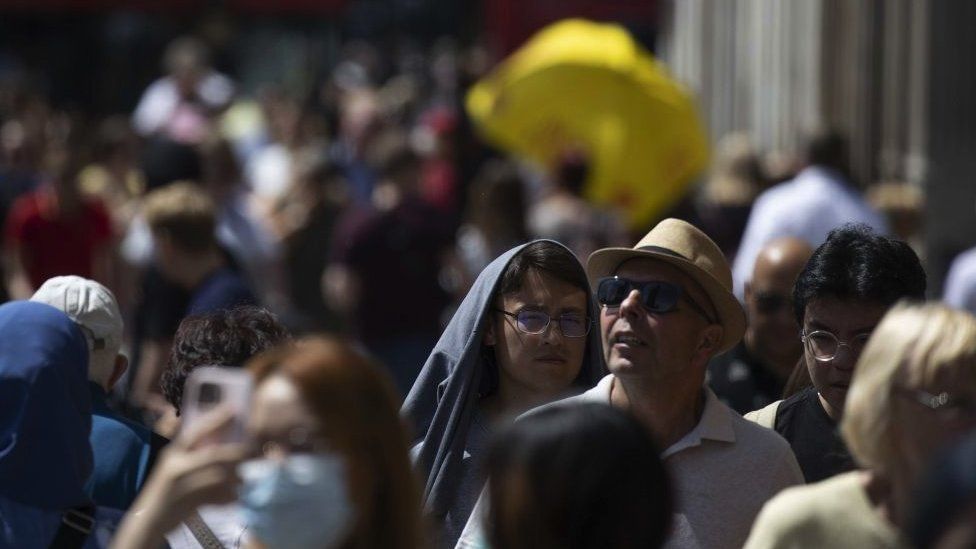

So what is the UK doing about it?

Nowhere near enough, is the stark conclusion of the Climate Change Committee (CCC), the government's advisors on climate change.

Prime Minister Boris Johnson warned the world was at "one minute to midnight" on climate change in his speech opening the Glasgow climate conference.

But in a report on the UK's progress towards net zero the CCC warned that his government's current policies are very unlikely to do the job.

It said the government has set a lot of targets and put a lot of policies in place but warns there is "scant evidence" these goals will be delivered.

And the country is not doing enough to prepare itself for the more frequent and intense heatwaves climate change will bring.

Heatwaves caused an additional 2,000 deaths in 2020, according to the UK Health Security Agency.

That figure is likely to triple in coming decades without government action, according to Baroness Brown, deputy chair of the Climate Change Committee.

"We've been telling the government for over 10 years that we are nothing like well enough prepared in the UK for the really hot weather we are seeing now," she says - particularly the extreme heat many people experience in their homes.

It is a "disgrace" people are dying of heat - or for that matter cold - in the UK, says Professor Hannah Cloke of the University of Reading.

Most UK buildings and infrastructure were not designed to cope with the kind of temperatures we are seeing this week and much more needs to be done to adapt them, she says.

"We have made great strides in forecasting extreme weather and climate conditions in recent years. Now we need the systems in place so that people and governments act on the warnings we can provide, whether three hours, three days, or three decades in advance."


Newsletter

Related Articles

0:00
0:00
Close
Starmer Seeks Economic Gains From China Visit While Navigating US Diplomatic Sensitivities
Starmer Says China Visit Will Deliver Economic Benefits as He Prepares to Meet Xi Jinping
UK Prime Minister Starmer Arrives in China to Bolster Trade and Warn Firms of Strategic Opportunities
The AI Hiring Doom Loop — Algorithmic Recruiting Filters Out Top Talent and Rewards Average or Fake Candidates
Amazon to Cut 16,000 Corporate Jobs After Earlier 14,000 Reduction, Citing Streamlining and AI Investment
Federal Reserve Holds Interest Rate at 3.75% as Powell Faces DOJ Criminal Investigation During 2026 Decision
Putin’s Four-Year Ukraine Invasion Cost: Russia’s Mass Casualty Attrition and the Donbas Security-Guarantee Tradeoff
Wall Street Bets on Strong US Growth and Currency Moves as Dollar Slips After Trump Comments
UK Prime Minister Traveled to China Using Temporary Phones and Laptops to Limit Espionage Risks
Google’s $68 Million Voice Assistant Settlement Exposes Incentives That Reward Over-Collection
Kim Kardashian Admits Faking Paparazzi Visit to Britney Spears for Fame in Early 2000s
UPS to Cut 30,000 More Jobs by 2026 Amid Shift to High-Margin Deliveries
France Plans to Replace Teams and Zoom Across Government With Homegrown Visio by 2027
Trump Removes Minneapolis Deportation Operation Commander After Fatal Shooting of Protester
Iran’s Elite Wealth Abroad and Sanctions Leakage: How Offshore Luxury Sustains Regime Resilience
U.S. Central Command Announces Regional Air Exercise as Iran Unveils Drone Carrier Footage
Four Arrested in Andhra Pradesh Over Alleged HIV-Contaminated Injection Attack on Doctor
Hot Drinks, Hidden Particles: How Disposable Cups Quietly Increase Microplastic Exposure
UK Banks Pledge £11 Billion Lending Package to Help Firms Expand Overseas
Suella Braverman Defects to Reform UK, Accusing Conservatives of Betrayal on Core Policies
Melania Trump Documentary Sees Limited Box Office Traction in UK Cinemas
Meta and EssilorLuxottica Ray-Ban Smart Glasses and the Non-Consensual Public Recording Economy
WhatsApp Develops New Meta AI Features to Enhance User Control
Germany Considers Gold Reserves Amidst Rising Tensions with the U.S.
Michael Schumacher Shows Significant Improvement in Health Status
Greenland’s NATO Stress Test: Coercion, Credibility, and the New Arctic Bargaining Game
Diego Garcia and the Chagos Dispute: When Decolonization Collides With Alliance Power
Trump Claims “Total” U.S. Access to Greenland as NATO Weighs Arctic Basing Rights and Deterrence
Air France and KLM Suspend Multiple Middle East Routes as Regional Tensions Disrupt Aviation
U.S. winter storm triggers 13,000-plus flight cancellations and 160,000 power outages
Poland delays euro adoption as Domański cites $1tn economy and zloty advantage
White House: Trump warns Canada of 100% tariff if Carney finalizes China trade deal
PLA opens CMC probe of Zhang Youxia, Liu Zhenli over Xi authority and discipline violations
ICE and DHS immigration raids in Minneapolis: the use-of-force accountability crisis in mass deportation enforcement
UK’s Starmer and Trump Agree on Urgent Need to Bolster Arctic Security
Starmer Breaks Diplomatic Restraint With Firm Rebuke of Trump, Seizing Chance to Advocate for Europe
UK Finance Minister Reeves to Join Starmer on China Visit to Bolster Trade and Economic Ties
Prince Harry Says Sacrifices of NATO Forces in Afghanistan Deserve ‘Respect’ After Trump Remarks
Barron Trump Emerges as Key Remote Witness in UK Assault and Rape Trial
Nigel Farage Attended Davos 2026 Using HP Trust Delegate Pass Linked to Sasan Ghandehari
Gold Jumps More Than 8% in a Week as the Dollar Slides Amid Greenland Tariff Dispute
BlackRock Executive Rick Rieder Emerges as Leading Contender to Succeed Jerome Powell as Fed Chair
Boston Dynamics Atlas humanoid robot and LG CLOiD home robot: the platform lock-in fight to control Physical AI
United States under President Donald Trump completes withdrawal from the World Health Organization: health sovereignty versus global outbreak early-warning access
FBI and U.S. prosecutors vs Ryan Wedding’s transnational cocaine-smuggling network: the fight over witness-killing and cross-border enforcement
Trump Administration’s Iran Military Buildup and Sanctions Campaign Puts Deterrence Credibility on the Line
Apple and OpenAI Chase Screenless AI Wearables as the Post-iPhone Interface Battle Heats Up
Tech Brief: AI Compute, Chips, and Platform Power Moves Driving Today’s Market Narrative
NATO’s Stress Test Under Trump: Alliance Credibility, Burden-Sharing, and the Fight Over Strategic Territory
OpenAI’s Money Problem: Explosive Growth, Even Faster Costs, and a Race to Stay Ahead
×