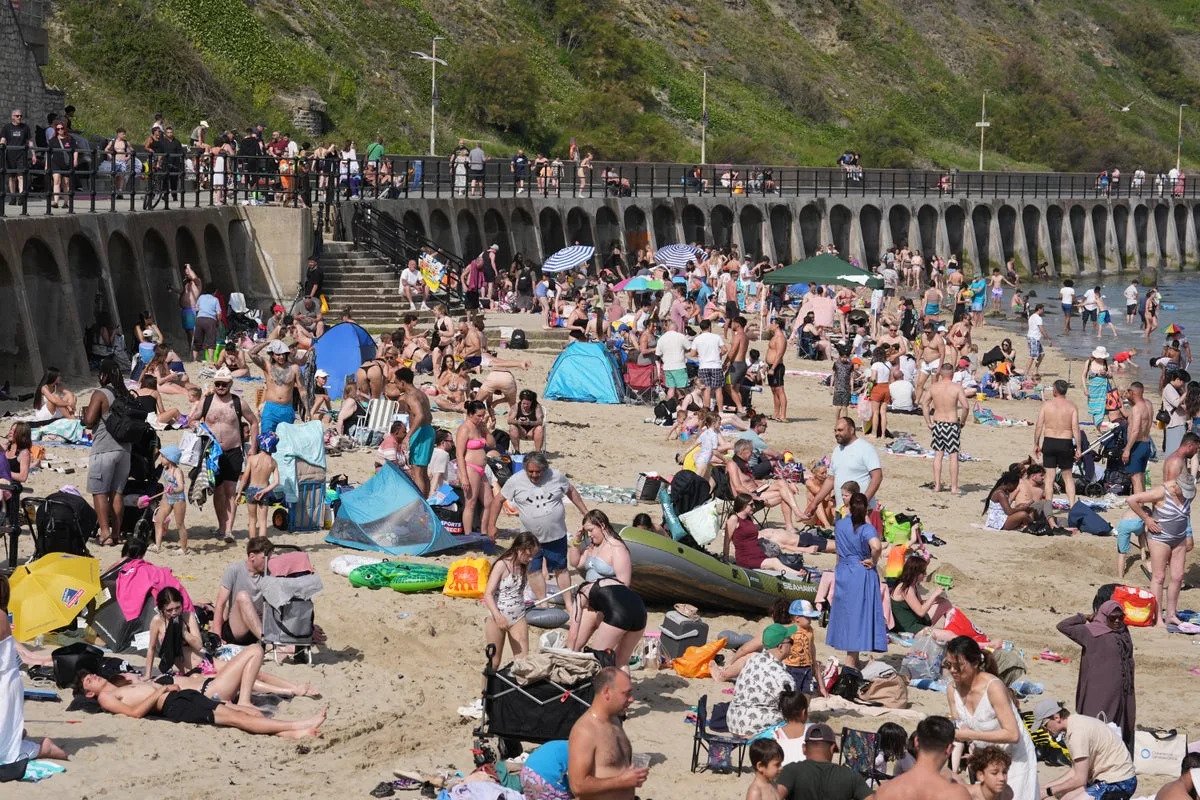
UK Heatwave Declaration Marks Early Peak in Summer Temperature Spike
Temperatures above thirty-two degrees Celsius trigger the UK’s first heatwave alert of the year, exposing infrastructure strain, health risks, and growing climate volatility.
The story is fundamentally event-driven because it centers on a rapid and officially recognized temperature spike that has triggered the United Kingdom’s first heatwave conditions of the year, with immediate implications for public health, infrastructure, and climate resilience.
What is confirmed is that temperatures in parts of the United Kingdom have exceeded thirty-two degrees Celsius, prompting meteorological authorities to declare heatwave conditions in affected regions.
This marks the hottest day of the year so far and places large parts of England under elevated heat warnings.
A UK heatwave is defined not simply by a single hot day but by a sustained period of high temperatures above locally set thresholds that vary by region.
These thresholds are calibrated to account for typical seasonal conditions, meaning a heatwave can be declared even when temperatures are lower than those seen in hotter countries, provided they significantly exceed local norms over consecutive days.
The immediate mechanism driving the heat event is a high-pressure weather system that has stabilized over parts of Western Europe, reducing cloud formation and limiting wind movement.
This creates prolonged exposure to solar heating and suppresses nighttime cooling, which is a critical factor in heat-related health risks.
The most direct consequences are being felt in public health systems and infrastructure.
High temperatures increase the risk of heat exhaustion, dehydration, and cardiovascular stress, particularly among elderly populations, young children, and individuals with pre-existing health conditions.
Hospitals and emergency services typically see increased demand during sustained heat periods.
Transport infrastructure is also affected.
Rail systems are vulnerable to track deformation under extreme heat, while road surfaces can soften and degrade.
Air conditioning demand rises sharply, placing additional pressure on electricity grids, particularly during peak afternoon hours when solar heating is strongest and energy demand converges.
Water systems face secondary pressure as well.
Heatwaves increase evaporation rates and household water consumption, particularly for cooling, gardening, and hydration.
This can strain local supply networks in regions already experiencing dry conditions.
The declaration of heatwave conditions also has implications for workplaces and schools.
Employers are expected to adjust working conditions where possible, particularly for outdoor labor, while schools may modify outdoor activities or implement heat safety measures to protect children.
The broader context is that heatwaves in the United Kingdom have become more frequent and more intense over recent decades.
Climate monitoring data shows a clear upward trend in average summer temperatures and extreme heat events, consistent with global warming patterns driven by increased greenhouse gas concentrations.
This trend is reshaping baseline expectations for what constitutes extreme weather in the UK. Temperatures above thirty degrees Celsius, once relatively rare, are now occurring more regularly, and multi-day heat events are becoming more common across southern and central regions.
The economic impact of heatwaves is also significant.
Productivity typically declines during extreme heat, particularly in sectors requiring physical labor or outdoor work.
Retail behavior shifts, transport reliability can decrease, and cooling-related energy costs rise sharply.
Public authorities have increasingly emphasized preparedness measures, including hydration guidance, avoiding unnecessary travel during peak heat hours, and checking on vulnerable individuals.
Local councils and health agencies often coordinate alerts and cooling center availability during prolonged heat periods.
The current heatwave is also being monitored for its duration, as sustained multi-day heat events carry exponentially higher health risks than short spikes.
Nighttime temperatures are a key factor, because limited cooling prevents the human body from recovering between heat exposures.
Meteorological agencies continue to track the movement of the high-pressure system to determine how long elevated temperatures will persist and whether additional regions will meet heatwave thresholds in the coming days.
The immediate outcome of the declaration is heightened national alert status for heat-related risks, with public services, transport operators, and healthcare systems adjusting operations to manage the effects of sustained high temperatures.
What is confirmed is that temperatures in parts of the United Kingdom have exceeded thirty-two degrees Celsius, prompting meteorological authorities to declare heatwave conditions in affected regions.
This marks the hottest day of the year so far and places large parts of England under elevated heat warnings.
A UK heatwave is defined not simply by a single hot day but by a sustained period of high temperatures above locally set thresholds that vary by region.
These thresholds are calibrated to account for typical seasonal conditions, meaning a heatwave can be declared even when temperatures are lower than those seen in hotter countries, provided they significantly exceed local norms over consecutive days.
The immediate mechanism driving the heat event is a high-pressure weather system that has stabilized over parts of Western Europe, reducing cloud formation and limiting wind movement.
This creates prolonged exposure to solar heating and suppresses nighttime cooling, which is a critical factor in heat-related health risks.
The most direct consequences are being felt in public health systems and infrastructure.
High temperatures increase the risk of heat exhaustion, dehydration, and cardiovascular stress, particularly among elderly populations, young children, and individuals with pre-existing health conditions.
Hospitals and emergency services typically see increased demand during sustained heat periods.
Transport infrastructure is also affected.
Rail systems are vulnerable to track deformation under extreme heat, while road surfaces can soften and degrade.
Air conditioning demand rises sharply, placing additional pressure on electricity grids, particularly during peak afternoon hours when solar heating is strongest and energy demand converges.
Water systems face secondary pressure as well.
Heatwaves increase evaporation rates and household water consumption, particularly for cooling, gardening, and hydration.
This can strain local supply networks in regions already experiencing dry conditions.
The declaration of heatwave conditions also has implications for workplaces and schools.
Employers are expected to adjust working conditions where possible, particularly for outdoor labor, while schools may modify outdoor activities or implement heat safety measures to protect children.
The broader context is that heatwaves in the United Kingdom have become more frequent and more intense over recent decades.
Climate monitoring data shows a clear upward trend in average summer temperatures and extreme heat events, consistent with global warming patterns driven by increased greenhouse gas concentrations.
This trend is reshaping baseline expectations for what constitutes extreme weather in the UK. Temperatures above thirty degrees Celsius, once relatively rare, are now occurring more regularly, and multi-day heat events are becoming more common across southern and central regions.
The economic impact of heatwaves is also significant.
Productivity typically declines during extreme heat, particularly in sectors requiring physical labor or outdoor work.
Retail behavior shifts, transport reliability can decrease, and cooling-related energy costs rise sharply.
Public authorities have increasingly emphasized preparedness measures, including hydration guidance, avoiding unnecessary travel during peak heat hours, and checking on vulnerable individuals.
Local councils and health agencies often coordinate alerts and cooling center availability during prolonged heat periods.
The current heatwave is also being monitored for its duration, as sustained multi-day heat events carry exponentially higher health risks than short spikes.
Nighttime temperatures are a key factor, because limited cooling prevents the human body from recovering between heat exposures.
Meteorological agencies continue to track the movement of the high-pressure system to determine how long elevated temperatures will persist and whether additional regions will meet heatwave thresholds in the coming days.
The immediate outcome of the declaration is heightened national alert status for heat-related risks, with public services, transport operators, and healthcare systems adjusting operations to manage the effects of sustained high temperatures.