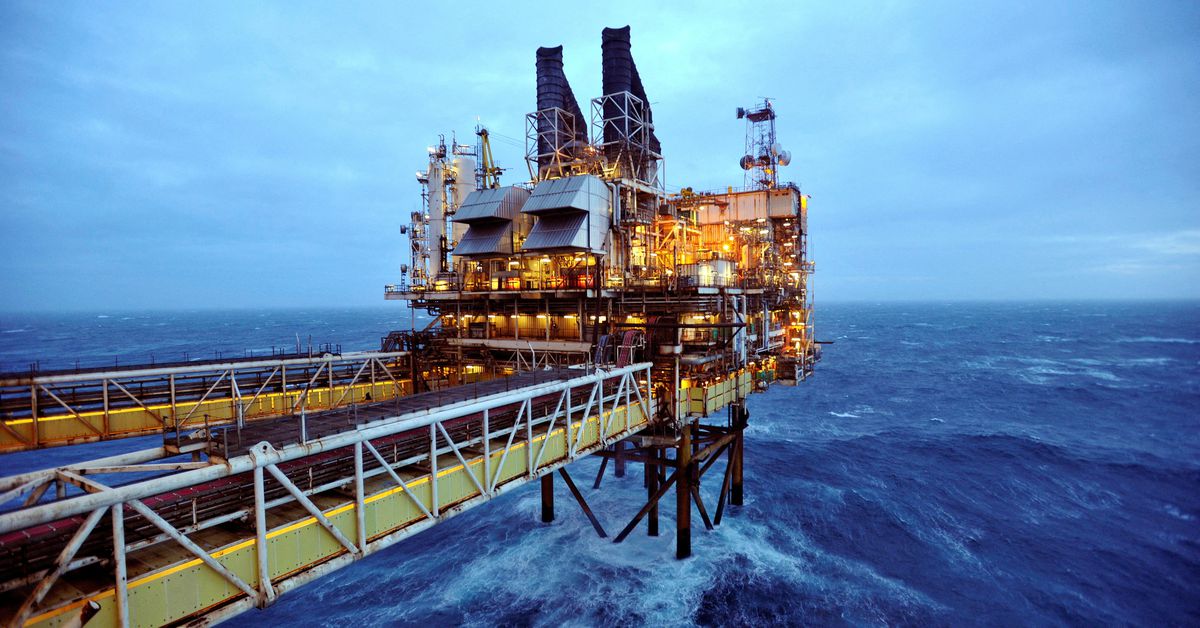
The tax was introduced last year as energy prices soared, and it prompted oil and gas producers, including some of the UK North Sea's biggest players, to cut investment in the basin.
Despite the government's move to waive the levy, industry sources doubt that it will succeed in boosting energy security by encouraging investment.
The UK's offshore oil, gas and renewables business association OEUK said that further steps were needed to restore confidence in the sector.
The government itself said that forecasts indicated the new price floor mechanism was unlikely to be triggered before the windfall tax runs out in 2028.
From an output of around 4.4 million barrels of oil equivalent per day at the start of the new millennium, Britain now produces around 1.3 million boepd, with a decline to under 200,000 seen by 2050.
Demand for oil and gas through 2030 will not decline fast enough to close the gap with falling domestic hydrocarbon and rising renewable power supply.
The Winter 2023 forward gas contract is priced around 120p/therm, while the Summer 2024 contract is priced around 105p/therm.
The government is hoping that these prices will provide sufficient downside protection to secure investment, despite the fact that oil futures contracts indicate that Benchmark Brent crude will drop below $70 a barrel after April 2025.
However, the frequent changes to oil taxation are creating fiscal uncertainty for the industry, which is making long-term investment decisions.
A final investment decision on the Rosebank field, which could produce up to 70,000 bpd, is expected to be made in the first half of this year.
LONDON DAILY ARCHIVE
UK Government Waives Windfall Tax on Oil and Gas Producers in North Sea
The UK government has waived a windfall tax on oil and gas producers in the North Sea, which had hiked taxes on producers to an overall rate of 75%.
10 June 2023 · 22:48 UTC