The change allowed companies to use agency staff to fill in the roles of striking workers, but unions have condemned it as "reckless" and launched a legal challenge almost immediately.
The change was made as a statutory instrument, which meant there was less scrutiny than usual legislation.
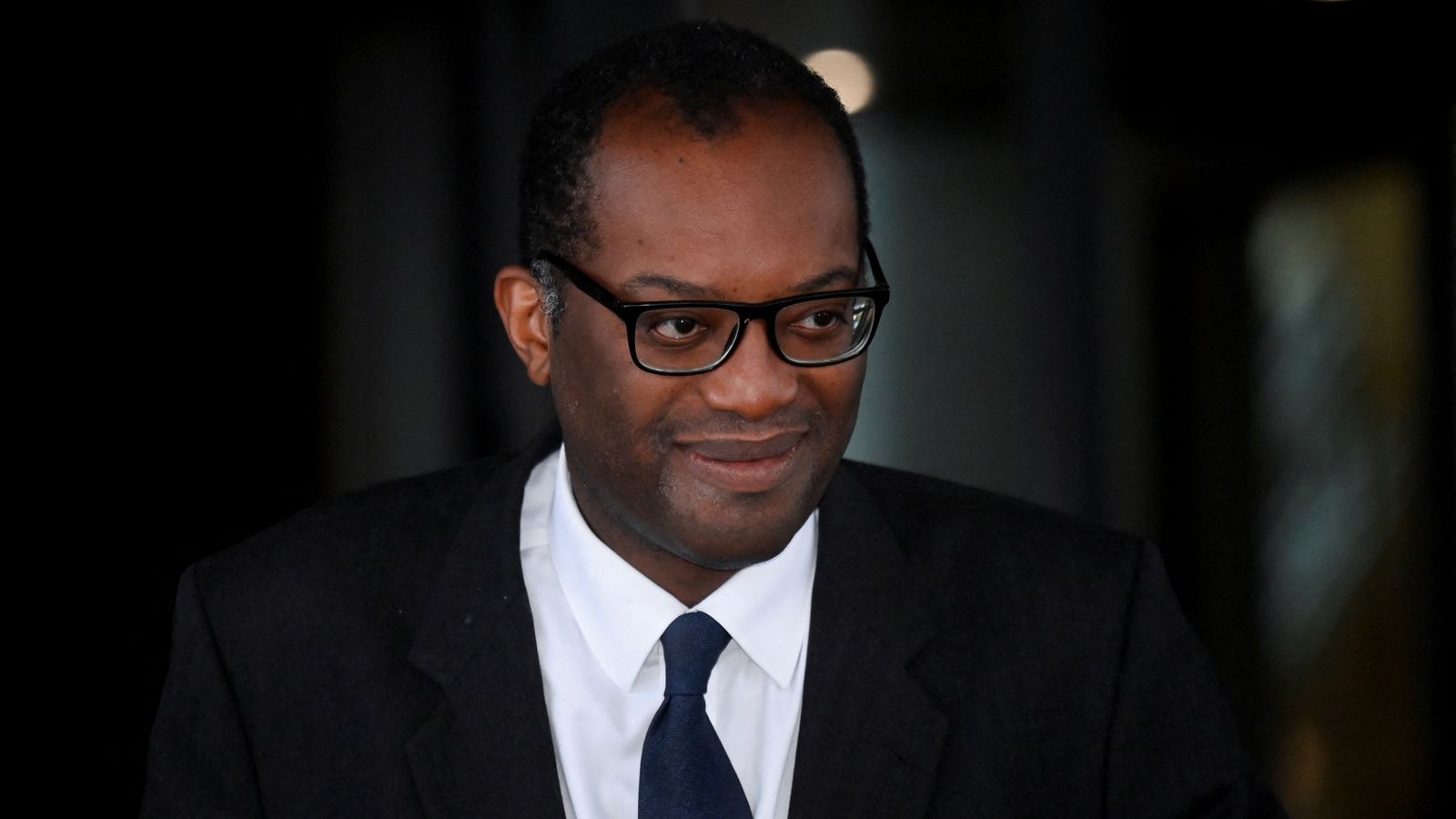
Mr Justice Linden criticized the decision in his written judgement, stating that the then-secretary of state, Kwasi Kwarteng, was "not sufficiently interested" to ask for analysis from civil servants to assess how the law change would be implemented.
The judge added that the decision was made "at exceptional speed" without any further consultation or analysis from the civil service.
The TUC coordinated the legal action, which was brought by a group of more than 10 unions, including Aslef, Unite, and Usdaw.
Richard Arthur, the lawyer for the TUC, said that the ruling "makes clear that the then secretary of state had a staggering disregard to his legal obligations when introducing legislation that enabled employers to engage agency workers to cover the duties of striking workers." The government's legal team argued that the law changes had been "modest," but Mr Justice Linden disagreed, stating that the decision was "bad law-making made 'on the hoof'" and that the government had a "staggering disregard" for its legal obligations.
The ruling is seen as a significant setback for the government's efforts to curb union power and limit their ability to call strikes.
The government has made it clear that while the ability to strike is important, there must be a reasonable balance between this and the rights of businesses and the public.
In response to the recent court ruling that granted unions the right to strike, the government has stated that it will carefully consider the judgement and next steps.
In a recent interview, a spokesperson for the government emphasized the need for a balance between the rights of unions and the rights of businesses and the public.
The spokesperson stated that while the ability to strike is important, it must not come at the expense of the rights and interests of others.
The government will be carefully reviewing the court's judgement and determining the best course of action moving forward.
The recent court ruling has granted unions the right to strike, a decision that has sparked both support and criticism.
Supporters of the ruling argue that it gives unions the power they need to negotiate fair contracts and protect the rights of workers.
Critics, on the other hand, argue that it could cause disruptions to businesses and the economy.
The government's stance on the issue reflects a desire to find a balance between the rights of unions and the rights of businesses and the public.
The government recognizes the importance of the right to strike, but also understands the potential impacts on the economy and the public.
It will be considering all of these factors as it determines the best course of action moving forward.
LONDON DAILY ARCHIVE
UK Government Dealt Setback in Legal Challenge to Strike Restrictions
The Trades Union Congress (TUC) has won a legal challenge against a law change introduced by former Business Secretary Kwasi Kwarteng in July last year.
14 July 2023 · 21:57 UTC