LONDON DAILY ARCHIVE
UK Government Adopts Cautious Stance on Trump’s Tariff Announcements
Senior minister emphasizes the need for measured response amid tariff uncertainty.
17 February 2025 · 09:22 UTC
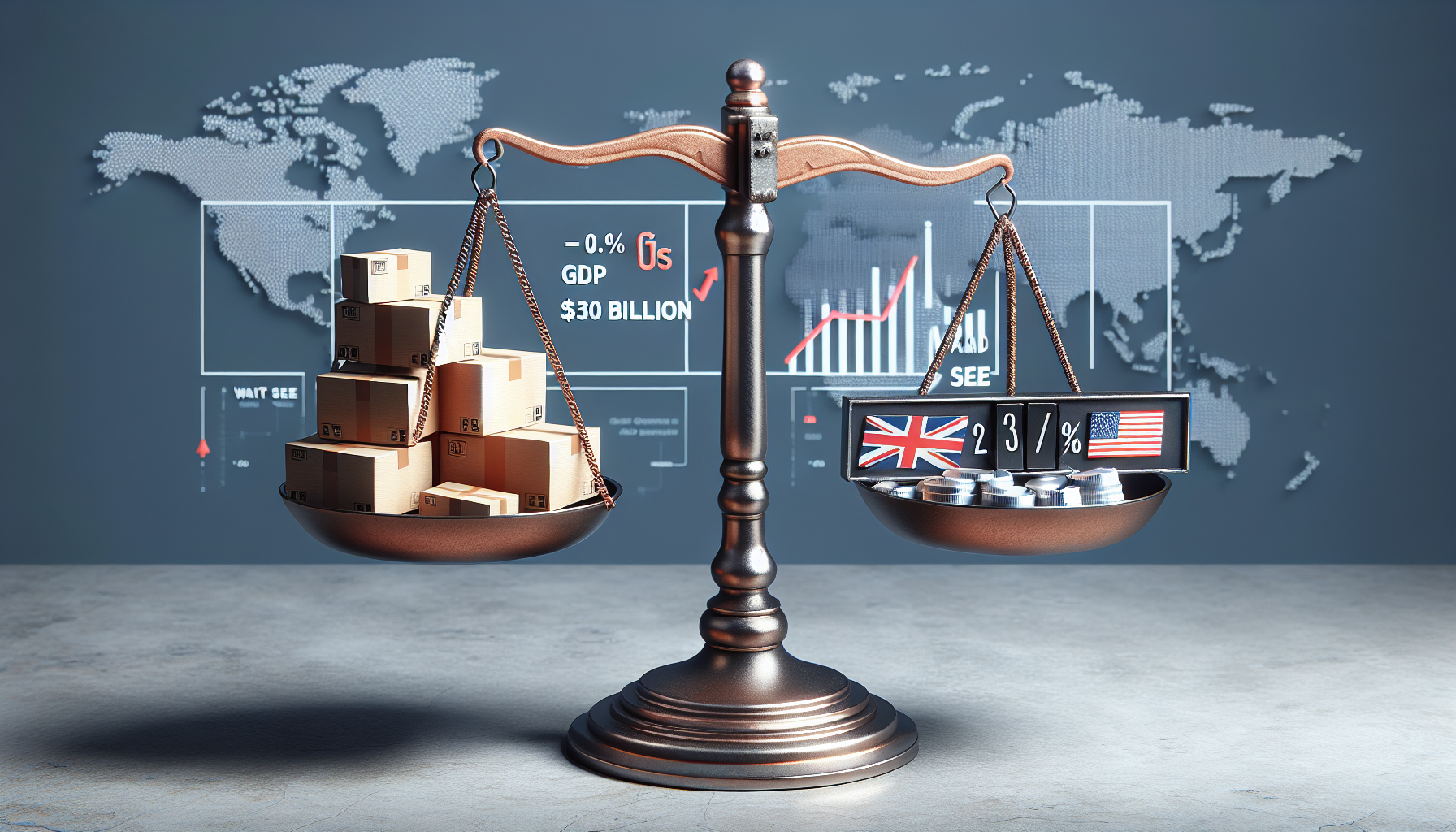
On Thursday evening, Trump outlined what he termed 'reciprocal tariffs' aimed at all other countries, framing the move as a measure of fairness in international trade practices.
Despite the announcement, significant ambiguity remains around how these tariffs will apply specifically to the UK, especially after Trump expressed his intent to classify the country’s value-added tax (VAT) of 20% as a form of tariff.
Economic projections suggest that the implementation of such tariffs could have substantial repercussions for the UK economy.
Ahmet Kaya, an economist with the National Institute of Economic and Social Research (NIESR), predicts that these tariffs could reduce UK GDP growth by 0.4 percentage points over the next two years, translating to an economic impact of approximately $30 billion (£24 billion).
Pat McFadden, the Chancellor of the Duchy of Lancaster and a senior minister in Sir Keir Starmer’s government, advocated for a measured response, telling Sky News it is prudent to 'wait and see what it means.' He noted the potential for tariff announcements to be rescinded soon after they are made, emphasizing the need for clarity before taking any policy actions.
McFadden pointed out that there are still 'a lot of unanswered questions' regarding the new tariff policy, urging caution against rash assessments.
He remarked, 'We took the decision…that we wouldn’t breathlessly chase every headline that was coming out over the last month,' suggesting a strategy of careful consideration in navigating the evolving trade landscape.
Industry representatives have echoed this sentiment.
William Bain, head of trade policy for the British Chambers of Commerce (BCC), stressed the importance of avoiding a 'trade war of tit-for-tat tariffs' that could escalate and disrupt global trade norms.
He described Trump’s proposed tariffs as potentially leading to increased costs and uncertainty for investors, businesses, and consumers alike.
Trump’s administration has introduced multiple tariffs since he assumed office, including a 25% duty on steel imports announced earlier this week.
While these moves have strained relationships with key allies such as Canada and Mexico, the permanence of many tariffs remains in question, as demonstrated by Trump’s recent suspension of duties on Canadian and Mexican goods after negotiations.
In reaction to the tariff announcements, Canada and Mexico have prepared retaliatory measures, while the European Union is also on alert.
Additionally, China has already initiated a response with a 10% tariff on its exports to the United States.
The UK has not disclosed plans to retaliate against these proposed tariffs, with McFadden calling it 'premature' to address the issue at this stage.
He emphasized the government’s duty to prioritize the national interest while seeking to maintain favorable trading relationships globally.
According to estimates, UK-US trade is valued at approximately £300 billion annually, with the UK importing slightly more than it exports to the United States.
Most UK exports to the US consist of services, with major goods exports including over £8 billion in automobiles and more than £6 billion in pharmaceuticals, although it is unclear how the reciprocal tariffs will impact these sectors.
Given these factors, UK ministers are hopeful that trade dynamics may offer some leverage in securing exemptions from Trump’s tariff policies.