UK Becomes First G7 Nation to Seal Landmark Trade Deal With Gulf States
Agreement with the Gulf Cooperation Council removes tariffs on most exports and deepens UK access to a fast-growing $57bn regional market
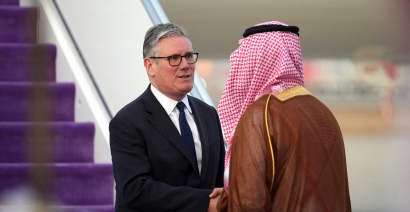
The United Kingdom has concluded a wide-ranging free trade agreement with the Gulf Cooperation Council, a six-country bloc made up of Saudi Arabia, the United Arab Emirates, Qatar, Kuwait, Bahrain and Oman, marking the first time a G7 economy has secured a modern trade deal with the group.
The agreement, formally finalised on May 20, is designed to reshape trade flows between the UK and one of the world’s most energy-rich and rapidly diversifying economic regions.
What is confirmed is that the deal removes tariffs on around 93 percent of UK goods exported to Gulf markets, eliminating an estimated £580 million in annual duties once fully implemented.
Around £360 million of those reductions will apply immediately after the agreement enters into force, pending ratification by all participating governments.
At its core, the deal is a market-access framework.
It lowers or removes barriers on key UK exports including food and drink, medical equipment, automotive products, aerospace components and advanced manufactured goods.
In parallel, it preserves or expands access for UK service industries, which are central to Britain’s economy and include financial services, legal services, education, consultancy and digital trade.
Government projections estimate the agreement could add around £3.7 billion a year to UK GDP in the long term, alongside a reported £1.9 billion annual uplift in real wages.
Officials also forecast increased bilateral trade of roughly 20 percent over time, reflecting both tariff reductions and expanded regulatory cooperation.
A notable feature of the agreement is its services and digital trade architecture.
The deal includes commitments aimed at improving cross-border data flows and reducing the need for firms to establish costly local infrastructure in Gulf markets.
It also includes provisions intended to streamline customs procedures, with expectations of faster clearance times for goods once the agreement is operational.
The political significance of the deal is tied to timing as much as content.
It arrives amid heightened global economic fragmentation and regional instability linked to conflict dynamics in the Middle East.
For the UK government, it is positioned as part of a broader strategy to diversify trade relationships beyond traditional European and North American partners.
For the Gulf states, the agreement fits into long-term economic diversification agendas aimed at reducing dependence on hydrocarbons by expanding services, logistics, finance and technology sectors.
The UK’s services-heavy economy aligns with that shift, making the agreement structurally complementary rather than purely commodity-driven.
The deal is also politically notable for what it excludes.
While it includes trade liberalisation and investment protections, it does not contain enforceable human rights conditions, a point that has already drawn criticism from advocacy groups concerned about governance standards in parts of the Gulf region.
Before it can take effect, the agreement must complete domestic ratification processes in the UK and each GCC member state.
Only after that will businesses be able to trade under the new tariff and services framework, with implementation expected to unfold gradually over several years as provisions phase in.
Once fully active, the agreement is expected to strengthen UK exporters’ access to a region whose trade with Britain is already worth tens of billions of pounds annually, locking in preferential access at a time of intensifying global competition for high-growth markets.
The agreement, formally finalised on May 20, is designed to reshape trade flows between the UK and one of the world’s most energy-rich and rapidly diversifying economic regions.
What is confirmed is that the deal removes tariffs on around 93 percent of UK goods exported to Gulf markets, eliminating an estimated £580 million in annual duties once fully implemented.
Around £360 million of those reductions will apply immediately after the agreement enters into force, pending ratification by all participating governments.
At its core, the deal is a market-access framework.
It lowers or removes barriers on key UK exports including food and drink, medical equipment, automotive products, aerospace components and advanced manufactured goods.
In parallel, it preserves or expands access for UK service industries, which are central to Britain’s economy and include financial services, legal services, education, consultancy and digital trade.
Government projections estimate the agreement could add around £3.7 billion a year to UK GDP in the long term, alongside a reported £1.9 billion annual uplift in real wages.
Officials also forecast increased bilateral trade of roughly 20 percent over time, reflecting both tariff reductions and expanded regulatory cooperation.
A notable feature of the agreement is its services and digital trade architecture.
The deal includes commitments aimed at improving cross-border data flows and reducing the need for firms to establish costly local infrastructure in Gulf markets.
It also includes provisions intended to streamline customs procedures, with expectations of faster clearance times for goods once the agreement is operational.
The political significance of the deal is tied to timing as much as content.
It arrives amid heightened global economic fragmentation and regional instability linked to conflict dynamics in the Middle East.
For the UK government, it is positioned as part of a broader strategy to diversify trade relationships beyond traditional European and North American partners.
For the Gulf states, the agreement fits into long-term economic diversification agendas aimed at reducing dependence on hydrocarbons by expanding services, logistics, finance and technology sectors.
The UK’s services-heavy economy aligns with that shift, making the agreement structurally complementary rather than purely commodity-driven.
The deal is also politically notable for what it excludes.
While it includes trade liberalisation and investment protections, it does not contain enforceable human rights conditions, a point that has already drawn criticism from advocacy groups concerned about governance standards in parts of the Gulf region.
Before it can take effect, the agreement must complete domestic ratification processes in the UK and each GCC member state.
Only after that will businesses be able to trade under the new tariff and services framework, with implementation expected to unfold gradually over several years as provisions phase in.
Once fully active, the agreement is expected to strengthen UK exporters’ access to a region whose trade with Britain is already worth tens of billions of pounds annually, locking in preferential access at a time of intensifying global competition for high-growth markets.