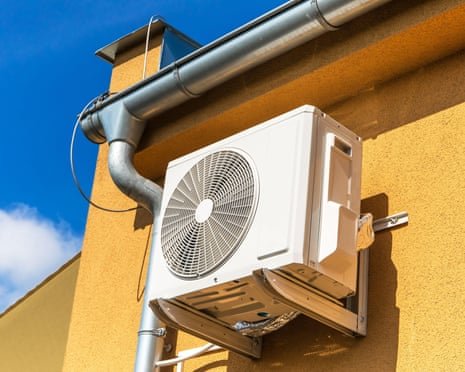
UK air-conditioning surge accelerates as homes adapt to hotter summers
Households with air conditioning have more than doubled in three years, surpassing four million amid rising temperatures and growing heat stress
EVENT-DRIVEN — The rapid expansion of domestic air-conditioning in the UK is being driven by increasingly frequent heatwaves, shifting climate conditions, and household adaptation to higher summer temperatures rather than a single policy or market shock.
The number of UK homes with air conditioning has more than doubled in just three years, rising to over four million households.
This marks one of the fastest structural changes in domestic energy and appliance use in recent years, reflecting how British households are responding to hotter and more prolonged summer conditions.
What is confirmed is that air-conditioning adoption, once relatively rare in the UK compared with warmer countries in Europe and beyond, is now accelerating sharply.
The increase is being driven primarily by portable and split-unit systems installed in existing homes, rather than large-scale integration into new housing developments.
This suggests a reactive shift in consumer behaviour rather than a coordinated infrastructure transition.
The rise has been concentrated in the past three summers, which have included repeated heatwaves and record-breaking temperature spikes in parts of the country.
These events have increased demand for cooling solutions, particularly among urban households where heat retention in densely built environments is more severe.
The expansion carries significant implications for electricity demand.
Air conditioning is energy-intensive, and widespread adoption is expected to increase peak summer load on the UK power grid.
This introduces new pressure on energy planning, particularly during periods when renewable output can fluctuate and when heating and cooling demands begin to overlap in seasonal transitions.
The trend also reflects a broader shift in how climate change is influencing domestic infrastructure decisions.
UK homes have historically been designed to retain heat rather than dissipate it, making them increasingly vulnerable to extreme summer temperatures.
As a result, households are turning to mechanical cooling rather than relying solely on passive ventilation or architectural adaptation.
Energy analysts view the change as part of a longer-term adjustment cycle in which climate-driven demand reshapes household consumption patterns.
While the penetration of air conditioning in the UK remains lower than in southern European countries, the speed of growth suggests convergence over time if current temperature trends continue.
The shift is also creating a policy dilemma.
Expanding air conditioning improves thermal comfort and reduces heat-related health risks, particularly among vulnerable populations.
At the same time, it increases electricity consumption and could complicate national efforts to manage peak demand and meet long-term emissions targets without corresponding improvements in grid efficiency and low-carbon generation capacity.
The latest figures therefore point to a structural change in how UK homes cope with heat, with cooling increasingly becoming a standard feature of domestic life rather than a luxury exception.
The number of UK homes with air conditioning has more than doubled in just three years, rising to over four million households.
This marks one of the fastest structural changes in domestic energy and appliance use in recent years, reflecting how British households are responding to hotter and more prolonged summer conditions.
What is confirmed is that air-conditioning adoption, once relatively rare in the UK compared with warmer countries in Europe and beyond, is now accelerating sharply.
The increase is being driven primarily by portable and split-unit systems installed in existing homes, rather than large-scale integration into new housing developments.
This suggests a reactive shift in consumer behaviour rather than a coordinated infrastructure transition.
The rise has been concentrated in the past three summers, which have included repeated heatwaves and record-breaking temperature spikes in parts of the country.
These events have increased demand for cooling solutions, particularly among urban households where heat retention in densely built environments is more severe.
The expansion carries significant implications for electricity demand.
Air conditioning is energy-intensive, and widespread adoption is expected to increase peak summer load on the UK power grid.
This introduces new pressure on energy planning, particularly during periods when renewable output can fluctuate and when heating and cooling demands begin to overlap in seasonal transitions.
The trend also reflects a broader shift in how climate change is influencing domestic infrastructure decisions.
UK homes have historically been designed to retain heat rather than dissipate it, making them increasingly vulnerable to extreme summer temperatures.
As a result, households are turning to mechanical cooling rather than relying solely on passive ventilation or architectural adaptation.
Energy analysts view the change as part of a longer-term adjustment cycle in which climate-driven demand reshapes household consumption patterns.
While the penetration of air conditioning in the UK remains lower than in southern European countries, the speed of growth suggests convergence over time if current temperature trends continue.
The shift is also creating a policy dilemma.
Expanding air conditioning improves thermal comfort and reduces heat-related health risks, particularly among vulnerable populations.
At the same time, it increases electricity consumption and could complicate national efforts to manage peak demand and meet long-term emissions targets without corresponding improvements in grid efficiency and low-carbon generation capacity.
The latest figures therefore point to a structural change in how UK homes cope with heat, with cooling increasingly becoming a standard feature of domestic life rather than a luxury exception.