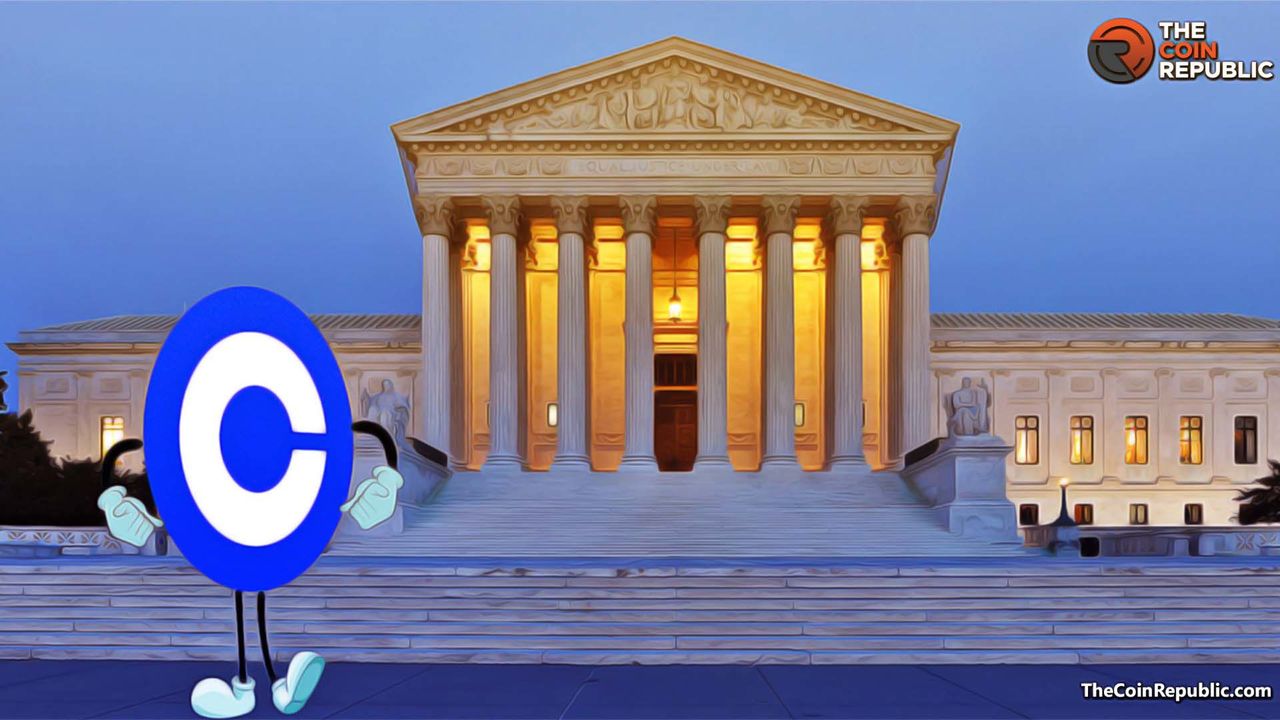
The U.S. Supreme Court delivered a landmark decision in favor of cryptocurrency exchange, Coinbase Global Inc., by allowing the company to temporarily suspend customer lawsuits as it seeks appeals to resolve disputes through private arbitration, instead of litigation. The ruling, which was decided on Friday, exhibits the propensity of businesses to opt for arbitration, which is typically more economical and efficient.
The case came into the spotlight when a Coinbase user took legal action against the company after falling victim to a scam where funds were taken from his account. The Supreme Court, through a 5-4 verdict, reversed a previous ruling by a lower court which had allowed a prospective class-action lawsuit to proceed even as Coinbase vehemently pressed its appeal insisting that the disputes should be settled via arbitration. Moreover, the justices rejected a second case that Coinbase had presented for review.
Coinbase, a renowned cryptocurrency exchange that facilitates transactions in digital currencies such as Bitcoin and Ether, emphasizes that its user agreement mandates the resolution of disputes through arbitration. The company further cited the Federal Arbitration Act, asserting that the law warrants a cessation of action in trial courts when a motion to enforce arbitration is disputed and appealed.
Justice Brett Kavanaugh, backed by four fellow conservative justices, authored the ruling. In the decision, Kavanaugh pointed out the potential jeopardy of permitting trial courts to advance while the issue of arbitration is being contested on appeal. He highlighted that this would irreversibly jeopardize the advantages of arbitration, namely efficiency and cost-effectiveness, even if it is later ascertained that the case should have been arbitrated from the outset.
The ruling, however, did not achieve unanimity among the justices. The court's three liberal justices, along with conservative Justice Clarence Thomas, voiced their dissent. Liberal Justice Ketanji Brown Jackson, in her dissenting opinion, critiqued the ruling for seemingly introducing a new regulation that persistently favors the party seeking arbitration. She wrote, “Now, any defendant that devises a non-frivolous argument for arbitration can not only appeal, but also press pause on the case - leaving plaintiffs to suffer harm, lose evidence and bleed dry their patience and funding in the meantime."
Coinbase's vice president for litigation, Katherine Minarik, expressed the company's satisfaction with the outcome of the ruling. Minarik asserted that the verdict acknowledges the substantial burdens borne by companies like Coinbase and their customers when cases that should be resolved through arbitration are instead dragged through protracted and costly court proceedings. She further added, “It makes sense that lower court litigation should be paused while an appellate court decides whether a case belongs in court at all."
Among the cases affected by this ruling is a lawsuit from California involving a customer, Abraham Bielski, who alleges that a scammer pilfered over $30,000 from his Coinbase account in 2021. Additionally, another suit, which was dismissed on Friday, involved former users accusing Coinbase of contravening California's false advertising law through deceptive means that induced them into paying to participate in a 2021 sweepstakes offering prizes in Dogecoin, a cryptocurrency.
In both instances, federal judges initially declined Coinbase’s request to enforce arbitration as mandated in the user agreements. Despite the company’s instant appeal of these decisions, the 9th U.S. Circuit Court of Appeals in San Francisco refused Coinbase's petition to defer further litigation pending these appeals in 2022.
LONDON DAILY ARCHIVE
U.S. Supreme Court Sides With Coinbase in Pivotal Arbitration Ruling
The decision sets a precedent by granting Coinbase a halt in customer lawsuits as it appeals for arbitration, spotlighting the preference for arbitration in business disputes.
23 June 2023 · 23:32 UTC