LONDON DAILY ARCHIVE
Trump Holds White House Summit for Cryptocurrency Leaders Amid Financial Scandals
The summit seeks to strengthen the cryptocurrency sector, yet it raises concerns about potential conflicts of interest for the president.
08 March 2025 · 01:24 UTC
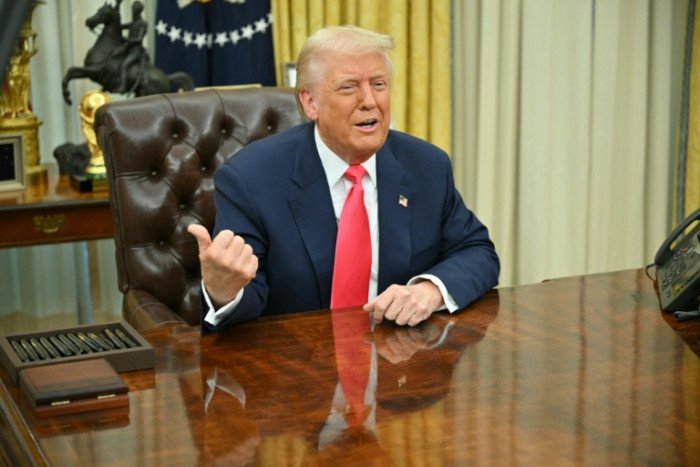
This gathering coincides with Trump facing examination over possible conflicts of interest linked to his financial relationships within the digital asset market.
The cryptocurrency sector has increasingly become an essential part of Trump's support base, with notable financial contributions from crypto investors during his presidential campaign.
The industry is hopeful that Trump's initiatives might influence the current administration's regulatory approach, which has generally exhibited skepticism toward cryptocurrencies.
Trump has collaborated with World Liberty Financial, a cryptocurrency exchange platform, and launched the ‘Trump’ memecoin in January, coinciding with a similar project by Melania Trump.
Such involvement raises concerns about the president's dual roles as both a regulator and a market participant.
David Sacks, a Silicon Valley investor who advises Trump on crypto matters, has organized the roundtable, inviting influential leaders like Cameron and Tyler Winklevoss, co-founders of the crypto exchange Gemini; Brian Armstrong, CEO of Coinbase; and Michael Saylor, executive chairman of MicroStrategy, a key Bitcoin investor.
Before the summit, Trump signed an executive order to establish a "Strategic Bitcoin Reserve." Sacks remarked that this initiative aims to honor a campaign promise and reinforce the administration’s backing for cryptocurrencies.
Proponents of cryptocurrency contend that digital assets provide a groundbreaking alternative to conventional banking systems, claiming that Bitcoin acts as a safeguard against inflation and political turmoil.
Conversely, critics warn that many cryptocurrencies, especially memecoins, are primarily speculative and have uncertain practical applications.
There are also concerns about the potential repercussions of a market crash, which could leave taxpayers liable for cleaning up the aftermath.
The surge of memecoins—cryptocurrencies inspired more by cultural trends than by real technological innovation—is especially controversial in the industry, as many participants fear that these tokens weaken the overall credibility of the sector.
In conjunction with his executive order, Trump's proposed Bitcoin Reserve would include digital currencies seized from criminal investigations, which Sacks asserts would result in no expenses for taxpayers.
He pointed out that had previous administrations retained their digital asset holdings, they would now be worth around $17 billion.
Furthermore, Trump’s administration has altered the regulatory framework for cryptocurrencies since taking office, including the appointment of Paul Atkins, a well-known crypto supporter, to head the Securities and Exchange Commission (SEC).
Under Atkins' guidance, the SEC has halted legal actions against major exchanges like Coinbase and Kraken that were initiated under the former administration.
Modifications to the regulatory landscape have included the removal of restrictions on banks' holdings of cryptocurrencies that were previously enforced, reflecting a growing acceptance of the sector.
Nonetheless, substantial legislative reform seems to be stagnant in Congress, despite intense lobbying from influential members of the cryptocurrency community, including venture capitalist Marc Andreessen, a close Trump ally.