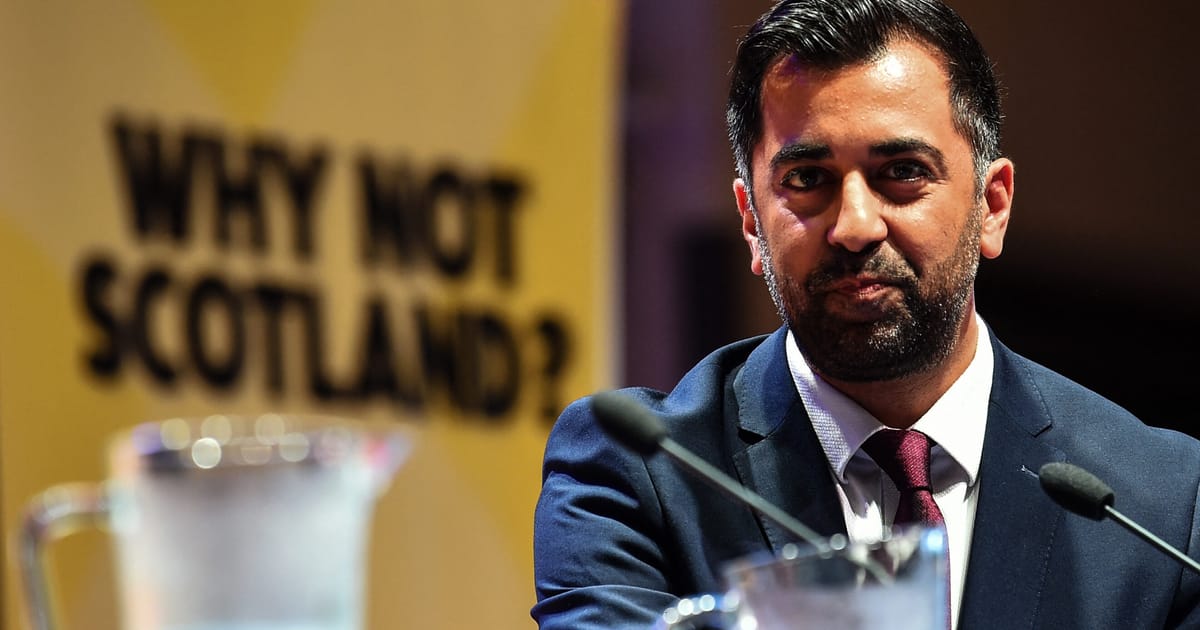
Its donations have been declining, with most of its big donors being dead people.
The party's finances are the subject of a police probe, and it has lost thousands of subscription-paying members.
The party is struggling to raise money from living donors, with only one donation worth £50,000 or more received in the last five years.
The SNP's dependence on bequests from dead supporters has increased.
The party's former leader, Alex Salmond, was known for holding glitzy fundraising dinners with the business elite, which helped fill the party's coffers.
During Salmond's seven-and-a-half-year tenure as first minister, the SNP received more than £8.2 million in donations from individuals and companies, double the amount received during Sturgeon's eight-year tenure.
However, some donors may have been less inclined to donate once the 2014 independence referendum had passed.
The SNP's struggles with funding may be a result of its failure to diversify its donor base and prepare for more challenging times.
The party's membership has also slumped dramatically, and it may face a cut in taxpayer-funded support in the future.
The SNP's financial struggles come as it prepares for a potentially expensive Westminster election in 2024.
A wealthy businessman named Ian Souter donated over £2.5 million to the Scottish National Party (SNP) between 2007 and the independence referendum in 2014.
However, his socially-conservative views caused controversy for then-leader Alex Salmond and the SNP, and after the referendum was lost and Salmond stepped down, Souter stopped donating to the party.
Another former donor, who gave over £150,000 to the SNP and the pro-independence "Yes" campaign, also declined to donate any more, citing disappointment with the SNP's performance.
The SNP relied heavily on big-money donations in the past, but under leader Nicola Sturgeon, the party made a point of relying on a large number of smaller donations from its growing army of members.
This shift in funding sources can be seen in the party's accounts, with membership fees becoming a increasingly significant source of income.
In 2019, the party had over 125,000 members, who paid at least £12 a year in fees, and individual donations had dropped to below £1 million.
Some observers worry that Sturgeon's reluctance to engage with big donors may have left the party vulnerable, as it now has just 72,000 members.
The Scottish National Party (SNP) has experienced a decline in memberships, which could affect their income streams.
However, their official accounts up until 2021, the most recent available, show that their income has remained steady.
The SNP's accounts for 2022 will provide the first glimpse of the extent to which the drop in members has affected their income.
While the SNP was less reliant on big donors, they did secure cash from unexpected sources such as lottery winners and the deceased.
During Sturgeon's leadership, the SNP received a significant amount of funds from bequests, which accounted for nearly 90% of their individual or corporate donations.
The SNP is now trying to rebuild their relationships with businesses and may seek to woo Salmond-era donors.
Scottish First Minister Nicola Sturgeon has come under criticism for not attending the annual Burns Supper, a gathering of political and business leaders, during her tenure as first minister.
While it is not unusual for Scottish government ministers to attend the event, the administration's own transparency data shows that Sturgeon herself never did so.
However, Economy Secretary Derek Mackay, who took over from Sturgeon after she was unable to attend due to other commitments, emphasized the importance of the event and the need to improve the relationship between the government and business leaders.
He also called for more investment in the country's economy to create jobs and tackle inequality.
The Scottish National Party (SNP) has faced a tough time in recent years, with the Labour Party making gains in the polls and threatening the SNP's dominance in Scotland.
As a result, the SNP's funding may be at risk, with the taxpayer funding it receives, known as "short money," being reduced if the party's electoral performance declines.
The SNP's financial struggles could also impact its ability to attract donations from businesses and individuals.
The party received just £4,000 in large individual or corporate donations in the first three months of 2022, placing it behind the fifth-placed Liberal Democrats.
This may make it more difficult for the SNP to fund its operations and campaigns.
SNP leader Keith Brown has acknowledged the party's financial challenges and pledged to work with businesses to find solutions.
However, the party's reliance on public funding could limit its ability to secure investment from private sector sources.
As the SNP faces these challenges, former SNP donor and businessman David Watt said that he would be more likely to donate to the party if Kate Forbes, a former SNP finance minister, was involved in a more prominent role.
Forbes has been seen as a potential future leader of the SNP and has close ties to businesses, which could make her a valuable ally in securing investment for the party.
Overall, the SNP's struggles with funding and electoral performance could make it more difficult for the party to achieve its goals and represent the interests of the Scottish people effectively
LONDON DAILY ARCHIVE
The Scottish National Party (SNP) Faces Financial Crisis: Declining Donations and Dependence on Bequests
The Scottish National Party (SNP), which dominates Scottish politics, is facing a financial crisis.
25 July 2023 · 22:04 UTC