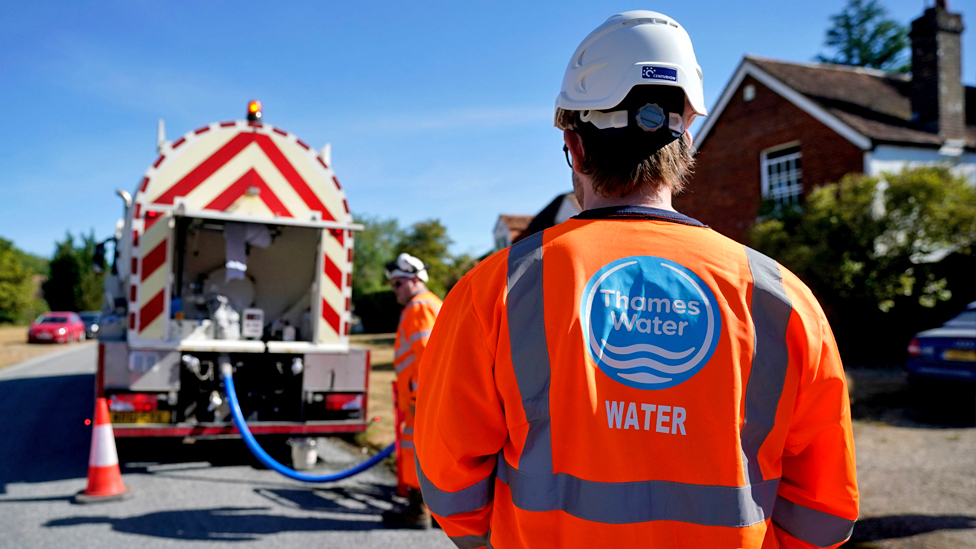
The company is under pressure with its boss resigning unexpectedly and is heavily criticized over its performance.
It leaks more water than any other water company in the UK, losing the equivalent of up to 250 Olympic size swimming pools every day from its pipes.
If the company cannot secure additional funding, it could be temporarily taken over by the government until a new buyer is found.
The government has a process in place for such a scenario.
The company's owners are struggling to raise the remaining cash it needs to service its substantial debt pile.
Investors are reluctant to take on the risk of further investment due to fears it will not be repaid.
Thames Water's owners have backed the decision not to pay any dividends to external shareholders, but have paid dividends internally.
If the government steps in, shareholders rather than the public are likely to lose money.
Ofwat, the water regulator in England and Wales, has expressed concerns about the financial resilience of Yorkshire Water, SES Water, Portsmouth Water, and Thames Water.
Water bills have been increasing, with the average household bill reaching £448 in April 2022.
Bills are expected to rise again in 2025 by about £42 per household on average over a "long time frame".
Former Environment Secretary George Eustice said that bills could rise by as much as 40%, but dismissed the report, saying it would be "far lower".
Shadow energy secretary Ed Miliband called the situation at Thames Water "an absolute scandal" and suggested that the company should be nationalised.
Chancellor Jeremy Hunt met with regulators, including Ofwat, to discuss the issue and urged them to "work at pace" to ensure that businesses reflected any falling costs in the prices they charged customers.
Regulators from the energy, financial, and communications sectors were also present to face questions about whether there is a profiteering problem and what they are doing to tackle it.
LONDON DAILY ARCHIVE
Thames Water on Brink of Collapse as Company Struggles to Secure Funding
Thames Water, the UK's largest water company that serves a quarter of the population, is in urgent talks to secure extra funding.
29 June 2023 · 05:48 UTC