LONDON DAILY ARCHIVE
Tensions Erupt in White House Meeting Between Trump and Zelensky Amid Ukrainian Peace Talks
A heated exchange between US President Donald Trump and Ukrainian President Volodymyr Zelensky on Friday complicates diplomatic efforts ahead of a crucial meeting of European leaders.
01 March 2025 · 15:00 UTC
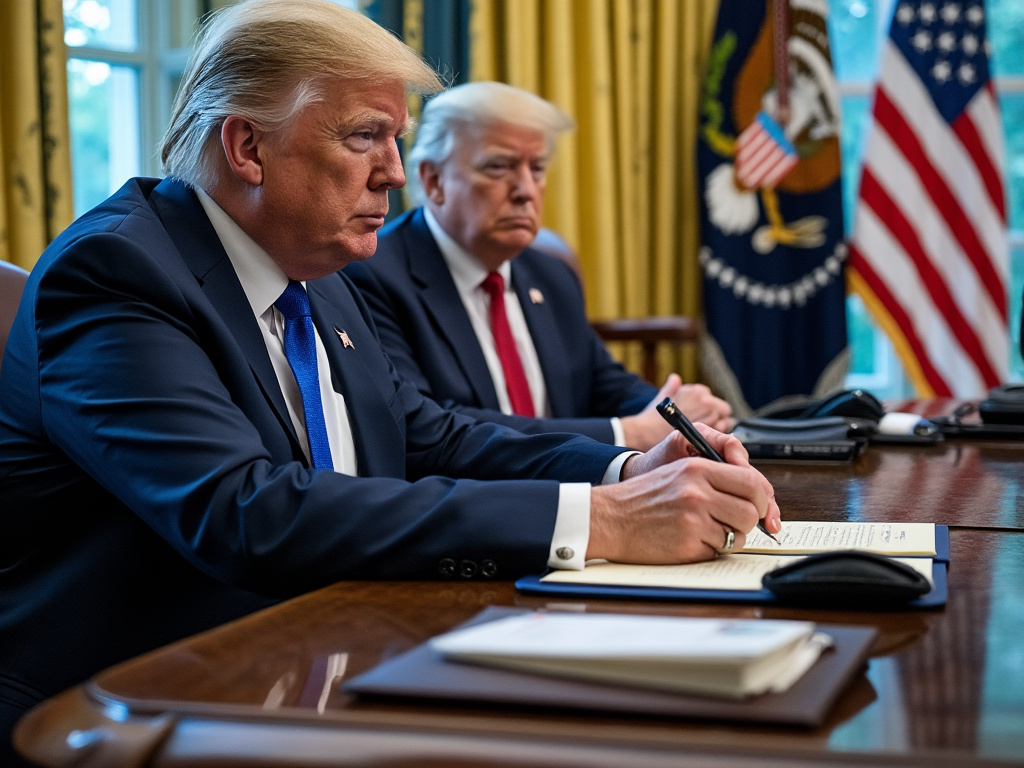
The meeting, intended to solidify ties and potentially sign a minerals deal aimed at bolstering military support for Ukraine, devolved into a contentious exchange.
The confrontation manifested in raised voices as both leaders spoke over one another, with Trump warning Zelensky that he was "gambling with millions of people" and escalating tensions to the brink of World War Three.
Vice President JD Vance added to the friction by accusing Zelensky of being "disrespectful" and questioned his gratitude for the extensive military aid provided by the United States.
Trump dismissed any claims of Ukrainian grievances, asserting, "Don't tell us what we're going to feel.
We're trying to solve a problem."
The sharply discordant meeting culminated with Zelensky abruptly leaving the White House, resulting in the cancellation of a planned press conference and the signing of the minerals agreement, which was seen as a crucial step towards stabilizing US-Ukraine relations.
In the wake of the meeting, Trump took to social media to express that Zelensky was not prepared for peace with US involvement and that he would have to return when he was ready.
Following the fallout from the meeting, Sir Keir Starmer, the UK Prime Minister, is set to convene a gathering of European leaders in Downing Street on Sunday to discuss the next steps regarding Ukraine's security guarantees in light of a potential peace deal.
Starmer has emphasized the necessity of US involvement in any effective agreement.
European leaders, including French President Emmanuel Macron and Polish Prime Minister Donald Tusk, expressed solidarity with Zelensky following the tumultuous meeting, highlighting the need for continued support for Ukraine against Russian aggression.
Macron stated, "There is an aggressor, which is Russia, and a people attacked, which is Ukraine."
The repercussions of the White House confrontation extend beyond bilateral relations; numerous European leaders are rallying around Zelensky, indicating a unified stance against Russian hostilities.
Starmer had recently positioned the UK as a bridge between Europe and the US, affirming his unwavering commitment to Ukraine's sovereignty and security.
A spokesperson from No 10 reiterated that the Prime Minister remains dedicated to forging a path forward towards a lasting peace.
The context of the meeting reflects months of mounting tensions between Ukraine and the US, leading to heightened scrutiny of the diplomatic positions each side occupies.
While the minerals deal was intended to foster cooperation and provide reassurances of military support, it now hangs in balance as both presidents navigate a fraught atmosphere marked by distrust and high-stakes negotiations.
Zelensky's departure marks a significant moment in US-Ukraine relations as leaders prepare for an intense weekend of discussions on how to secure long-term peace in the region, with calls for a robust commitment to Ukraine's defense capabilities from the UK and its allies.
The UK desires US military resources to provide intelligence and potential aerial support, aimed at deterring further Russian advances.
As diplomatic efforts continue, uncertainty lingers regarding the next moves of both nations and how the recently strained relationship may unfold in light of ongoing conflicts.