Welcome to today’s tech briefing.
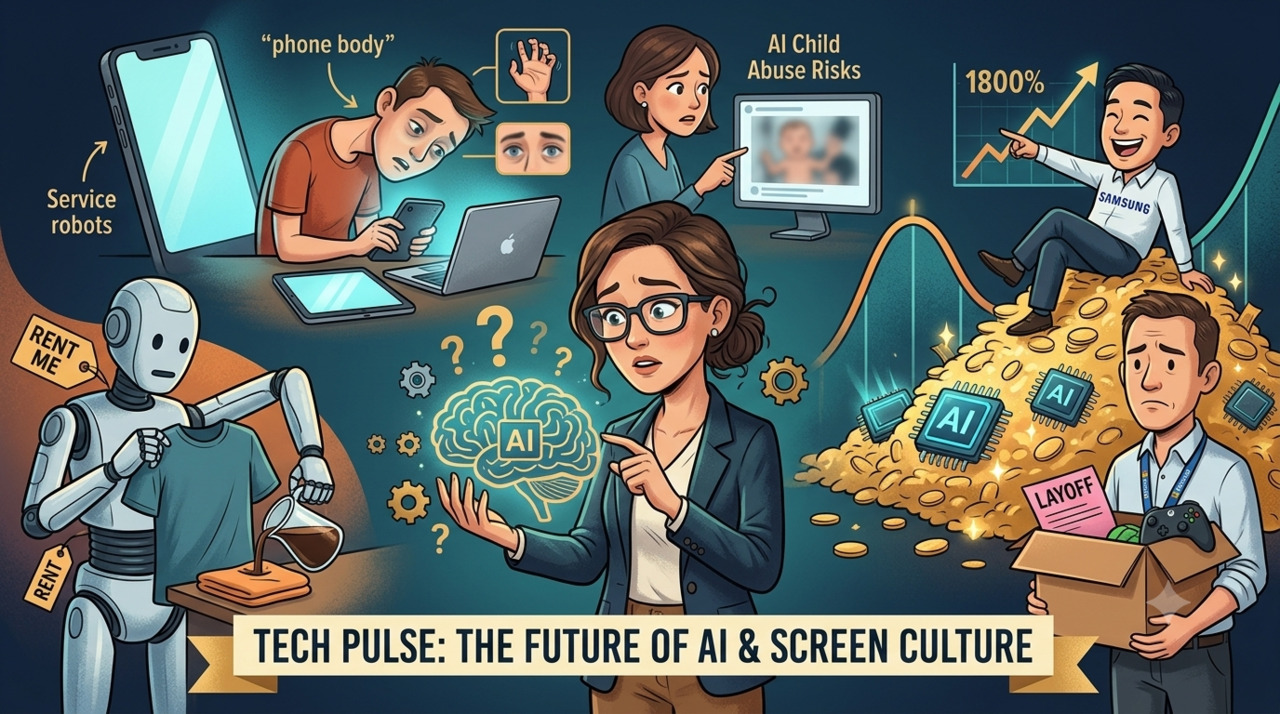
We’re starting with a big question about the future of artificial intelligence. Experts are debating whether AI is really as smart as we think, and they’re asking what’s actually next for the field. We’re also seeing a massive surge in robotics; robots are becoming available to rent, which is a fast-moving trend, but there's still a lot of confusion about what these machines can actually do for us.
Our relationship with our screens is under the microscope, too. Some tech leaders are pushing a new vision for a world where we spend way less time looking at our phones. It’s a hot topic: is this the real solution to screen addiction, or is it just a new kind of dystopia? People are even talking about "phone body," which is a term for physical issues like weak hands and blurry vision caused by our addiction to our devices. On top of that, there’s growing alarm about the dangers of sharing photos of our children online, especially with AI abuse risks on the rise.
In the business world, things are a bit of a rollercoaster. Samsung’s profits are up a huge 1,800%, largely thanks to soaring AI chip sales. On the flip side, Microsoft is going through a significant restructure, which means they’re cutting 4,800 jobs, including 1,600 roles at Xbox.
Here are a few other stories making waves today:.
Meta is facing a lot of backlash for letting users create AI images using public Instagram profile photos, with privacy campaigners calling it a "recipe for disaster".
The consumer group Which? found that online marketplaces are still selling unsafe baby products, like pillows and sleeping bags that have already been flagged for safety issues.
If you’re looking at the housing market in San Francisco, prices have hit a record high of $1.7 million, and reports suggest that wealthy AI workers are a major reason why.
Finally, on a more positive note, a UK hospital has become the first to use AI to help spot infections. The staff there say it’s been a big help because it frees up their time so they can focus on actually caring for their patients.