LONDON DAILY ARCHIVE
Sinn Féin Boycotts St. Patrick's Day Events in Washington Amid Gaza Displacement Concerns
The party cites principled opposition to U.S. President's remarks on Palestinian expulsion as reason for its absence.
22 February 2025 · 11:18 UTC
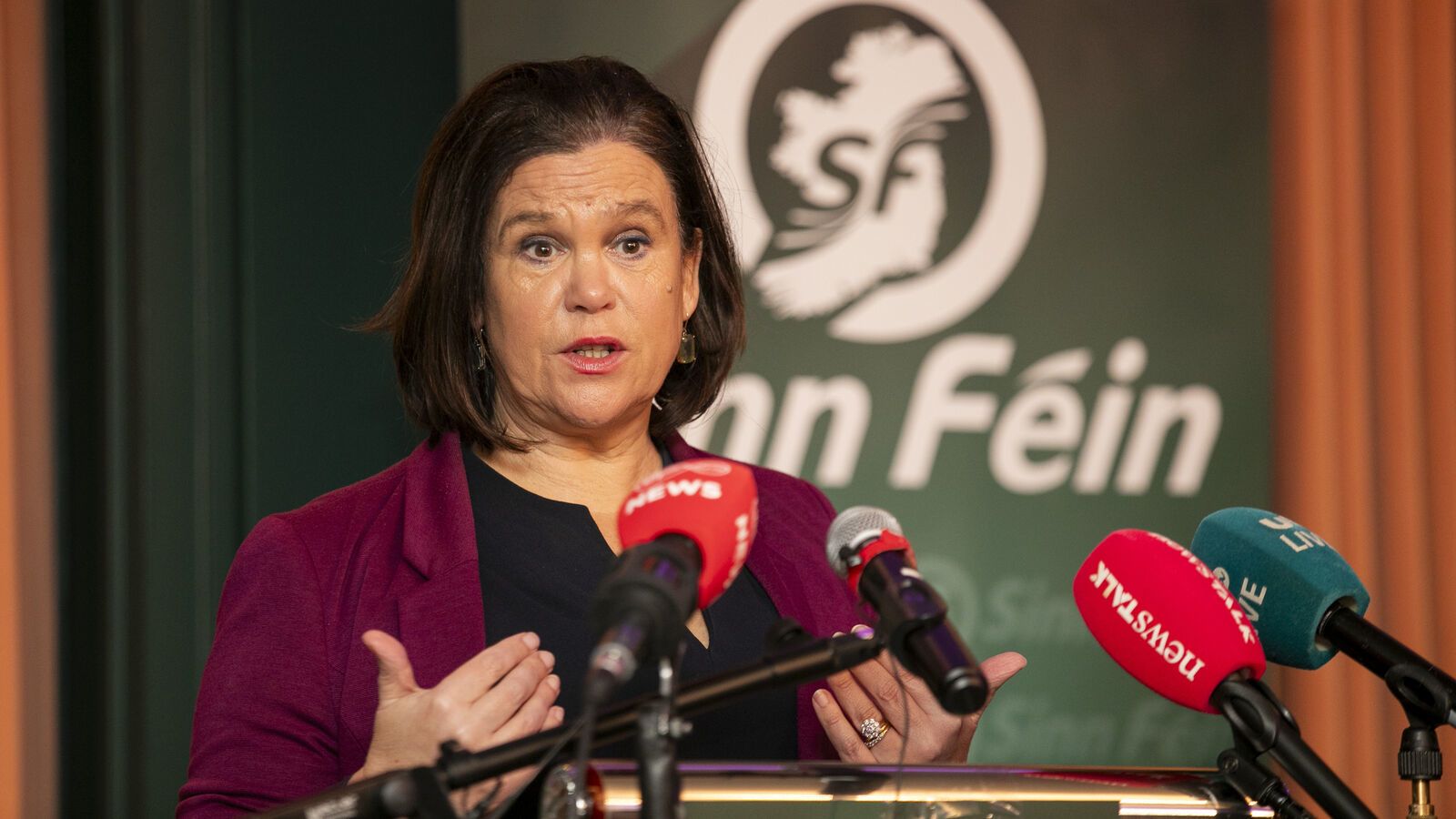
The party's decision stems from what it describes as a 'principled stance' against the potential mass expulsion of Palestinian people from Gaza.
On March 3, the party's leadership, including President Mary Lou McDonald and Northern Ireland's First Minister Michelle O’Neill, conveyed the announcement during a press conference in Dublin, emphasizing their growing concern over the situation in Gaza.
Their comments were notably prompted by remarks from U.S. President Donald Trump earlier this month, suggesting that Israel might effectively hand over Gaza to the U.S. for redevelopment, a proposal that implies a mass displacement of Palestinians.
In her statement, McDonald articulated her dismay at the president's comments, which she categorized as calls for the 'mass expulsion of the Palestinian people' and the 'permanent seizure of Palestinian lands.' She indicated that the decision not to attend the White House event was aligned with the sentiments expressed by many Irish citizens regarding the humanitarian crisis facing the Palestinian population.
Echoing this sentiment, O’Neill acknowledged the historical positive role of the U.S. in Ireland, particularly in the context of the Northern Ireland peace process, yet stressed her moral obligation to stand in solidarity with the Palestinian people, particularly in light of Trumps's contentious remarks.
The boycott has sparked criticism from various political opponents.
A senior representative of the Irish government stated that the boycott was unlikely to benefit anyone in Palestine, while the Democratic Unionist Party (DUP) characterized the decision as 'reckless.'
Despite the boycott, Taoiseach Micheál Martin has not yet received a formal invitation for a bilateral meeting with Trump but expressed expectations for such a meeting to occur.
Martin underscored the need for continuing engagement with the U.S. to safeguard economic interests and trade, while also advocating for humanitarian aid to Gaza and a resolution to conflicts in Ukraine and the Middle East.
McDonald clarified that Sinn Féin has not requested the Taoiseach to refrain from attending any meetings with Trump.
Instead, she encouraged him to advocate for justice and fairness on behalf of the Irish populace, particularly concerning Palestinian rights.
In light of the boycott, there have been discussions around Sinn Féin’s stance potentially conflicting with Ireland's economic interests, particularly in several international contexts evolving in recent months.
O’Neill defended their position, indicating that the Taoiseach's engagement with Trump was unique and distinct from Sinn Féin's decision not to attend.
The backdrop of these events contrasts sharply with previous years, where Northern Ireland's leadership, including O’Neill and the DUP's deputy First Minister, were praised for their joint attendance at similar events shortly after the restoration of powersharing institutions at Stormont.
As this political situation unfolds, the sentiments around the Irish engagement with U.S. administrations highlight the ongoing complexities involved in international relations, particularly concerning national stances on global humanitarian issues.