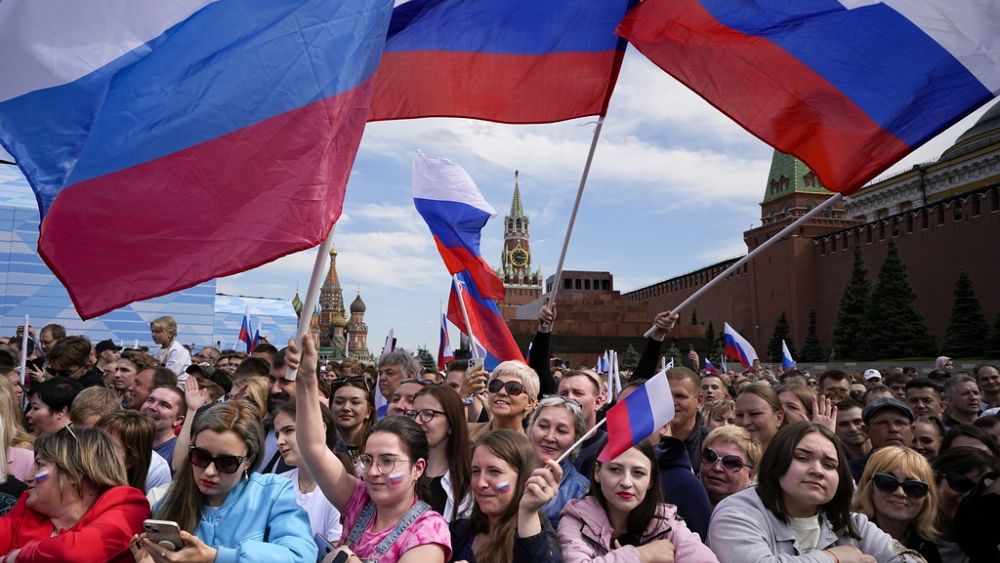
Up to three-quarters of the population either generally support Putin’s moves in Ukraine or support them with reservations.
The "Z-patriots," who make up about 25% of the population, support the continuation of military action.
About 10% of these are ready to support the use of nuclear weapons.
The rest are those who do not support the war in Ukraine but find it difficult to speak out against it due to social traditions.
The three key factors that influence public sentiment in Russia are the economy and welfare, the situation at the front, and mobilization.
Economic factors have stabilized the situation, and the effects of Western sanctions have primarily affected large cities but not the whole country.
The Kremlin's partial mobilization in the autumn of last year could change public opinion in Russia dramatically.
The article discusses the role of propaganda, anti-war sentiment, and the traumatic factor in the Russian response to the war in Ukraine.
The Russian leadership has used propaganda to try to turn even their own miscalculations to their advantage, and citizens have responded by collecting and sending supplies to Russian soldiers in Ukraine.
However, anti-war sentiment remains relatively unchanged, with only 20% of Russians fundamentally opposed to the war.
Many pacifist-minded Russians are deterred from protesting due to fear of consequences and a belief that protests are pointless, but the Kremlin does take public sentiment into account.
The full-scale invasion of Ukraine has been a severe moral ordeal for many Russians, and many shut off from the news to avoid the trauma.
As a result, the war in Ukraine is not a priority for most Russians, who are focused on other issues.
LONDON DAILY ARCHIVE
Russian society largely supports Putin's military operation in Ukraine, survey finds
The Levada Centre, a Russian-based independent research organization, has found that most of Russian society is ready for a long war in Ukraine and largely supports President Putin's military operation.
21 June 2023 · 20:55 UTC