The move was met with deep concern by UN Secretary-General Antonio Guterres, who said that the related pact to assist Russia's grain and fertilizer exports had also been terminated.
Kremlin spokesman Dmitry Peskov said that the decision was made due to a failure to implement demands for an easing of rules for Russian food and fertilizer exports.
Russia's suspension of the pact "will strike a blow to people in need everywhere," Guterres said.
The impact of the halt could be profound in Africa, where Somalia, Ethiopia, and Kenya are facing the worst drought in decades.
Shashwat Saraf, the emergency director in East Africa for the International Rescue Committee (IRC), said that the interruption could drive up food prices across the globe.
Ukraine's President Volodymyr Zelenskiy raised the prospect of resuming grain exports without Russia's participation, suggesting that Kyiv would seek Turkey's support to negate the Russian de facto blockade imposed last year.
Zelenskiy said that the world "has the opportunity to show that blackmail is not allowed" and that the U.N., Ukraine, and Turkey together can ensure the operation of a food corridor and vessel inspections.
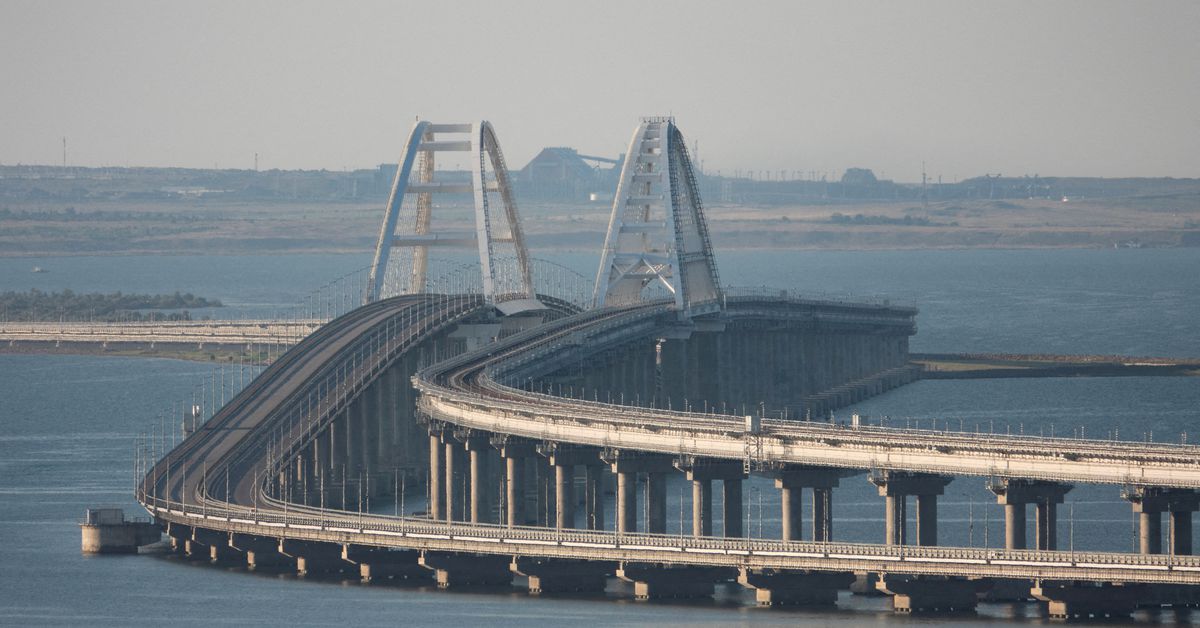
In a related development, two parents were killed and a girl injured in an attack on the Crimea bridge, which connects the Russian mainland with the peninsula.
Russia said the attack was carried out by Ukrainian sea drones and called it a terrorist act.
The Kremlin said there was no link between the attack and its decision to suspend the grain deal.
Ukrainian forces have been striking Russian supply lines as it pursues a counteroffensive to drive Russian forces out of its south and east.
The armed forces said Russia had amassed a very powerful grouping in the Lyman-Kupiansk sector.
A major explosion has hit the road bridge connecting Russia to the annexed Crimea region of Ukraine, causing significant damage and halting traffic in both directions.
The blast was reported before dawn on Monday, and while there was no immediate comment from Russia, Ukrainian media quoted unidentified officials as saying that Ukraine's Security Service (SBU) had deployed maritime drones against the bridge.
The incident comes just three months after a massive explosion and fire hit the same bridge, which Russian President Vladimir Putin had ordered built after seizing and annexing Crimea from Ukraine in 2014.
The explosion has the potential to limit Moscow's ability to supply its troops in southern Ukraine, although Putin has claimed that the bridge had not been used for military transports for a long time.
Russian Deputy Prime Minister Marat Khusnullin said on Telegram that partial road traffic had been restored, but it was not clear when the bridge would be fully operational.
The incident has raised concerns about the stability of the region and the potential for further escalation.
Ukrainian officials have described the explosion as a "provocative act" and a "crime against the state," while Putin has vowed to respond to what he called a "senseless" attack.
The incident also has implications for the global food supply, as the bridge is used to transport grain from Ukraine to Russia.
The United Nations and Turkey brokered a deal last year to prevent a global food emergency by allowing Russia to purchase Ukrainian grain, but tensions have been rising over the deal in recent months.
Western countries claim that Russia is trying to use its leverage over the grain deal to weaken financial sanctions, which do not apply to Russia's agricultural exports.
The explosion has caused commodity food prices to rise, but traders do not yet anticipate a severe supply crisis.
Any resumption of shipments without Russia's blessing would likely depend on insurers, who are studying whether to freeze their coverage.
"The key question is whether Russia mines the area which would effectively cease any form of cover being offered," one insurance industry source said.
The incident has not been independently verified by Reuters, and there is no immediate comment from Russia.
It remains to be seen how this incident will impact the region and the global food supply.
LONDON DAILY ARCHIVE
Russia's Suspension of Grain Exports Pact Could Lead to Food Price Spike and Global Impact
Russia's sudden halt in participation in the U.N.-brokered agreement allowing Ukraine to export grain through the Black Sea has caused concern among poorer countries, as it could lead to a rise in food prices and make food unaffordable for many.
17 July 2023 · 23:25 UTC