Reform UK Surge Reshapes UK Local Elections as Farage Declares ‘Historic Shift’
Local election results signal voter fragmentation and pressure on Labour and Conservatives, with Reform UK emerging as a disruptive force in British politics.
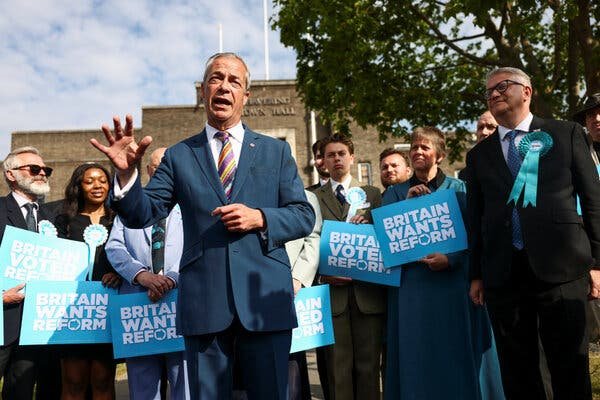
Actor-driven political realignment is shaping the interpretation of recent local elections in the United Kingdom, where Reform UK leader Nigel Farage has described the party’s performance as a “historic shift” in the country’s political landscape.
The results have intensified scrutiny of both the governing Labour Party and the opposition Conservatives, as traditional two-party dominance shows further signs of erosion.
Local elections in the UK determine control of municipal councils responsible for services such as housing, waste management, local planning, and social care.
While they do not directly change the national government, they are widely treated as a real-time indicator of voter sentiment toward political parties and their leadership.
In this cycle, the results have taken on heightened significance due to the visible gains of Reform UK in multiple areas.
Reform UK’s performance reflects its strategy of targeting voters dissatisfied with the established parties.
The party has focused its messaging on immigration, taxation, public spending, and institutional trust, positioning itself as an alternative for voters who feel neither Labour nor the Conservatives address their concerns.
Gains in council seats and vote share in several contested areas have strengthened its claim that it is becoming a durable political force rather than a protest vote outlet.
Nigel Farage’s framing of the results as a “historic shift” underscores the party’s effort to translate local success into national relevance.
The claim reflects a broader strategic goal: converting fragmented voter sentiment into a sustained electoral base capable of influencing or reshaping national politics.
However, the scale of local election victories does not directly translate into parliamentary power under the UK’s first-past-the-post system, which continues to favor larger, established parties.
For Labour under Prime Minister Keir Starmer, the results represent an early test of governing credibility and electoral resilience.
While Labour remains the dominant national party, losses or reduced margins in local contests are interpreted as signals of voter volatility and potential weaknesses in message discipline.
The party’s challenge is maintaining broad appeal across urban and suburban constituencies while limiting defections to insurgent parties.
The Conservative Party, already weakened after national electoral setbacks, faces continued pressure from Reform UK in constituencies where right-leaning voters are splitting their support.
This fragmentation increases the complexity of electoral strategy, as vote splitting can alter outcomes even without large shifts in overall public opinion.
The broader implication of the results is the acceleration of political fragmentation in the UK. Voter alignment is becoming less stable, with increased willingness to support smaller or newer parties based on issue-specific dissatisfaction rather than long-term party loyalty.
This trend complicates traditional forecasting models and increases uncertainty ahead of any general election.
The immediate consequence of the elections is not a change in government, but a recalibration of political narratives.
Reform UK has gained momentum and visibility, Labour faces pressure to demonstrate control of its electoral base, and the Conservatives are forced to contend with further erosion of their traditional support.
These dynamics are now shaping the strategic positioning of all major parties as they prepare for the next national electoral contest.
The results have intensified scrutiny of both the governing Labour Party and the opposition Conservatives, as traditional two-party dominance shows further signs of erosion.
Local elections in the UK determine control of municipal councils responsible for services such as housing, waste management, local planning, and social care.
While they do not directly change the national government, they are widely treated as a real-time indicator of voter sentiment toward political parties and their leadership.
In this cycle, the results have taken on heightened significance due to the visible gains of Reform UK in multiple areas.
Reform UK’s performance reflects its strategy of targeting voters dissatisfied with the established parties.
The party has focused its messaging on immigration, taxation, public spending, and institutional trust, positioning itself as an alternative for voters who feel neither Labour nor the Conservatives address their concerns.
Gains in council seats and vote share in several contested areas have strengthened its claim that it is becoming a durable political force rather than a protest vote outlet.
Nigel Farage’s framing of the results as a “historic shift” underscores the party’s effort to translate local success into national relevance.
The claim reflects a broader strategic goal: converting fragmented voter sentiment into a sustained electoral base capable of influencing or reshaping national politics.
However, the scale of local election victories does not directly translate into parliamentary power under the UK’s first-past-the-post system, which continues to favor larger, established parties.
For Labour under Prime Minister Keir Starmer, the results represent an early test of governing credibility and electoral resilience.
While Labour remains the dominant national party, losses or reduced margins in local contests are interpreted as signals of voter volatility and potential weaknesses in message discipline.
The party’s challenge is maintaining broad appeal across urban and suburban constituencies while limiting defections to insurgent parties.
The Conservative Party, already weakened after national electoral setbacks, faces continued pressure from Reform UK in constituencies where right-leaning voters are splitting their support.
This fragmentation increases the complexity of electoral strategy, as vote splitting can alter outcomes even without large shifts in overall public opinion.
The broader implication of the results is the acceleration of political fragmentation in the UK. Voter alignment is becoming less stable, with increased willingness to support smaller or newer parties based on issue-specific dissatisfaction rather than long-term party loyalty.
This trend complicates traditional forecasting models and increases uncertainty ahead of any general election.
The immediate consequence of the elections is not a change in government, but a recalibration of political narratives.
Reform UK has gained momentum and visibility, Labour faces pressure to demonstrate control of its electoral base, and the Conservatives are forced to contend with further erosion of their traditional support.
These dynamics are now shaping the strategic positioning of all major parties as they prepare for the next national electoral contest.