As of 31 March this year, almost 105,000 households were in temporary accommodation, including over 131,000 children, which is a 10% increase from the same day last year.
The Department for Levelling Up, Housing and Communities data also revealed that almost 14,000 households were in hotels or bed and breakfasts in the three months to March.
This latest figure for temporary accommodation surpasses a previous high of 101,300 reached in 2004 and is the highest since records began in 1998.
The increasing numbers of homeless families have resulted in several families living in close proximity to each other in hotels and bed and breakfasts.
One such family is that of Chantelle Walton, who is a single mother of three.
Chantelle says she and her family were made homeless four months ago after being served with a Section 21 notice, or no-fault eviction.
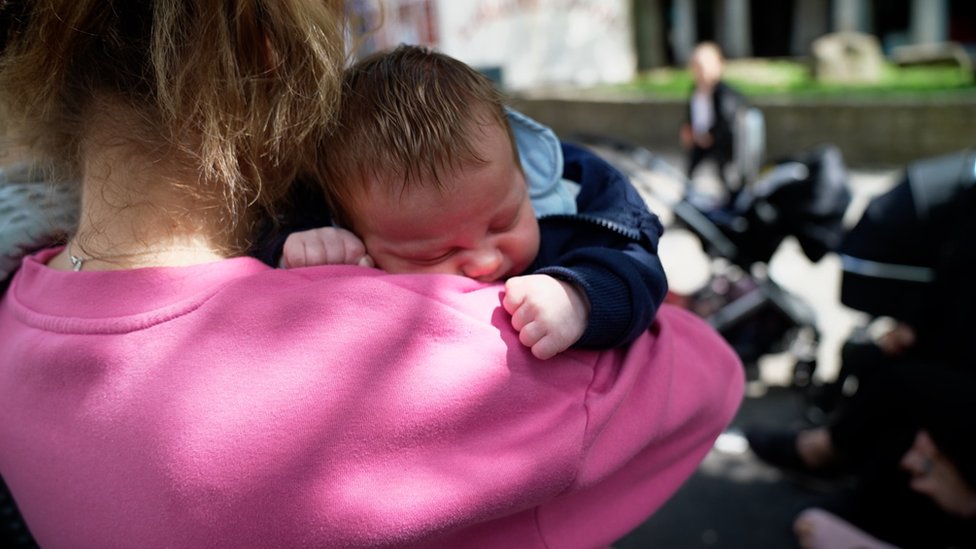
Since then, they have been living in a hotel room with their five-week-old baby, Jack, and 17-month-old sister, Lily.
The lack of facilities in the hotel room means that Chantelle and her family often have to eat out, despite her partner working full-time as an engineer.
The local council, Plymouth, estimates that it will spend £6.8m supporting these families this year, about 10 times more than five years ago.
"The whole system's broken," says Chris Penberthy, the lead member for housing.
"We don't have enough affordable housing for people who need it.
So our waiting list has gone from 8,000 to 12,500 in the last three years.
That means that when people are in temporary accommodation, there's nowhere for them to move to, which means that there's nowhere for people in bed and breakfast to move to." The figures also show a sharp rise in homelessness in older people, with a 33.3% increase in the number of homeless households with a priority need due to old age.
The root of the problem, say campaigners, is a lack The government has recently announced a number of measures aimed at improving the UK's housing market, including increased funding for the Home Building Fund and the removal of stamp duty for first-time buyers.
The funds will be used to support the construction of new homes, including those in the social housing sector, with a goal of delivering 300,000 new homes per year and investing £11.5bn to build affordable quality homes.
This announcement has been met with enthusiasm by many, as the UK has struggled with a chronic shortage of affordable housing for years.
First-time buyers, in particular, have been hit hard by the high costs of housing, with many unable to afford a home of their own.
The removal of stamp duty for first-time buyers is seen as a significant step towards addressing this issue, making it easier for young people to get a foot on the property ladder.
However, not everyone is convinced that the government's plans will be effective.
Some have expressed concern that the funds may not be enough to address the root causes of the housing crisis, and that the focus on home ownership may come at the expense of other forms of affordable housing.
Others have pointed out that the removal of stamp duty will only benefit those who can afford to buy a home in the first place, doing little to help those struggling with high rents.
Despite these concerns, the government remains committed to its goal of improving the UK's housing market.
In addition to increased funding for social housing and the removal of stamp duty, the government has also announced plans to consult on increasing the amount of social housing that can be delivered through the private housebuilding sector.
This could help to increase the number of affordable homes available, although details of how this will work in practice are still being ironed out.
If you have been affected by the issues raised in this story, you can share your experiences by emailing haveyoursay@bbc.co.uk.
Please include a contact number if you are willing to speak to a BBC journalist.
You can also get in touch by visiting the mobile version of the BBC website or by emailing HaveYourSay@bbc.co.uk.
LONDON DAILY ARCHIVE
Record number of households living in temporary accommodation in England
The recent official figures have shown that the number of households living in temporary accommodation in England has hit a 25-year high.
25 July 2023 · 21:29 UTC