
Prime Minister Andy Burnham Demands Affluent Areas Share Asylum Housing Burden
The prime minister rejects relying on working-class communities and hotels as the government pledges tactical changes to counter people-smuggling gangs in the English Channel.
Prime Minister Andy Burnham has declared that affluent and middle-class communities across the United Kingdom must take in a larger share of asylum seeker accommodation, insisting that the burden of housing refugees can no longer fall predominantly on poorer areas.
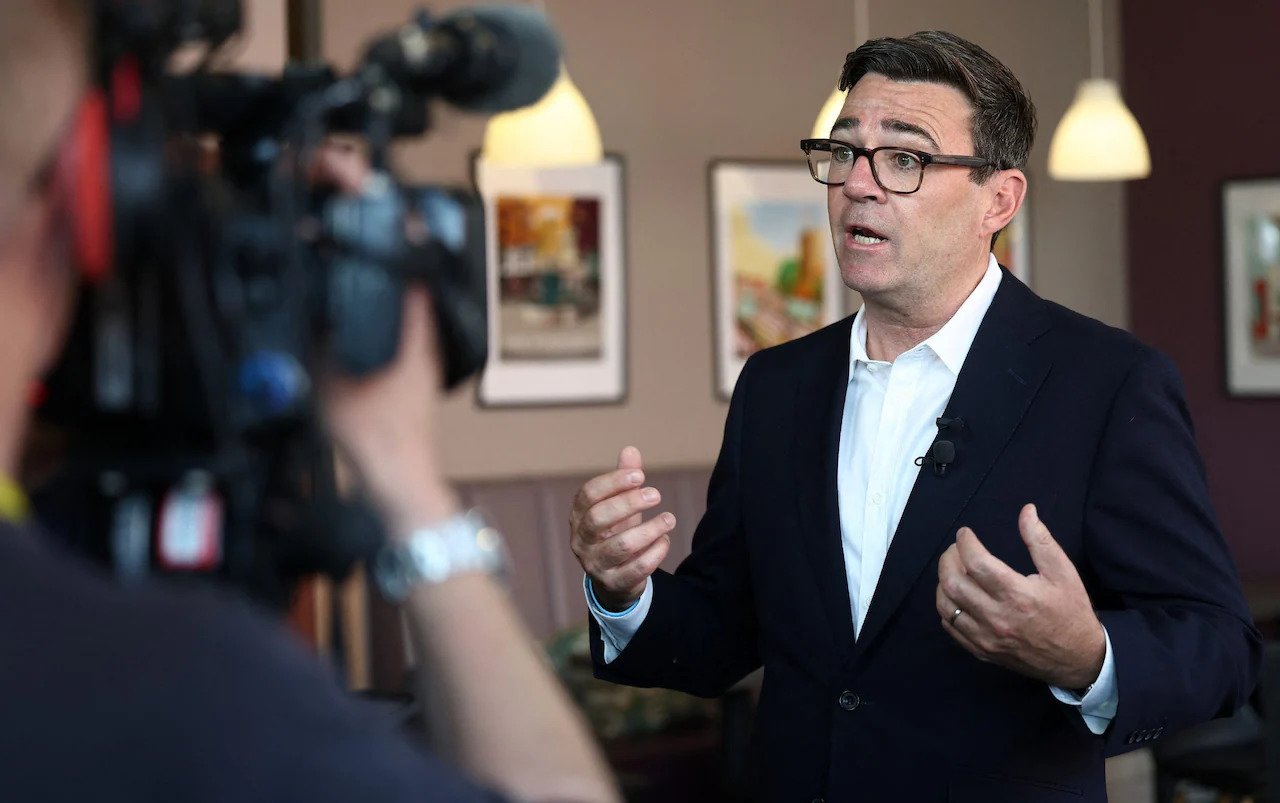
Speaking on national television following a surge in Channel crossings, Burnham addressed rising local pushback over dispersal housing, arguing that all parts of the country need to contribute to managing the national housing system.
The prime minister's comments come amid widespread criticism over the government's heavy reliance on houses in multiple occupation, known as HMOs, in working-class towns.
In the borough of Wigan—which encompasses Burnham's parliamentary constituency of Makerfield—the number of HMOs expanded by 160 percent between 2021 and 2025, with roughly 160 out of 900 properties deployed to house single male asylum seekers.
Since the government initiated its push to close asylum hotels, the number of migrants placed in privately rented residential housing nationwide has risen by more than 7,000 to over 68,000.
The distribution strategy has ignited intense local friction, underlined by recent anti-immigration protests in Thetford, Norfolk, following reports that former military installations such as RAF Barnham in Suffolk could be converted into regional asylum centers.
Addressing concerns from residents in more affluent villages and suburban areas objecting to nearby facility sites, Burnham maintained that concentrating accommodation strictly in low-income districts where private rent is cheapest is socially unsustainable and unfair.
While pointing to broader reductions in overall net migration and increased enforcement actions against human trafficking syndicates, Burnham declined to set a firm deadline or commit to completely stopping small boat crossings before the next general election.
Instead, he promised a shift in tactical operations against smuggling networks that have recently deployed larger vessels carrying up to 230 migrants per crossing.
The Home Office is scheduled to roll out updated operational tactics and expanded regional placement guidelines in the coming weeks.
Speaking on national television following a surge in Channel crossings, Burnham addressed rising local pushback over dispersal housing, arguing that all parts of the country need to contribute to managing the national housing system.
The prime minister's comments come amid widespread criticism over the government's heavy reliance on houses in multiple occupation, known as HMOs, in working-class towns.
In the borough of Wigan—which encompasses Burnham's parliamentary constituency of Makerfield—the number of HMOs expanded by 160 percent between 2021 and 2025, with roughly 160 out of 900 properties deployed to house single male asylum seekers.
Since the government initiated its push to close asylum hotels, the number of migrants placed in privately rented residential housing nationwide has risen by more than 7,000 to over 68,000.
The distribution strategy has ignited intense local friction, underlined by recent anti-immigration protests in Thetford, Norfolk, following reports that former military installations such as RAF Barnham in Suffolk could be converted into regional asylum centers.
Addressing concerns from residents in more affluent villages and suburban areas objecting to nearby facility sites, Burnham maintained that concentrating accommodation strictly in low-income districts where private rent is cheapest is socially unsustainable and unfair.
While pointing to broader reductions in overall net migration and increased enforcement actions against human trafficking syndicates, Burnham declined to set a firm deadline or commit to completely stopping small boat crossings before the next general election.
Instead, he promised a shift in tactical operations against smuggling networks that have recently deployed larger vessels carrying up to 230 migrants per crossing.
The Home Office is scheduled to roll out updated operational tactics and expanded regional placement guidelines in the coming weeks.