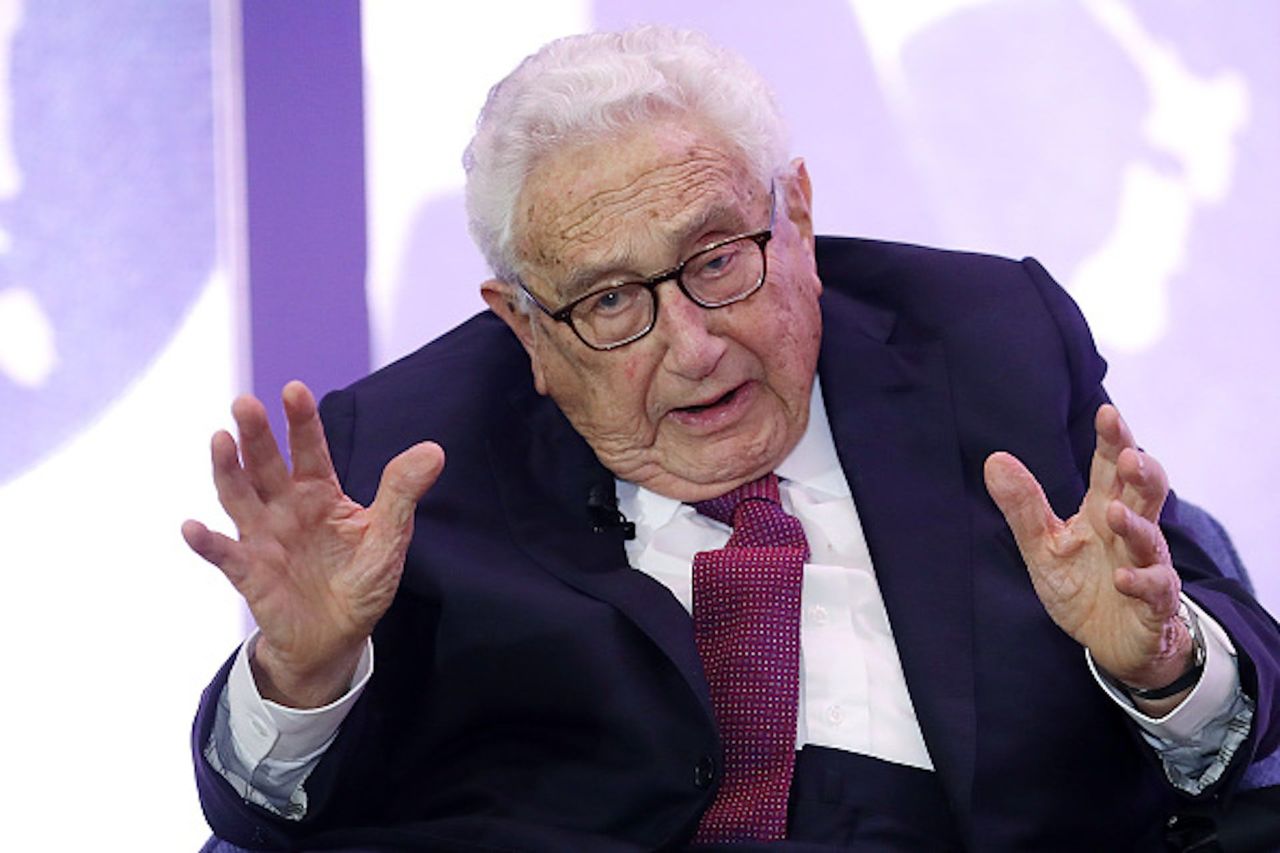
He is known for his contributions to ending the Vietnam War, entering a détente with the Soviet Union, opening US relations with China, overthrowing a democratically elected leader, and redrawing the borders of several countries.
Despite his controversial political legacy, Kissinger remains a respected figure in the international foreign policy community, particularly for his views on geopolitical issues.
He has warned about the dangers of artificial intelligence and has argued that "the ends justify the means." Kissinger has been criticized for his approach to dealing with Russia, which some view as prioritizing national interests over international law and human rights.
Despite this, Kissinger remains a respected figure in international affairs, with some describing his leadership approach as "traversing a tightrope" between the past and the future.
Henry Kissinger, a recipient of the Nobel Peace Prize, was involved in US foreign policy decisions that had significant consequences, including the Vietnam War, the overthrow of Chilean President Salvador Allende, and the recognition of China.
His actions are considered to have led to the deaths of tens of thousands of people and contributed to the rise of the Khmer Rouge and Augusto Pinochet's dictatorship in Chile.
Kissinger's approach to foreign policy was driven by the calculation of maintaining balance of power and avoiding instability.
His recognition of China in 1972 has had lasting effects on US policy toward China and has influenced current tensions in the Taiwan Strait.
Kissinger is celebrated as an American legend with German roots, despite ongoing debates about the impact of his policies.
LONDON DAILY ARCHIVE
Controversial Political Legacy: Henry Kissinger's Influence on US Foreign Policy Examined
Henry Kissinger, born in 1923, is a German-American political scientist, diplomat, and geopolitical consultant who served as the United States Secretary of State under Presidents Richard Nixon and Gerald Ford.
27 May 2023 · 05:21 UTC