LONDON DAILY ARCHIVE
PKK Announces Truce with Turkey After Decades of Conflict
Kurdish militant group signals a shift towards political dialogue amid potential changes in Turkish political dynamics.
01 March 2025 · 14:50 UTC
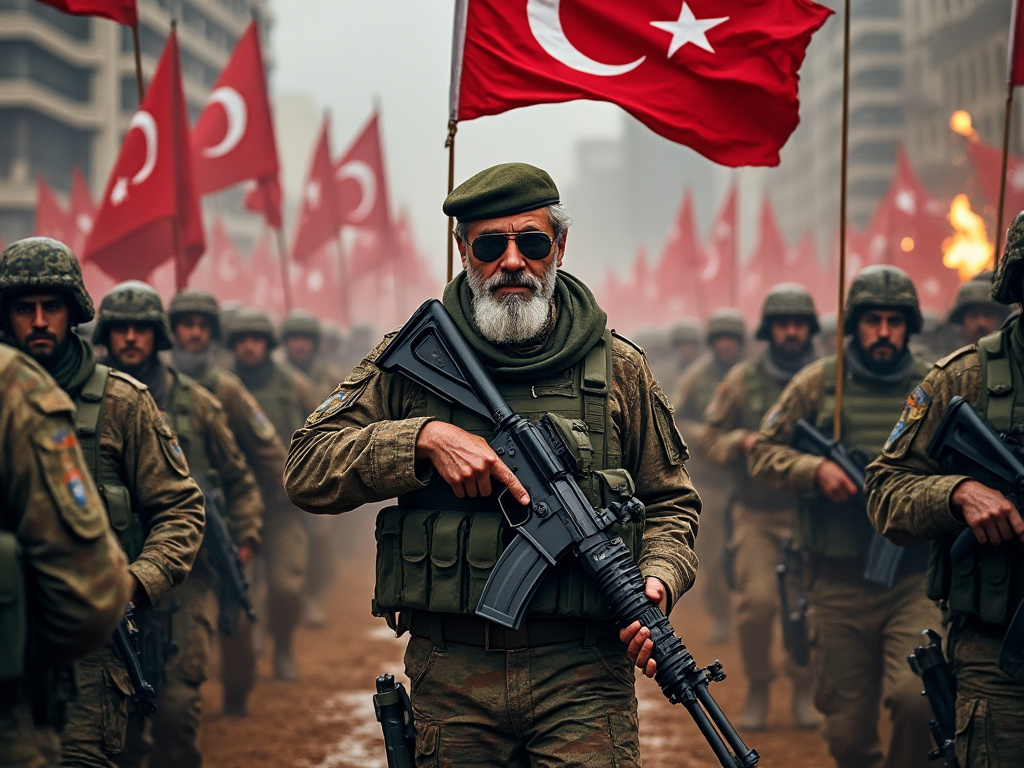
The organization stated that 'none of our forces will take armed action unless attacked,' though it refrained from announcing disbandment, emphasizing that such a decision requires direct leadership guidance and a broader political framework.
This development follows a message from Abdullah Öcalan, the imprisoned leader of the PKK, who has been held on an island prison since 1999. In his recent statement, Öcalan contended that the era of armed struggle has become ineffective and encouraged Kurdish political entities to pursue democratic routes of participation.
Turkish President Recep Tayyip Erdoğan responded positively to Öcalan's call, characterizing it as a 'historic opportunity' for resolving the longstanding conflict.
The Erdoğan administration indicated that it will monitor the situation closely, insisting that the PKK's full dissolution is a priority.
Moreover, Ankara has communicated that it expects affiliated Kurdish groups operating in Iraq and Syria to comply with this truce.
European political figures also reacted to this announcement.
Spanish socialist lawmaker Nacho Sánchez Amor, who serves as the European Parliament’s lead representative on relations with Turkey, labeled Öcalan’s message as a 'historic step.' He urged both the Turkish government and the PKK to capitalize on this moment to achieve a comprehensive political resolution.
The PKK has been designated as a terrorist organization by Turkey, the European Union, and the United States, and began its insurgency in 1984, originally demanding an independent Kurdish state.
Over the years, the group's focus has evolved towards seeking greater autonomy and rights for the Kurdish population in Turkey.
Previous ceasefire attempts, including a notable peace process from 2013 to 2015, ended abruptly amid renewed violence in the region.