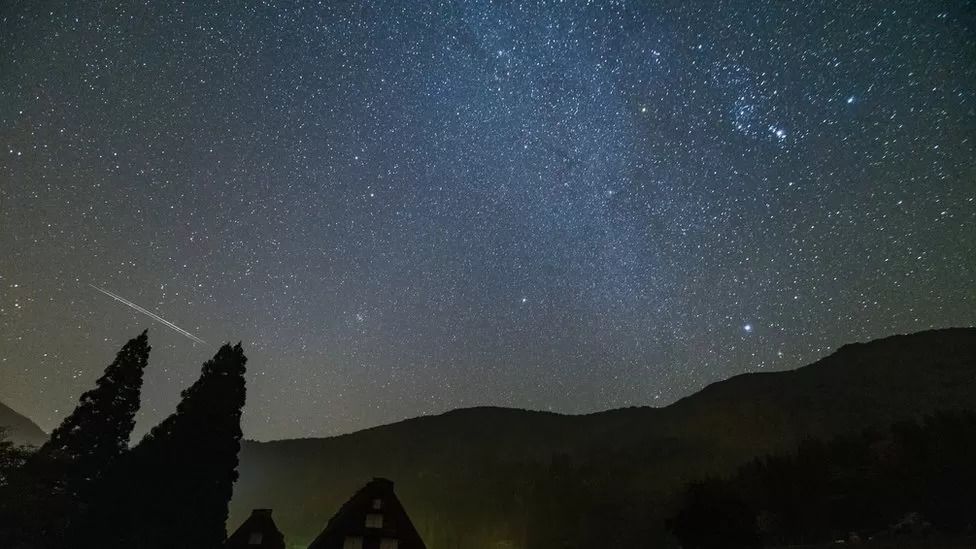
The Orionid meteor shower originates from debris left by Halley's comet, one of history's most famous comets. As Halley's comet orbits the Sun, it sheds tiny particles that create a trail of dust and ice. When these particles enter Earth's atmosphere at a speed of around 41 miles (66 kilometers) per second, they ignite, forming streaks of light known as meteors.
Halley's comet visits Earth only every 75-76 years, with the next expected sighting in 2061. However, the Orionid meteor shower occurs annually, providing a regular opportunity for skywatchers to witness the event.
To watch the meteor shower, the best time is Saturday, October 21, between midnight and sunrise. It's visible from both the northern and southern hemispheres, and clear skies enhance the experience. You can see the meteors with the naked eye, but allow your eyes to adjust to the dark.
To maximize your viewing, find a dark location away from streetlights and buildings. Meteors can appear anywhere in the sky, so choose an open space for easy scanning. There's no fixed schedule for meteor appearances, so patience is key. Consider bringing drinks and snacks for comfort. If you miss the peak on Saturday, you can still observe the meteor shower at its "maximum" phase until around October 28.