

Nobody holds 'brutal' police to account - Doreen Lawrence
Weeks after a landmark report found evidence of continuing systemic racism, Baroness Lawrence said officers can be "as brutal as they want" without being held to account.
She told the BBC the findings of the Casey Review did not surprise her.
Black people are never seen as "people that should have justice", she added.
It is now 30 years since the murder of Stephen, and Baroness Lawrence sat down with me ahead of a memorial service for her son. She told me she had spoken to the Met's Commissioner Sir Mark Rowley and told him promises of change must be judged against the experience of the public.
Eighteen-year-old Stephen was killed in 1993 in an unprovoked racist attack by a gang at a bus stop in Eltham in south-east London. Two of his five suspected killers were jailed for murder nearly 20 years later.
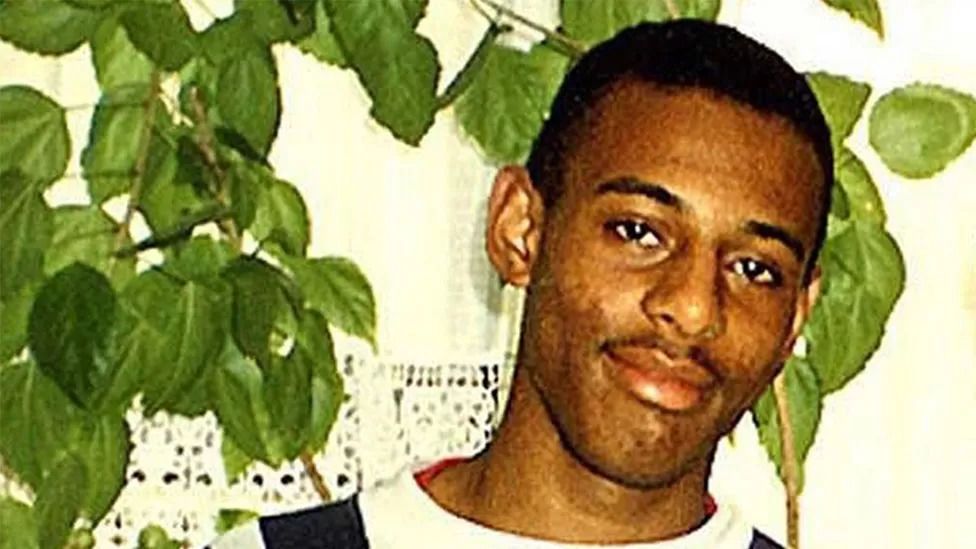 Stephen Lawrence
The 1999 Macpherson Report into the failed investigation into Stephen's death found there had been "institutional racism" in the Metropolitan Police. The watershed report made 70 recommendations, many aimed at improving police attitudes to racism.
Twenty-four years on, Baroness Louise Casey's recent report once again found the force to be an institutionally racist organisation - as well as homophobic and misogynistic.
"I don't know how many more inquiries and how many reviews you need to have to say the same thing - and still no changes, and still denials," Baroness Lawrence says.
"Officers [are] able to be as brutal as they want, and nobody holds them to account."
Baroness Lawrence told me she did not believe she would ever see full justice for her son's murder. She says that without the family's constant pressure, even those two convictions in 2012 would not have happened.
"Within the black community, how we're treated, how crime's investigated, we're never seen as a group of people that should have justice," she says. "So everything that we've had, we've had to fight for - and continue to fight."
I have covered the Lawrence story since the 1990s and have watched and interviewed Doreen many times as she campaigned for justice for her son. The private person we will never know, but her public persona has changed considerably. Back then, she treated her encounters with the media as a necessary evil, her only means of keeping her family's cruel denial of justice in the public eye.
Day after day, during the Macpherson Inquiry hearings into the botched murder investigation, I would watch from the media pen as Doreen braced herself to run the gauntlet of the cameras waiting to catch her as she arrived. Her face was taut with the strain of daily exposure, and of having to relive, through the evidence, the tragedy that had befallen her - all in the full glare of publicity.
A private, guarded person, Doreen Lawrence was the most reluctant of figureheads, a bereaved mother who wore her grief heavily like armour, and who endured the spotlight only in the fervent hope of seeing her son's killers convicted - and the police exposed for their failings.
Thirty years later, Baroness Lawrence of Clarendon has lost none of her steel. But she is a more relaxed person, more comfortable in her public role, and with an easy warmth. There is no rest for her though, and perhaps there never will be.
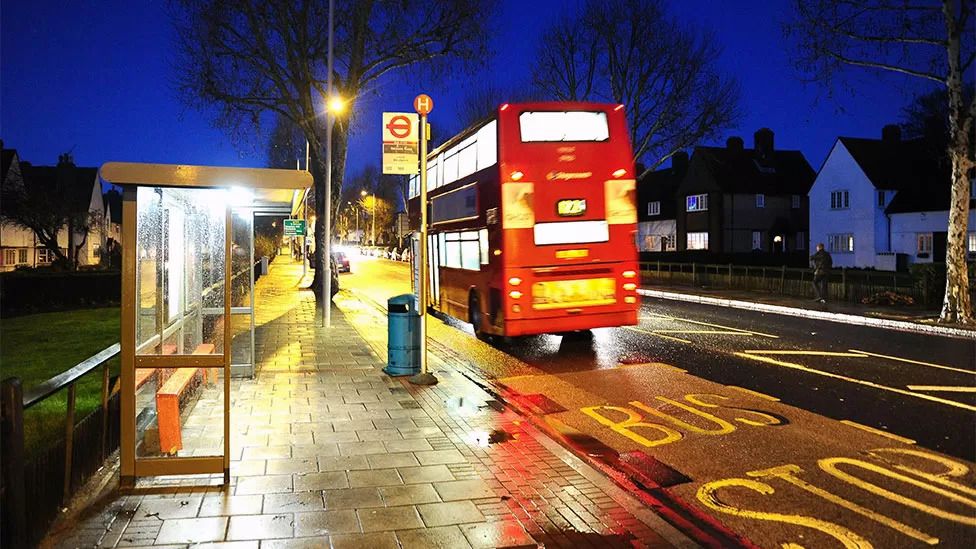 The bus stop in Eltham, London, where Stephen Lawrence was attacked
Despite the 2012 convictions of David Norris and Gary Dobson, there are other suspects who are still free.
Then, there has been the fallout - Baroness Lawrence discovered that police officers were spying on her and her family - and right now, she is involved in a legal case against the publisher of the Daily Mail, alleging it was illicitly gathering information about her.
She says that as long as the police continue to deny they did anything wrong, there will be no change. "The reality is that they didn't do everything that they could - they allowed the perpetrators to go free."
Sir Mark Rowley, the Commissioner of the Met, has admitted that there are severe shortcomings, but that the Met is not the same force that it was 20 or 25 years ago.
"I think the public should be the judge of that and not him," Baroness Lawrence says.
She adds that she has heard "a lot of rhetoric" from the commissioner, "but unless we see the changes ourselves, we're never going to believe that".
When she met Sir Mark after the publication of the Casey report, she told him the public needed to see improvements for themselves.
"But over the past - in Stephen's case - 30 years, nothing much has changed," she says.
Will she ever stop campaigning? "You need to use your voice," she replies. But the burden of it remains. "I don't want to be constantly in the public eye… at the end of the day, I just want to be, just me and my family."
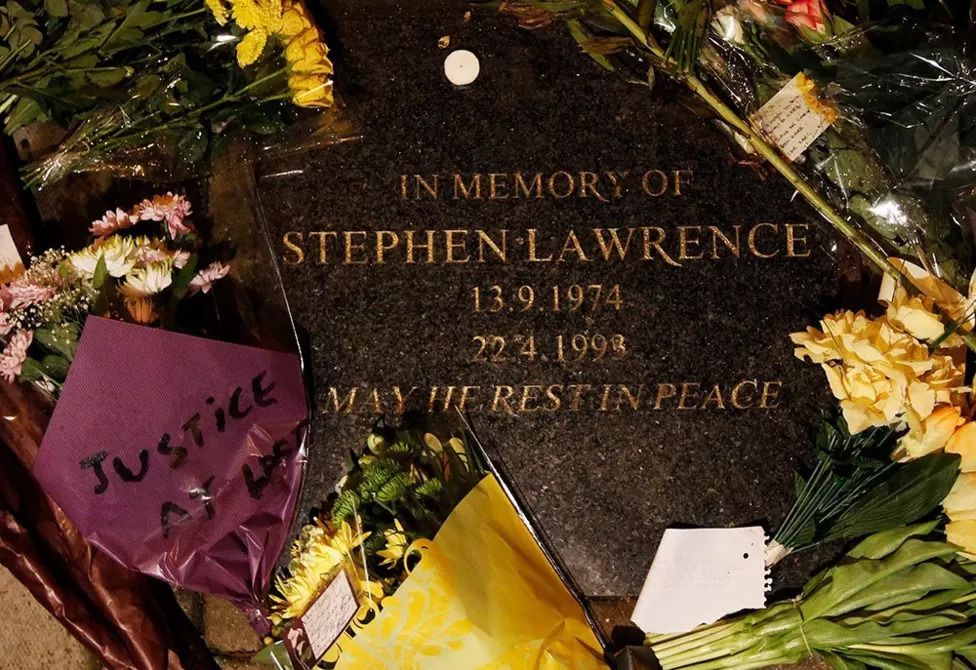 Stephen Lawrence memorial stone
She feels that 30 years ago, society was not sufficiently shocked by Stephen's murder, and that although the Black Lives Matter movement has since "opened people's eyes up a little bit more", it has not led to permanent change.
She says she tries not to feel bitter, because that would affect her personally, but admits she feels "disappointed, upset, and at times I can be quite angry".
In 2018, Stephen's father, Neville Lawrence, said he had forgiven their son's killers as a way of helping him cope.
Baroness Lawrence feels that for her to do so, they would first need to admit to their crime. "But they've never owned up, and in their eyes, they've done nothing wrong."
Mr Lawrence has since said that their son's killers should confess before being considered for parole.
Baroness Lawrence continues to campaign for justice and racial equality and has set up the Stephen Lawrence Day Foundation to help young people achieve their ambitions.
In 2018, then-Prime Minister Theresa May announced a national day of commemoration would take place on 22 April - the day of Stephen's murder - every year.
The 30th anniversary will be marked by a church service at St Martin-in-the-Fields, Trafalgar Square, and there will be events involving local schools, the Prince's Trust and the police cadets.
Privately, Baroness Lawrence will remember her son by laying flowers at the bus stop where he lost his life, as she does every year.