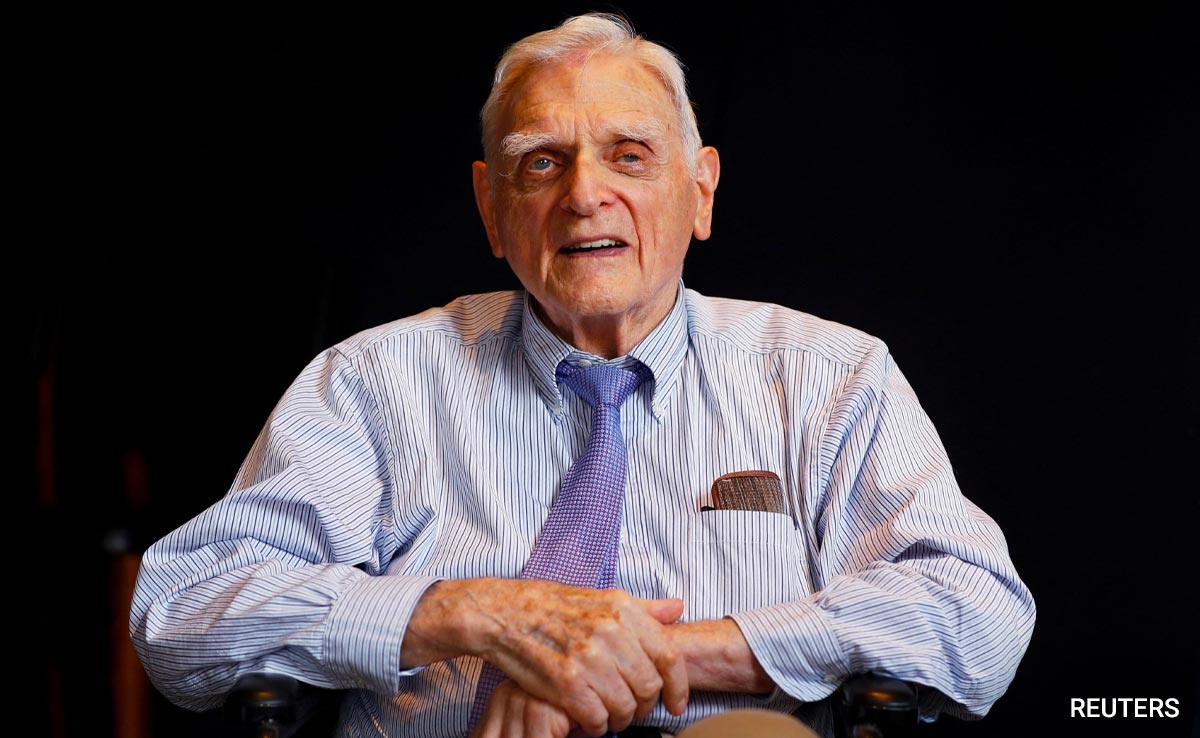
Born in Germany in 1922, Goodenough grew up in the United States and earned a Master's degree and PhD in physics in 1952.
After serving as a meteorologist in the US Army during World War II, he went on to have a career in science and engineering, including working as a faculty member at the University of Texas for 37 years.
Goodenough is best known for his work on the lithium-ion battery, which has revolutionized modern life and paved the way for smartphones and a fossil fuel-free society.
He died on Sunday, leaving behind a lasting legacy in the scientific and engineering community.
John Goodenough, a German-American physicist and chemist, has been awarded the 2020 Nobel Prize in Chemistry for his work on the lithium-ion battery, a technology that has revolutionized the world and enabled the development of portable electronic devices.
Goodenough, who was born in 1922 and grew up in the United States, served in the US Army during World War II and later earned a PhD from the University of Chicago.
He worked at the Massachusetts Institute of Technology's Lincoln Laboratory and then joined the University of Texas, where he worked for over 30 years.
Goodenough is known for his quick wit and infectious laugh and was still coming to work well into his 90s.
He was married to his wife Irene for 70 years until her death in 2016.
In a statement, Goodenough expressed pride in his discovery and hope that it would be used for good and not evil.
LONDON DAILY ARCHIVE
Nobel Prize Winner and Battery Pioneer John Goodenough Dies at 100
John Goodenough, the 2019 Nobel Prize winner in Chemistry and a pioneer in the development of lithium-ion batteries, has died at the age of 100.
27 June 2023 · 13:01 UTC