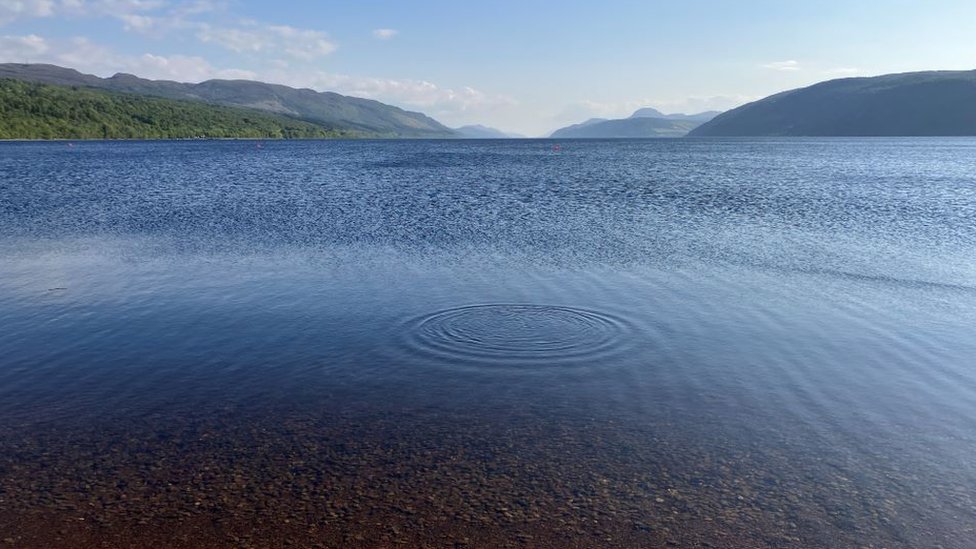
The water level of Loch Ness dropped to its lowest level in 32 years in May, according to Scottish Environment Protection Agency figures, and has remained low since.
The Ness fishery board claimed that water that could help ease the situation was being stored unused for hydro-power.
Energy company SSE Renewables stated that it was managing its water use sensitively amid challenging weather conditions.
On May 24th, the Sepa recorded a water level of just over 109cm (3.5ft) at Foyers, which is the location of a pumped storage hydro scheme that uses water from Loch Ness.
The Sepa has increased its water scarcity warning for the area to "moderate" due to low rainfall.
The Ness District Salmon Fishery Board has expressed concerns about the health of the River Ness and its impact on wild salmon populations, the river's conservation status, and angling.
The board noted a trend for drier winters and springs, and said that climate change was a factor.
Water was drawn at Dochfour for the Caledonian Canal that would otherwise flow into the River Ness, which has a significant impact on the river's water levels.
Loch Ness, Scotland's largest freshwater loch, is experiencing low water levels due to dry weather, according to residents and environmental experts.
Fiona Cairns, who has lived by the loch for most of her life and runs Loch Ness Alpacas, said a bay within the loch was dry, and her alpacas were able to access a field usually inaccessible due to the depth of the loch.
SSE Renewables stated that the dry weather had affected rivers across the Highlands, but their hydro operations were managed in accordance with environmental obligations while delivering zero carbon electricity.
Scottish Canals also reported low water levels due to the weather, and said they had robust plans in place to manage extreme situations like this, including engaging with the Scottish Environment Protection Agency (Sepa) for their latest advice.
Environment manager Olivia Lassiere of Scottish Canals noted that climate change was likely to cause more instances like this in the future.
LONDON DAILY ARCHIVE
Loch Ness and River Ness facing critical water levels due to dry weather and hydro-power usage
Concerns have been raised over the falling water levels of Loch Ness and the River Ness in Scotland.
10 June 2023 · 09:40 UTC