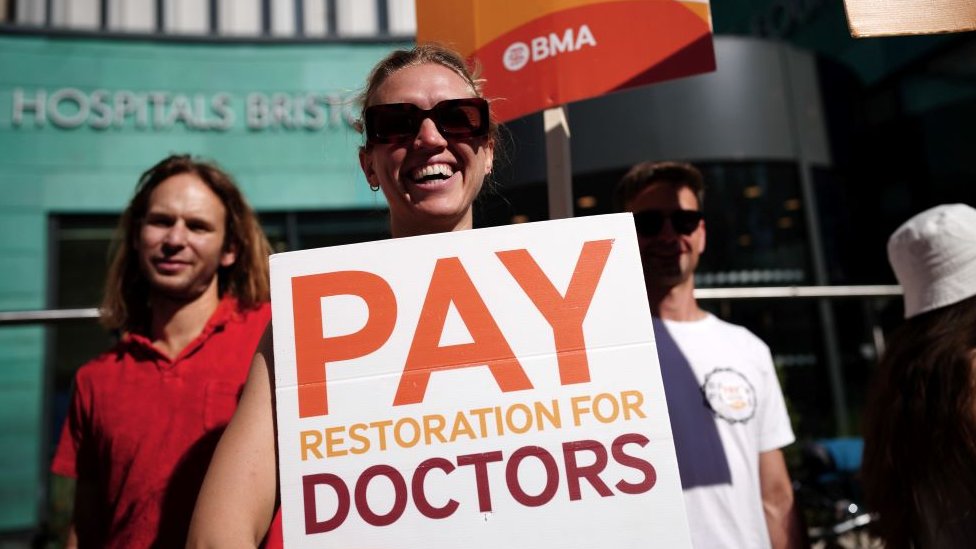
The strike, which began on 14 July and is set to end on 18 July, is in protest over junior doctors' pay.
The 6% pay rise is in line with pay review body recommendations, but junior doctors have been demanding a 35% increase.
The British Medical Association (BMA), which represents more than 46,000 junior doctors in the UK, has called on the government to "do the right thing" and call off the strikes.
BMA Council Chair Prof Phil Banfield said that although the 6% offer was a reasonable starting point, it may not be enough to end the dispute or stop doctors from leaving the NHS.
The latest walkouts are the fourth strike by junior doctors in England since the pay dispute began.
Junior doctors make up around half of all hospital doctors in England and a quarter of all doctors working in GP surgeries.
With the ongoing dispute, patients have been advised to contact NHS 111 or the nearest pharmacy for more minor health concerns, and people will be contacted if their appointment has to be rescheduled.
The health service is entering an "incredibly busy and disruptive period," with staff doing all they can to maintain services and address a record backlog of patients waiting for appointments or treatment.
More than 600,000 NHS appointments in England have already been cancelled or postponed due to strikes by doctors, nurses, and other healthcare workers in recent months.
Richard McKenzie, a marketing manager from Berkshire, is one of the many patients affected by the strike.
He is in constant pain and has been waiting for an operation for a new knee, which was scheduled for today but has been postponed due to the strike.
"The pain is like having a hot volcano in your knee and somebody sticks hot needles into the hot volcano.
It's horrendous," he says.
"It means you can't sleep, you can't rest - and I can't think either," he says.
"Or I have to take such a large load of painkillers that I A new pay deal has been offered to junior doctors in Scotland, leading to the cancellation of planned strikes this week.
The deal offers a 17.5% increase over two years for junior doctors, who are responsible for providing non-emergency services.
However, the strike has caused a shortage of senior doctors, consultants, who are now being called upon to provide emergency care during the strike.
Consultants will be going on strike themselves on Thursday and Friday of this week, providing only emergency care and a limited amount of routine work.
This strike action is being described as "Christmas Day cover", as emergency care will be provided, but only a limited amount of non-urgent procedures will be carried out.
The strike is causing disruption for patients and is a source of concern for the healthcare system.
If you are a doctor or a patient affected by this strike, the BBC would like to hear from you.
You can email haveyoursay@bbc.co.uk, including your name, age, and location, or you can contact the BBC through their website or social media channels.
The BBC is interested in hearing your experiences and perspectives on the strike.
LONDON DAILY ARCHIVE
Junior Doctors in the UK to Receive 6% Pay Rise After Five-Day Strike in England
The United Kingdom's National Health Service (NHS) is set to give junior doctors a pay rise of 6%, following a five-day strike in England.
13 July 2023 · 14:47 UTC