

iPhone 13 Pro review: Display and camera upgrades steal the show
There are some other improvements too, but those two are the headline features you’ll notice day-to-day when using the phone.
Let’s start with the cameras. The iPhone 13 Pro has what Apple calls its ‘biggest camera upgrade ever’. Hyperbole aside, the pictures it kicks out are incredibly impressive.
Like the iPhone 12 Pro, there’s a three-camera system on the back but this year it’s been improved.
Both the 13 Pro and the 13 Pro Max have identical Wide, Ultra Wide and Telephoto cameras.
The Ultra Wide camera features a larger ƒ/1.8 aperture and new autofocus sensor, capable of gathering 92 per cent more light.
The Wide camera features a larger ƒ/1.5 aperture with up to 2.2x more light gathering. And the new Telephoto camera features a 77mm focal length and 3x optical zoom (up from 2.5 last year).
If you really want to, you can push the zoom up to a 15x digital zoom, but the results aren’t great.
 A typical daytime shot taken with the Wide camera on the iPhone 13 Pro
  Here’s what it looks like when you push it to the 3x optical zoom with the Telephoto lens
  And finally, you can go all the way up to a 15x digital zoom, but we wouldn’t recommend it
 The increase in aperture and sensor size is noticeable when you look at the phone as the camera bump is hefty.
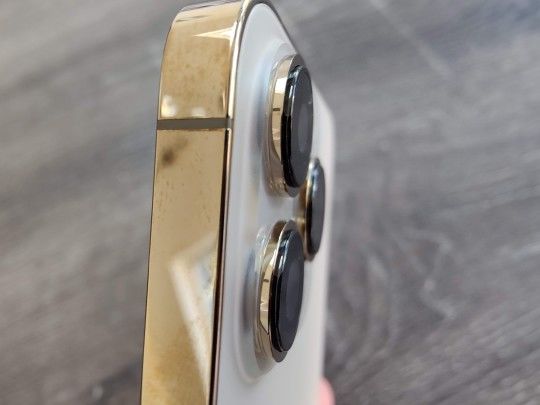 That is one chunky camera bump
But I was very happy with both the low-light performance and the macro photography achievable with the Ultra Wide. All three of the cameras now support Night Mode and that extra aperture means you can get workable shots even in near-darkness.
 Fans of macro photography will enjoy using the iPhone 13 Pro
Apple’s camera system has always been tailored towards giving the user a simple interface and trying to achieve the best results across the broadest set of standards. There’s a new Photography Styles option which gives you set of styles to quickly change the look of an image. To me, it feels like a set of really well-integrated filters. In technical terms, it’s more complicated that that. Photography Styles adjusts how the iPhone’s Smart HDR capture works. The phone will take a load of different pictures all at once and combine them into a single image. When a different style is applied, it makes different choices about things like white balance and contrast. It also works by recognising different parts of the photo – faces, the sky, a car – and exposing them differently to bring out a new look.
 Here is an image taken with the iPhone 13 Pro camera with the ‘Standard’ photography style
  Here’s the same picture with the ‘Rich Contrast’ setting
  And finally with the ‘Vibrant’ setting engaged
The iPhone has, in my opinion, always been the best smartphone on the market when it comes to capturing video. That’s still the case with the 13 Pro and even more so with the newly-created Cinematic Mode. Basically, it lets the iPhone automatically rack focus during a video as the subject changes. Like Portrait Mode for video, it will let you swap focus from foreground to background as you’re shooting.
It’s an incredibly impressive achievement to be able to do this on a phone and, while it’s not absolutely perfect, I really enjoyed using it. There’s still a touch of haloing around the subject and the focus transition isn’t as smooth as you’d see on an optical camera because the 13 Pro is making this happen through software.
But the bottom line is that in order to achieve the same kind of thing on actual camera equipment, you’re going to have to buy some expensive gear and basically learn photography. The fact anyone can pull out the iPhone and shoot with Cinematic Mode massively lowers the bar for user-created video.
Although it’s a software feature, Cinematic Mode won’t come to the iPhone 12 series. It requires the camera array and processing power of the iPhone 13 and beyond. Another feature – ProRes format for video – is in the pipeline for the iPhone 13 series. When Apple pushes that out, it will allow users to record with high colour fidelity in the format widely used by professional video editors.
As with any new iPhone, there’s a step up in processing power from last year courtesy of the new A15 Bionic CPU. Apple says it’s the fastest chip in a smartphone and, thanks to a 5-core GPU, is highly competent when it comes to high-performance gaming and using camera features like the aforementioned Cinematic Mode.
In practice? Yeah, it’s fast, smooth and…well, powerful. Apps loaded quickly and I couldn’t detect any stuttering or lag from a couple of those high-performance games.
But what I (and perhaps others who purchase this phone) really appreciated was the jump in refresh rate on the Super Retina XDR display. Apple has developed what it calls ‘ProMotion’ which essentially lets the screen scale up and down between 10Hz and 120Hz as appropriate. If you’re scrolling, you get the maximum refresh to make it as silky smooth as possible (and it is absolutely something your average user will notice and appreciate) while static text is dropped down to 10Hz to conserve battery life.
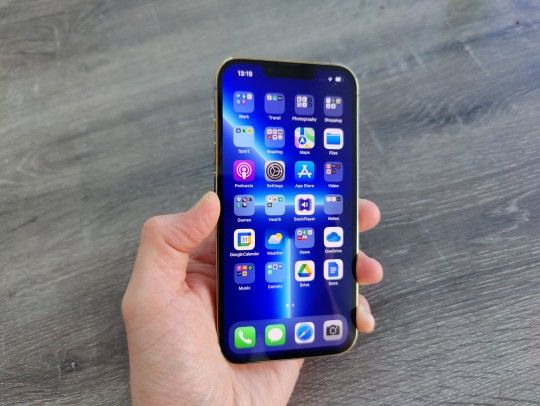 The screen now runs with up to a 120Hz refresh rate and the difference is noticeable
Other phones, particularly the OnePlus 9 Pro, have done 120Hz screens already, so it is great to see it finally brought to the iPhone, albeit just the Pro variants. Just as an aside, the iPad Pro has had 120Hz ProMotion for a while now.
While we’re on the subject of the screen, Apple has also shrunk the ‘notch’ for the iPhone 13 range. The FaceID camera cutout has been on iPhones since the iPhone X in 2017 and this is the first time it’s been made smaller. All the same tech is there, just in a smaller black bar. I was always able to get used to the notches on iPhones, so shrinking it is nice but not a huge deal for me. Also, it doesn’t appear Apple has done much with the extra screen real estate as the battery and signal/WiFi icons have just been made slightly bigger.
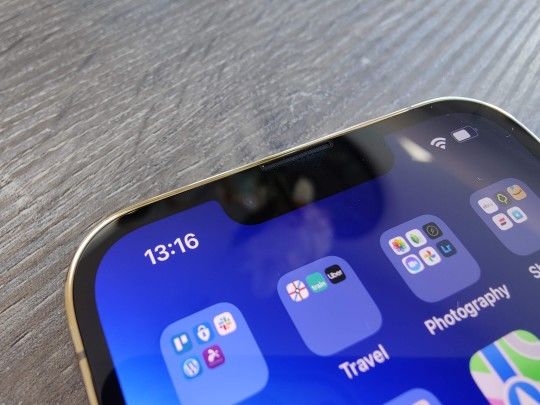 This year…a smaller notch (Metro.co.uk)
 Instagram seemed to have a problem with the new notch as the display overlaps with the battery and signal icons
The last new piece of the puzzle to talk about is the battery life. Apple has incorporated a bigger battery this year and that results in the iPhone 13 Pro having slightly more heft than the 12 Pro. Apple lays it down as an extra 1.5 hours for the regular iPhone Pro and 2.5 hours longer for the iPhone Pro Max. During my time with the phone, I found there was still 30 per cent or so left by 11pm after starting the day at 6am. That’s with pretty normal usage – gaming, taking photos, listening to music and both sending and receiving plenty of messages on the likes of WhatsApp and Slack. The battery life on this phone really is very impressive.
With these new features on board, is the iPhone 13 Pro a worthwhile upgrade?
If you’re using the iPhone 12 Pro, then no. It feels a bit like one of Apple’s ‘S’ model interstitial phones. The improvements are there, but not enough to really motivate a yearly update – especially when it’s crucial for the environment that we hold on to our devices for as long as possible.
That being said, if you’re using an iPhone X or XS and feel ready to move up, then the iPhone 13 Pro will feel leaps ahead.
Even if you’re upgrading from an 11 Pro (still a very capable phone) you’ll be getting the new design and the option of 5G if your data plan supports it.
Are there any drawbacks? A couple of negligible points. Firstly, the chunky camera bump means this phone doesn’t lie flat on a surface and also means that any cases you had from the iPhone 12 Pro (if you did decide on a yearly update) won’t fit.
Secondly, we’re still using Lightning rather than USB-C and the iPhone 13 Pro won’t charge faster than Apple’s 20W charger (now sold separately).
That feels dated when the likes of Samsung and OnePlus are pushing out 45W and 65W fast charging options. Of course, there’s still MagSafe and wireless charging (at 15W) with the iPhone 13 Pro if you want it.
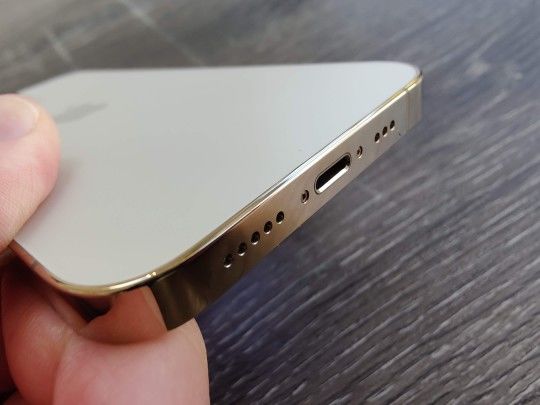 The iPhone 13 Pro keeps the Lightning connector and is limited to 20W charging
Overall, the iPhone 13 Pro is a great phone that doubles down on what customers want: great improvements to the camera, battery and screen.
Pricing starts at £949 for the entry-level 128GB storage option then goes up to £1,049 for 256GB and £1,249 for the 512GB model. And fresh for 2021, there’s a new 1TB storage option will set you back a staggering £1,449.
The four colour options on offer are Graphite, Silver, Gold and Sierra Blue and the phone is available to buy now.
iPhone 13 Pro: the details
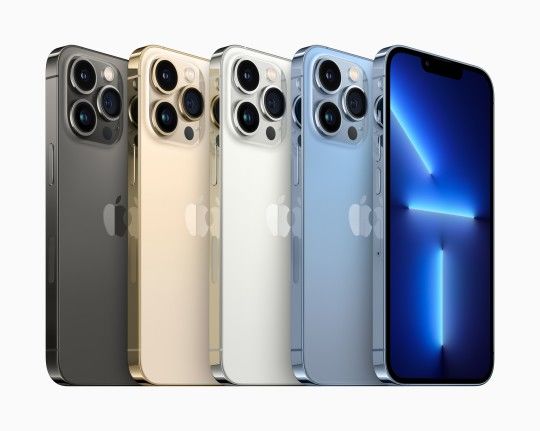 The iPhone 13 Pro and iPhone 13 Pro Max come in a choice of four different colours
Name: iPhone 13 Pro
Starting Price: £949
What’s good:
- 120Hz refresh rate screen
- Camera performance and features
- Great battery life
What’s bad:
- 20W charging feels outdated
- Camera bump is really thick now