
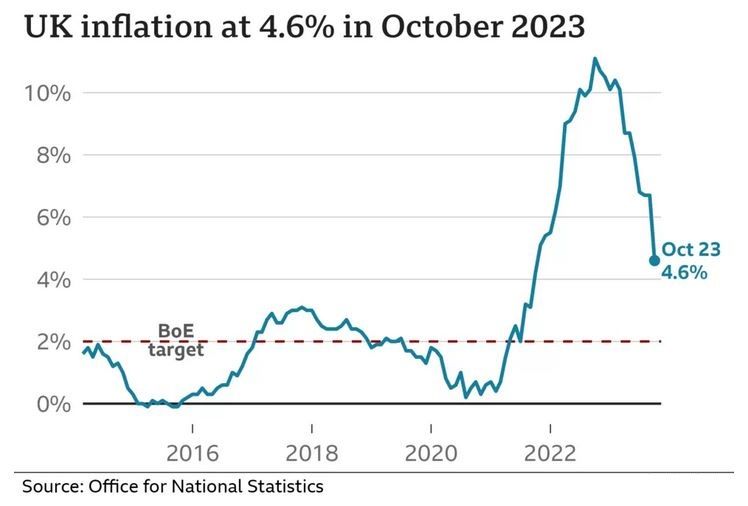
This decline from 6.7% the previous month and a peak of 11.1% in October 2022 is attributed to a reduction in the energy price cap and the Bank of England's interest rate increases to 5.25%.
The government claims to have met its pledge to halve inflation by the end of the year earlier than expected. However, economists note that the government's influence over this decrease is limited, with key factors being the energy price cap and monetary policy.
Despite the fall in inflation, many households may still feel financial strain, especially with higher energy bills expected this winter due to reduced government support. The cost-of-living crisis continues to affect many, with food banks experiencing high demand due to increased food and energy costs.
Prime Minister Rishi Sunak and Chancellor Jeremy Hunt credit fiscal discipline for the inflation reduction, but critics like the Institute for Fiscal Studies and Labour's shadow chancellor Rachel Reeves question the government's role, suggesting the reduction was expected regardless of policy changes.
The UK still faces challenges in meeting the Bank of England's 2% inflation target, and with the upcoming announcement on next year's energy price cap, there could be potential increases in energy prices. UK inflation also remains higher than in several other countries, including the US, France, and Germany.