Hyper-Realistic Reborn Dolls Draw Collectors Seeking Comfort and Craft
Handmade dolls that can cost from hundreds of dollars to well into five figures are gaining attention through specialist conventions and online communities.
Reborn dolls, handcrafted figures made to resemble infants with striking realism, are drawing new attention at specialist conventions and across online collector communities.
Their appeal ranges from artistry and nostalgia to companionship and comfort, while their lifelike appearance continues to provoke fascination and unease among people encountering them for the first time.
Authentic reborn dolls are typically assembled from vinyl or silicone kits and finished by specialist artists.
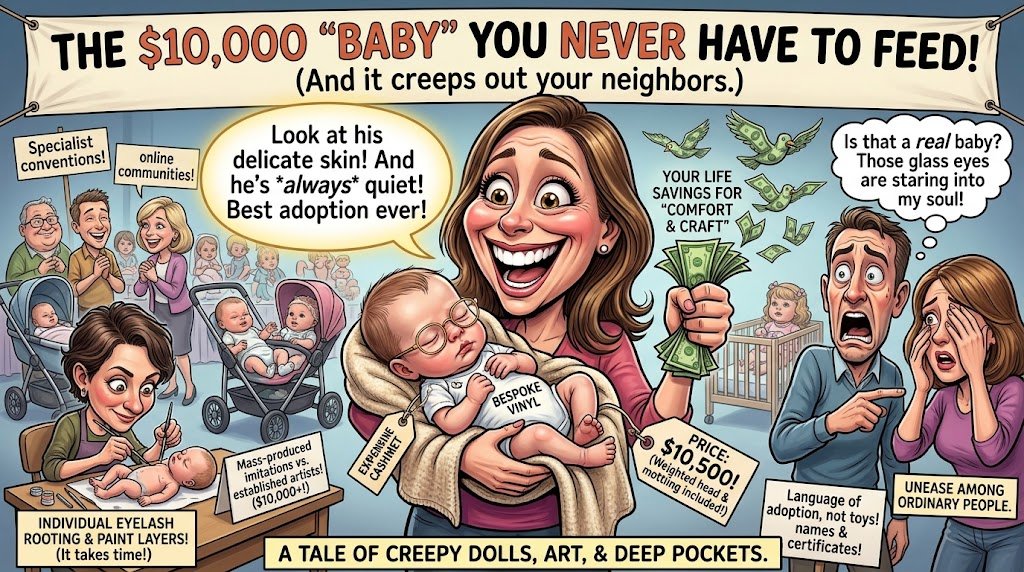
The work can involve multiple layers of paint to recreate skin tone and mottling, individually rooted hair and eyelashes, hand-set eyes, weighted bodies and carefully chosen clothing.
More elaborate full-silicone models can feel and move more like a baby when held.
Prices vary widely.
Entry-level dolls and mass-produced imitations may sell for hundreds of dollars, while original works by established artists can cost several thousand.
Highly detailed silicone dolls, rare editions and bespoke commissions can reach $10,000 or more, reflecting the time, materials and specialist labour involved.
For many buyers, the dolls are collectible art rather than toys.
Artists and enthusiasts often use the language of adoption and provide dolls with names, clothing, accessories and certificates.
Conventions allow collectors to meet makers, inspect work in person, attend demonstrations and trade advice about sculpting, painting and restoration.
Some owners say the dolls offer comfort, help them reconnect with childhood memories or provide a calming object to hold.
They are also used in film, photography and education.
In some care settings, dolls have been used as part of person-centred activities for people with dementia, although such use requires sensitivity to the individual and is not a substitute for clinical care.
The market also has a less polished side.
Artists have raised concerns about counterfeit dolls, misleading online listings and low-cost replicas that copy original sculptors’ work without permission.
The difference between a handmade reborn and a factory-made imitation can be substantial in craftsmanship, materials and price.
As more people encounter reborn dolls through social media and public events, the trend is expanding a niche art form into a wider cultural conversation about collecting, care, grief, memory and the powerful human response to objects designed to look almost alive.
Their appeal ranges from artistry and nostalgia to companionship and comfort, while their lifelike appearance continues to provoke fascination and unease among people encountering them for the first time.
Authentic reborn dolls are typically assembled from vinyl or silicone kits and finished by specialist artists.
The work can involve multiple layers of paint to recreate skin tone and mottling, individually rooted hair and eyelashes, hand-set eyes, weighted bodies and carefully chosen clothing.
More elaborate full-silicone models can feel and move more like a baby when held.
Prices vary widely.
Entry-level dolls and mass-produced imitations may sell for hundreds of dollars, while original works by established artists can cost several thousand.
Highly detailed silicone dolls, rare editions and bespoke commissions can reach $10,000 or more, reflecting the time, materials and specialist labour involved.
For many buyers, the dolls are collectible art rather than toys.
Artists and enthusiasts often use the language of adoption and provide dolls with names, clothing, accessories and certificates.
Conventions allow collectors to meet makers, inspect work in person, attend demonstrations and trade advice about sculpting, painting and restoration.
Some owners say the dolls offer comfort, help them reconnect with childhood memories or provide a calming object to hold.
They are also used in film, photography and education.
In some care settings, dolls have been used as part of person-centred activities for people with dementia, although such use requires sensitivity to the individual and is not a substitute for clinical care.
The market also has a less polished side.
Artists have raised concerns about counterfeit dolls, misleading online listings and low-cost replicas that copy original sculptors’ work without permission.
The difference between a handmade reborn and a factory-made imitation can be substantial in craftsmanship, materials and price.
As more people encounter reborn dolls through social media and public events, the trend is expanding a niche art form into a wider cultural conversation about collecting, care, grief, memory and the powerful human response to objects designed to look almost alive.