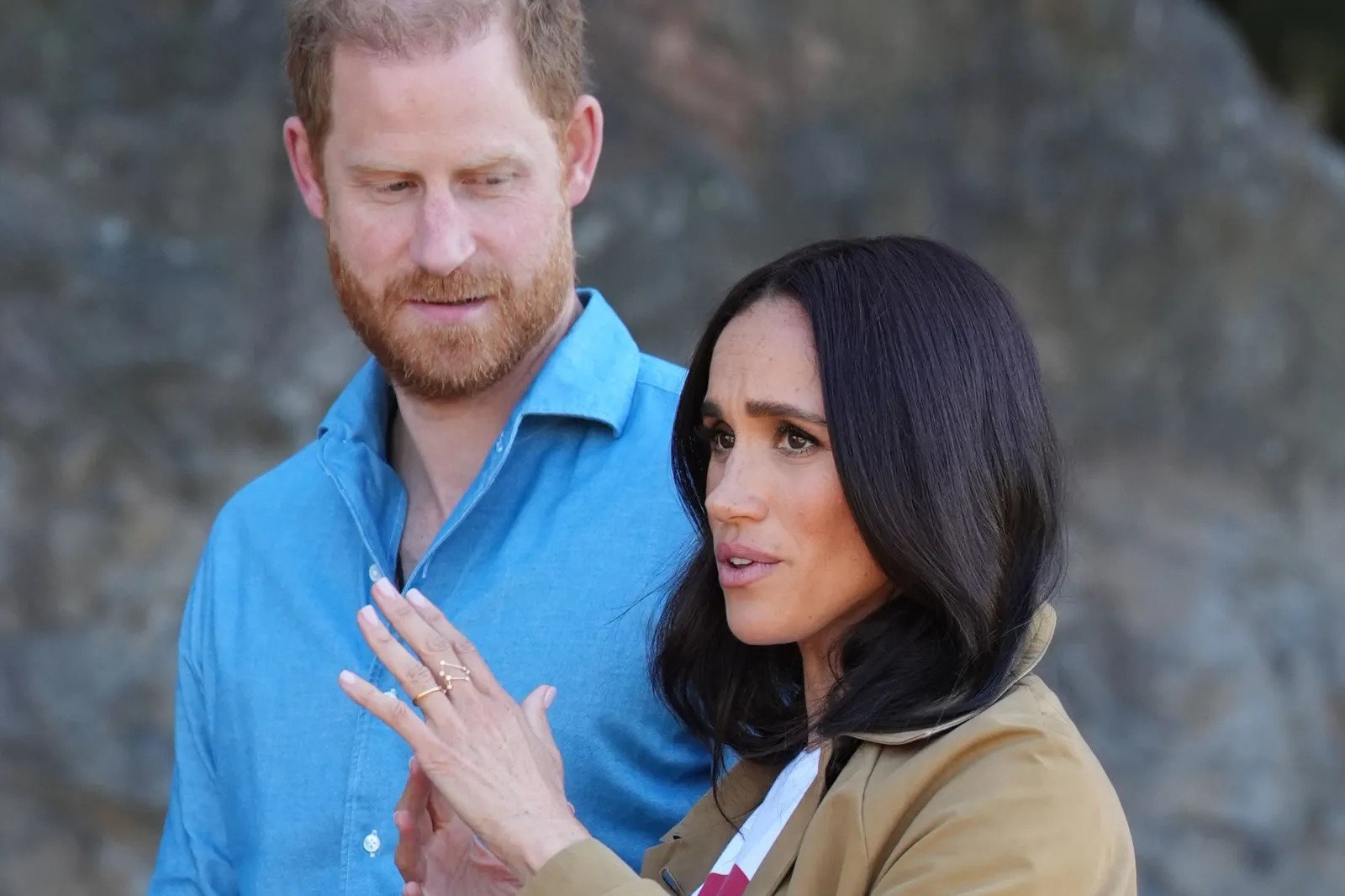
Harry and Meghan’s Australia Tour Exposed the Commercial Limits of the Sussex Brand
The Duke and Duchess of Sussex returned to Australia hoping to blend philanthropy, celebrity influence, and commercial partnerships, but the trip instead highlighted growing public skepticism, brand fatigue, and the unresolved contradictions of their post-royal identity.
Prince Harry and Meghan Markle’s latest Australia visit was fundamentally driven by the Sussexes’ attempt to convert royal visibility into an independent commercial and philanthropic platform outside the British monarchy.
The tour mattered less as a celebrity trip than as a test of whether the couple can still command sustained public enthusiasm, media influence, and business value after years of conflict with the royal establishment.
The four-day visit across Melbourne, Canberra, and Sydney was not an official royal tour.
Harry and Meghan stepped back from working royal duties in two thousand twenty and now operate as private public figures through charitable initiatives, speaking engagements, media ventures, and commercial partnerships.
Yet the structure, imagery, and choreography of the Australia trip closely resembled a traditional royal visit.
That contradiction became the defining issue.
The couple appeared at mental health events, veterans’ initiatives, charity programs, and community meetings while also participating in private commercial engagements tied to Meghan’s lifestyle brand and paid wellness events.
Their office described the trip as combining charitable, community, and broader commercial objectives.
What emerged was a visibly different atmosphere from the couple’s highly successful two thousand eighteen Australia tour, when they were newly married, still senior royals, and broadly popular across much of the Commonwealth.
This time, the reception was mixed.
Crowds were smaller, media scrutiny was harsher, and the political symbolism surrounding the Sussexes had changed dramatically.
Australian commentators, royal observers, and sections of the public increasingly viewed the visit through the lens of monetization rather than public service.
The commercial dimension drew particular attention.
Meghan participated in a luxury Sydney wellness retreat with ticket prices reaching several thousand Australian dollars.
Harry appeared at business and mental health conferences attended by paying audiences.
Promotional material surrounding parts of the trip referenced both charitable goals and broader brand-building activities.
The key issue was not simply whether the couple earned money directly from specific appearances.
In several cases, representatives denied claims that appearance fees were paid.
The deeper concern was that the Sussexes appeared to be using the prestige and aesthetics of royalty while operating as private entrepreneurs.
That distinction matters because the modern British royal system relies heavily on a separation between public duty and commercial activity.
Official royals are restricted from monetizing their status directly in exchange for publicly funded institutional support.
Harry and Meghan attempted to leave the institution while preserving elements of its symbolic power.
Australia became a difficult environment in which to test that model.
Public criticism intensified before the couple even arrived.
Petitions opposing taxpayer-funded security circulated widely online, even though Sussex representatives insisted the trip itself was privately financed.
Australian police nevertheless provided certain security support and crowd-management operations, reigniting debate about whether public resources were indirectly subsidizing private celebrity activity.
The backlash exposed how politically sensitive the Sussexes have become in Commonwealth countries once considered among their strongest audiences.
Media coverage repeatedly described the visit as a “quasi-royal” or “faux-royal” tour.
Critics argued the couple wanted the ceremonial prestige of monarchy without accepting the institutional constraints attached to it.
Supporters countered that Harry and Meghan face disproportionate hostility and remain entitled to pursue charitable and commercial work independently after leaving royal life.
The visit also revealed the extent to which the Sussex brand now depends on carefully managed publicity rather than spontaneous public excitement.
Security became a major operational issue throughout the tour.
After embargoed itinerary details leaked to sections of the media before the couple arrived, Sussex representatives sharply restricted press access and accused outlets of compromising safety arrangements.
Detailed press briefings were subsequently reduced or halted altogether.
That media conflict reflected a deeper long-running battle between Prince Harry and parts of the British and Australian tabloid press.
Harry has repeatedly argued that aggressive media practices endangered both himself and Meghan, and his legal campaigns against several publishers remain central to his post-royal public identity.
But the Australia trip also demonstrated the downside of controlling visibility too tightly.
Traditional royal tours depend heavily on public spectacle: walkabouts, mass crowds, unscripted interactions, and extensive press coverage that reinforces symbolic national connection.
The Sussex visit featured fewer spontaneous public moments and more carefully managed appearances, reducing the emotional impact that once made royal visits powerful.
Commercial expectations surrounding the tour also appear to have exceeded reality.
Despite intense global media attention, there is little evidence that the trip generated major financial momentum or significantly expanded the Sussexes’ public standing.
Analysts in Australia noted that several events appeared niche, heavily curated, or directed toward affluent lifestyle audiences rather than broad national engagement.
That matters because Harry and Meghan’s long-term business strategy depends on maintaining relevance across multiple sectors simultaneously: philanthropy, entertainment, activism, publishing, public speaking, streaming media, and luxury consumer branding.
The challenge is becoming more difficult.
Their Spotify partnership ended earlier than expected.
Their Netflix relationship has shifted toward selective projects rather than continuous output.
Meghan’s lifestyle ventures are still developing commercially.
Harry remains active in mental health advocacy, veterans’ work, and the Invictus movement, but public interest increasingly fluctuates between admiration, fatigue, and controversy.
Australia highlighted another structural problem facing the couple: the farther they move from the monarchy institutionally, the more difficult it becomes to sustain the same level of global fascination that monarchy originally created.
The Sussexes still command enormous name recognition.
Their appearances continue to generate headlines worldwide.
But recognition alone does not guarantee influence, trust, or durable commercial power.
The broader royal context amplified those pressures.
The tour occurred shortly before King Charles III prepared for a major diplomatic visit to the United States connected to the two hundred fiftieth anniversary of American independence.
That contrast reinforced the distinction between official state-backed monarchy and the Sussexes’ hybrid celebrity-philanthropy model.
What is confirmed is that Harry and Meghan remain globally marketable figures with strong support among some audiences.
They continue to attract substantial media attention, maintain high-profile partnerships, and command international visibility that most celebrities never achieve.
But the Australia trip showed that visibility now comes with diminishing automatic goodwill.
The central problem was not a single scandal, failed event, or financial loss.
It was that the tour exposed unresolved questions at the heart of the Sussex project itself: whether the couple are activists, entertainers, philanthropists, influencers, former royals, or commercial lifestyle entrepreneurs.
For several years, Harry and Meghan benefited from public sympathy tied to their departure from royal life and their conflict with the British press.
Australia demonstrated that sympathy alone is no longer enough to sustain a durable global brand.
The practical result is that future Sussex ventures are likely to become more commercially explicit, more carefully segmented, and more dependent on targeted audiences willing to pay for direct access, curated experiences, and lifestyle affiliation rather than broad public enthusiasm tied to royal mystique.
The tour mattered less as a celebrity trip than as a test of whether the couple can still command sustained public enthusiasm, media influence, and business value after years of conflict with the royal establishment.
The four-day visit across Melbourne, Canberra, and Sydney was not an official royal tour.
Harry and Meghan stepped back from working royal duties in two thousand twenty and now operate as private public figures through charitable initiatives, speaking engagements, media ventures, and commercial partnerships.
Yet the structure, imagery, and choreography of the Australia trip closely resembled a traditional royal visit.
That contradiction became the defining issue.
The couple appeared at mental health events, veterans’ initiatives, charity programs, and community meetings while also participating in private commercial engagements tied to Meghan’s lifestyle brand and paid wellness events.
Their office described the trip as combining charitable, community, and broader commercial objectives.
What emerged was a visibly different atmosphere from the couple’s highly successful two thousand eighteen Australia tour, when they were newly married, still senior royals, and broadly popular across much of the Commonwealth.
This time, the reception was mixed.
Crowds were smaller, media scrutiny was harsher, and the political symbolism surrounding the Sussexes had changed dramatically.
Australian commentators, royal observers, and sections of the public increasingly viewed the visit through the lens of monetization rather than public service.
The commercial dimension drew particular attention.
Meghan participated in a luxury Sydney wellness retreat with ticket prices reaching several thousand Australian dollars.
Harry appeared at business and mental health conferences attended by paying audiences.
Promotional material surrounding parts of the trip referenced both charitable goals and broader brand-building activities.
The key issue was not simply whether the couple earned money directly from specific appearances.
In several cases, representatives denied claims that appearance fees were paid.
The deeper concern was that the Sussexes appeared to be using the prestige and aesthetics of royalty while operating as private entrepreneurs.
That distinction matters because the modern British royal system relies heavily on a separation between public duty and commercial activity.
Official royals are restricted from monetizing their status directly in exchange for publicly funded institutional support.
Harry and Meghan attempted to leave the institution while preserving elements of its symbolic power.
Australia became a difficult environment in which to test that model.
Public criticism intensified before the couple even arrived.
Petitions opposing taxpayer-funded security circulated widely online, even though Sussex representatives insisted the trip itself was privately financed.
Australian police nevertheless provided certain security support and crowd-management operations, reigniting debate about whether public resources were indirectly subsidizing private celebrity activity.
The backlash exposed how politically sensitive the Sussexes have become in Commonwealth countries once considered among their strongest audiences.
Media coverage repeatedly described the visit as a “quasi-royal” or “faux-royal” tour.
Critics argued the couple wanted the ceremonial prestige of monarchy without accepting the institutional constraints attached to it.
Supporters countered that Harry and Meghan face disproportionate hostility and remain entitled to pursue charitable and commercial work independently after leaving royal life.
The visit also revealed the extent to which the Sussex brand now depends on carefully managed publicity rather than spontaneous public excitement.
Security became a major operational issue throughout the tour.
After embargoed itinerary details leaked to sections of the media before the couple arrived, Sussex representatives sharply restricted press access and accused outlets of compromising safety arrangements.
Detailed press briefings were subsequently reduced or halted altogether.
That media conflict reflected a deeper long-running battle between Prince Harry and parts of the British and Australian tabloid press.
Harry has repeatedly argued that aggressive media practices endangered both himself and Meghan, and his legal campaigns against several publishers remain central to his post-royal public identity.
But the Australia trip also demonstrated the downside of controlling visibility too tightly.
Traditional royal tours depend heavily on public spectacle: walkabouts, mass crowds, unscripted interactions, and extensive press coverage that reinforces symbolic national connection.
The Sussex visit featured fewer spontaneous public moments and more carefully managed appearances, reducing the emotional impact that once made royal visits powerful.
Commercial expectations surrounding the tour also appear to have exceeded reality.
Despite intense global media attention, there is little evidence that the trip generated major financial momentum or significantly expanded the Sussexes’ public standing.
Analysts in Australia noted that several events appeared niche, heavily curated, or directed toward affluent lifestyle audiences rather than broad national engagement.
That matters because Harry and Meghan’s long-term business strategy depends on maintaining relevance across multiple sectors simultaneously: philanthropy, entertainment, activism, publishing, public speaking, streaming media, and luxury consumer branding.
The challenge is becoming more difficult.
Their Spotify partnership ended earlier than expected.
Their Netflix relationship has shifted toward selective projects rather than continuous output.
Meghan’s lifestyle ventures are still developing commercially.
Harry remains active in mental health advocacy, veterans’ work, and the Invictus movement, but public interest increasingly fluctuates between admiration, fatigue, and controversy.
Australia highlighted another structural problem facing the couple: the farther they move from the monarchy institutionally, the more difficult it becomes to sustain the same level of global fascination that monarchy originally created.
The Sussexes still command enormous name recognition.
Their appearances continue to generate headlines worldwide.
But recognition alone does not guarantee influence, trust, or durable commercial power.
The broader royal context amplified those pressures.
The tour occurred shortly before King Charles III prepared for a major diplomatic visit to the United States connected to the two hundred fiftieth anniversary of American independence.
That contrast reinforced the distinction between official state-backed monarchy and the Sussexes’ hybrid celebrity-philanthropy model.
What is confirmed is that Harry and Meghan remain globally marketable figures with strong support among some audiences.
They continue to attract substantial media attention, maintain high-profile partnerships, and command international visibility that most celebrities never achieve.
But the Australia trip showed that visibility now comes with diminishing automatic goodwill.
The central problem was not a single scandal, failed event, or financial loss.
It was that the tour exposed unresolved questions at the heart of the Sussex project itself: whether the couple are activists, entertainers, philanthropists, influencers, former royals, or commercial lifestyle entrepreneurs.
For several years, Harry and Meghan benefited from public sympathy tied to their departure from royal life and their conflict with the British press.
Australia demonstrated that sympathy alone is no longer enough to sustain a durable global brand.
The practical result is that future Sussex ventures are likely to become more commercially explicit, more carefully segmented, and more dependent on targeted audiences willing to pay for direct access, curated experiences, and lifestyle affiliation rather than broad public enthusiasm tied to royal mystique.