LONDON DAILY ARCHIVE
German Leaders Express Alarm Over Trump Administration's Ukraine Peace Negotiation Plans
Chancellor Scholz and other German politicians call for increased military spending amid U.S. approach to negotiating with Russia.
15 February 2025 · 06:04 UTC
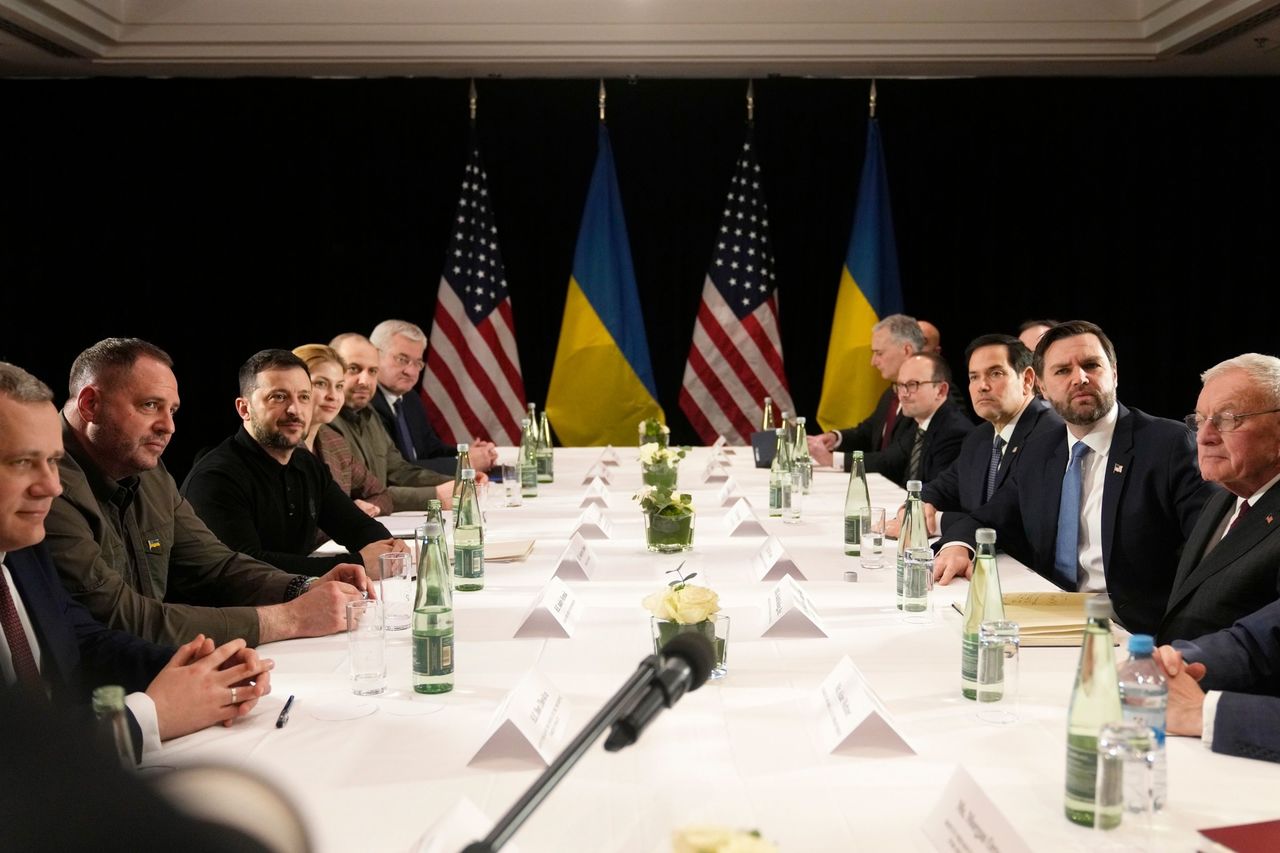
Chancellor Olaf Scholz articulated these concerns at the Munich Security Conference, emphasizing that any peace must ensure Ukraine's sovereignty.
"We will never support a dictated peace," he stated, highlighting apprehensions that such negotiations could benefit President Putin at the expense of European security.
As Germany approaches national elections on February 23, Scholz, whose Social Democratic Party (SPD) currently ranks third in polls, urged for increased defense spending and military aid for Ukraine.
He called on Germany's conservatives to relax the country's stringent fiscal rules to enhance military support capabilities.
Scholz remarked, "Today, we must face the reality of what the U.S. government’s actions and announcements mean for Ukraine, for Europe and for the world.
Not to act would mean putting the security of our country and our continent at risk."
Roderich Kiesewetter of the Christian Democratic Union (CDU), which leads in polling, echoed these calls for increased military investment, cautioning that neglecting Ukraine could lead to further risks for Germany.
"If Ukraine is left in the lurch now, we will soon be next," he stated.
The Trump administration's recent proposal to negotiate with Russia reportedly includes ceding territory to Moscow and shifting the primary burden of military and financial aid for Ukraine onto European nations.
German leaders, including Scholz, expressed surprise at the U.S. position, which contrasted starkly with Germany's role in providing support to Ukraine.
Scholz noted that his previous discussions with Trump had led him to expect continued American backing for Ukraine, indicating a disconnect between the two governments.
Liberal MEP Marie-Agnes Strack-Zimmermann criticized Scholz’s leadership, claiming a failure to adequately strengthen Germany’s defense during his tenure as Chancellor.
Despite the criticisms, some lawmakers are hopeful about finding common ground with Washington.
Falko Drossmann from the SPD remarked on the need to see how discussions unfold at the Munich Security Conference while acknowledging that Europe cannot fully replace U.S. military support for Ukraine due to the integration of American technologies in many of the systems provided.
In Munich, the Trump administration is anticipated to outline its strategy to key European political figures, with high-level meetings scheduled, including discussions involving U.S. Vice President JD Vance, Secretary of State Marco Rubio, and Ukrainian President Volodymyr Zelenskyy.
Notably, members of Germany's far-right party, Alternative for Germany (AfD), have welcomed the prospect of peace talks, expressing approval for Trump's engagement with Russia as aligned with their long-standing advocacy for negotiations.