London Daily

Focus on the big picture.
Saturday, May 30, 2026

Finland should be ready to join NATO, with or without Sweden

Finland should be ready to join NATO, with or without Sweden

While there are several reasons why simultaneous accession remains the preferred option for all involved, Finland should be open to the prospect of joining without Sweden, Helmi Pillai argues.

If Turkey is willing to ratify Finland’s NATO membership, there is little reason for Helsinki to wait for Stockholm.

Last May, Finland and Sweden announced their joint NATO bids in response to Russia’s February full-scale invasion of Ukraine.

Turkey and Hungary are the only NATO allies yet to ratify their membership.

Hungary has suggested it will begin the process this spring, but Turkey continues to delay the ratification.


Negotiations under duress


Ankara claims that Sweden, in particular, has failed to extradite or deport pro-Kurdish activists and that it has not done enough to crack down on supporters of the Kurdistan Workers' Party (PKK).

In January, the ratification process reached a breaking point following protests in Stockholm, which included the burning of a Quran by a far-right politician and the pro-Kurdish group's hanging of an effigy inspired by Turkish President Recep Tayyip Erdoğan.

A protestor jumps on a banner with the image of Turkish President Erdogan during a demonstration by The Kurdish Democratic Society Center in Stockholm, 21 January 2023


In response, Erdoğan announced that he would no longer support Sweden’s accession to NATO but suggested that Turkey could still ratify Finland’s membership.

This has put Helsinki in a difficult position. Officially, the Finnish leadership remains committed to its joint bid with Sweden.

Yet, recent comments from Foreign Minister Pekka Haavisto, Chair of the Foreign Affairs Committee Jussi Halla-aho, and Defence Minister Mikko Savola all indicated that Finland might be considering other options.

While Finland should be open to the prospect of joining without Sweden, there are several reasons why simultaneous accession remains the preferred option for all involved.


Finland's NATO bid depends on Erdoğan's election performance


For NATO’s defence planning, the Baltic Sea region would be most effectively defended as one strategic area.

Access to Swedish territory is vital for the security of supply and military mobility of Finland and other NATO allies in Northern Europe.

It would also undermine the alliance’s authority if Turkey was allowed to unilaterally decide who gets to become a member.
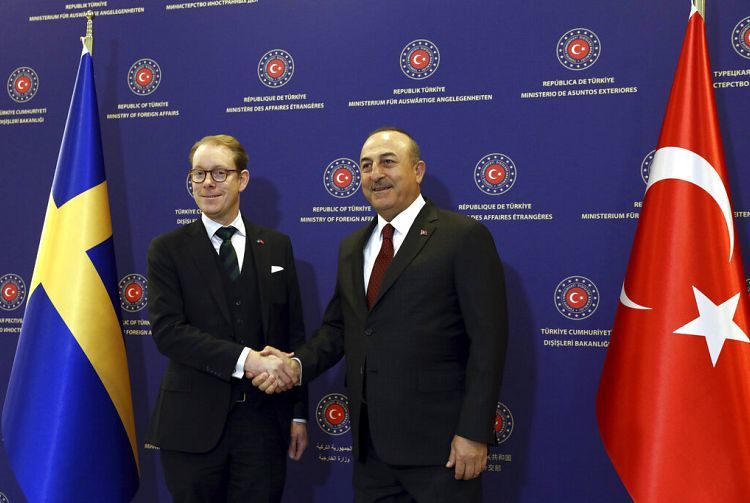
Turkey's Foreign Minister Mevlut Cavusoglu shakes hands with Sweden's Foreign Minister Tobias Billstrom before holding a press conference in Ankara, 22 December 2022


But if Turkey continues to block Sweden’s membership, Finland must prepare to join NATO on its own.

It is highly improbable that Ankara will ratify Sweden’s membership before the Turkish elections, which are currently due to be held in May.

If the opposition wins, they will probably lift the block on Sweden’s accession. But if Erdoğan remains in power, it is unlikely that he would be in a rush to ratify Sweden’s membership even after the elections.

Blocking the process provides considerable leverage for Ankara, which it could use to, for example, pressure the US to sell Turkey the F-16 fighter jets it is seeking to purchase.


Moscow's threat still looms large


There are several reasons why it would be preferable for at least Finland to join NATO than for both countries to remain outside the alliance.

For NATO, Finland’s membership would allow it to defend its territory in the North more effectively and, thus, improve the security of the whole Baltic Sea region. Sweden, too, would be more secure with all of its neighbours in the alliance.

Politically, it would be difficult for Finland to delay its accession to wait for Sweden after pressuring NATO allies to quickly ratify its membership.

This would probably also be unpopular domestically, considering that more than half of the Finnish population is in favour of joining the alliance before Sweden.
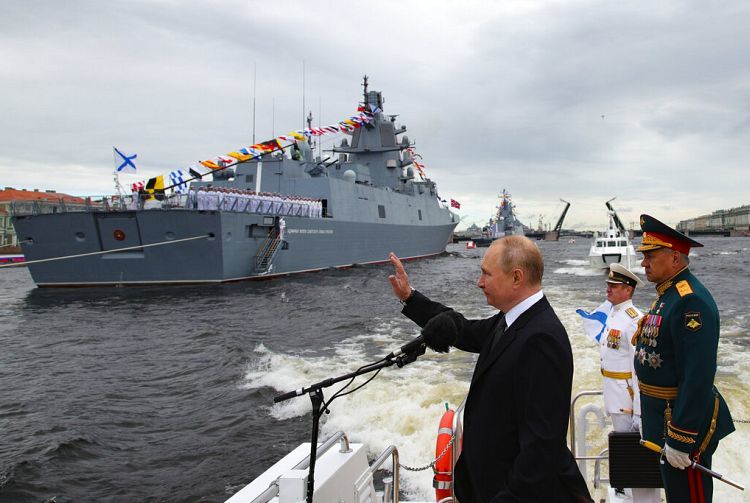
Russian President Vladimir Putin and Defence Minister Sergei Shoigu review warships before the main naval parade marking Russian Navy Day in St Petersburg, 31 July 2022


Geopolitical considerations are also a factor. The threat of Russian aggression looms over both Finland and Sweden, but the two countries are not equally vulnerable.

Finland has a 1340-kilometre-long border with Russia; it was occupied by the Russian empire, fought two wars with the Soviet Union in the 20th century and was subjected to intense Soviet pressure throughout the Cold War.

The same is not true for Sweden, which has no land border with Russia and does not share Finland’s historical baggage.

As long as Russian troops are tied up in Ukraine, there is no immediate threat to Finland, but aggression remains a possibility. This is the reason why Helsinki wants to join NATO in the first place.


Sweden and Finland would remain close friends regardless


Finland’s separate accession could cause some friction with Sweden, but it would be unlikely to cause significant damage to the relationship.

Recent comments by Swedish Prime Minister Ulf Kristersson and Foreign Minister Tobias Billström suggest that Stockholm understands Helsinki’s urgency in the matter, even if it would prefer to join together.

In any case, it is highly improbable that Finland would join NATO alone without consulting Sweden first.
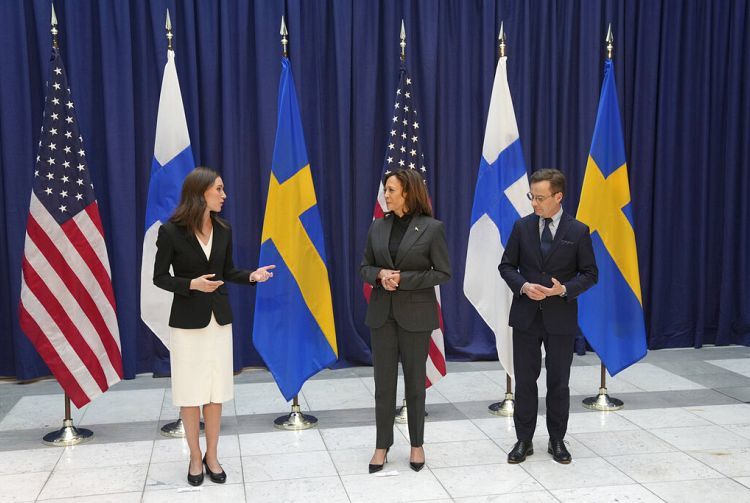
Finland's PM Sanna Marin, US Vice President Kamala Harris and Sweden's Prime Minister Ulf Kristersson at the Munich Security Conference on 18 February 2023


For the moment, it is unlikely that Finland will actively pursue separate accession, at least before the Turkish elections.

Joining together remains the preferred option for Finland, Sweden and NATO.

But Helsinki must prepare for the possibility that Ankara may continue to block Sweden’s NATO bid after the elections.

If Turkey were willing to ratify Finland’s membership, there would be little reason for Finland to decline the offer.

Despite their close relations, Finland and Sweden are separate countries. And given the context, Finland must prioritise its own security interests.


Newsletter

Related Articles

0:00
0:00
Close
Japanese Technology Firm Fujitsu Launches Advanced Artificial Intelligence Tool for Corporate Disclosures
South Africa Officially Launches Nationwide Campaign for Highly Contested Local Government Elections
United Kingdom Commits Additional Funding for Unexploded Ordnance Clearance in Laos
Singapore Announces Stringent New Greenhouse Gas Regulations for Commercial Cooling Systems
Cambodia and Thailand Hold High-Level Border Security Talks at United Nations Headquarters
Myanmar Military Government and China Sign Major Agreement to Upgrade Media and Cultural Cooperation
Knife Attack at Swiss Train Station Leaves Three Injured in Suspected Act of Domestic Terrorism
Transnational Extortion Gang Threatens Canadian Police With Army of One Thousand Armed Operatives
Australia Imposes Forty-Two-Day Quarantine on Cruise Ship Passengers Following Deadly Hantavirus Outbreak
International Monetary Fund Unlocks Seven Hundred Million United States Dollars for Sri Lanka Following Economic Reforms
Australia Launches Record One Point Four Billion Dollar Lawsuit Against Chemical Giant 3M Over Contamination
China and Canada Foreign Ministers Meet in Ottawa in Effort to Stabilize Strained Diplomatic Ties
Indonesia Demands Urgent United Nations Security Council Reform Amid Escalating Global Conflicts
Extreme Weather Patterns Trigger Severe Drought in Madagascar and Destructive Flooding in East Africa
Indian State of Karnataka Faces Political Upheaval as Chief Minister Siddaramaiah Abruptly Resigns
Philippines and Japan Reaffirm Defense Ties as Crucial for Indo-Pacific Regional Stability
Norway Joins French Nuclear Deterrence Initiative in Major Shift for European Security Architecture
Global Critical Mineral Alliances Expand as Western Nations Move to Counter Chinese Supply Dominance
United States Imposes Fifty Percent Tariffs on Mexican Steel and Aluminum Ahead of Trade Pact Review
European Union and China Head Toward Major Trade Conflict Over Clean Technology Exports
United States Economic Growth Severely Downgraded to One Point Six Percent as Stagflation Fears Mount
World Health Organization Warns Central African Ebola Epidemic is Outpacing Containment Efforts
United States Treasury Department Conditions Sanctions Relief on Reopening of the Strait of Hormuz
Iranian Air Defenses Intercept and Destroy United States Military Drone Over Bushehr Province
Iranian Armed Forces Launch Ballistic Missiles Toward Unspecified Targets Prompting Regional Condemnation
United Nations Secretary-General Warns Global Order Facing Highest Level of Conflict Since 1945
Israel Issues Sweeping Evacuation Orders in Southern Lebanon Amid Intensified Hezbollah Conflict
Russia Announces Systemic Military Strikes Targeting Ukrainian Defense and Energy Infrastructure
United States and Iranian Negotiators Reach Draft Agreement to Extend Ceasefire and Resume Nuclear Talks
United Nations Security Council Deeply Divided Over United States Capture of Venezuelan President
US and Iran Exchange Direct Military Strikes Amid Fragile Gulf Ceasefire
World Health Organization Warns of Catastrophic Ebola Outbreak in DR Congo
Russia Threatens New Wave of Strikes on Ukrainian Infrastructure and Embassies
Scientists Warn Atlantic Ocean Currents Could Collapse Faster Than Projected
Anthropic Reaches $900 Billion Valuation in Historic AI Funding Round
Washington Imposes Crippling Sanctions on Iranian Maritime Authority
Japan and the Philippines Initiate Strategic Intelligence-Sharing Pact
Microsoft Deploys Autonomous Computer-Using AI Agents to Global Markets
Anthropic Secures $45 Billion Compute Infrastructure Agreement With SpaceX
U.S. Director of National Intelligence Resigns Amid Administration Shakeup
Micron Technology Crosses Trillion-Dollar Valuation Amid Unprecedented Hardware Demand
Canada and Germany Finalize Historic Long-Term LNG Export Agreement
China Expands International Travel Restrictions on Domestic AI Researchers
Japan Approves Sweeping Overhaul of National Intelligence Apparatus
Global Airlines Scramble Logistics as Middle East Airspace Remains Fractured
Japan's Naphtha Imports Plunge 47 Percent Amid Strait of Hormuz Closure
Global Crude Prices Retreat Below $96 as Gulf Tensions Momentarily Ease
Generative AI Outperforms Human Baselines in Landmark Global Creativity Study
NASA Partners With Private Aerospace to Unveil Permanent Lunar Base Architecture
South Korean Equity Markets Surge on Next-Generation Memory Chip Frenzy
×