The ship's control panels are packed with high-tech equipment and the ship's wheel looks like something from a Ferrari.
The hard work is done, and the ship is operational, with everything working, including the rudders, steering gear, and the ability to control the ship while manoeuvring in harbour.
However, the ship is still not legal to take down the river because the final certificates have not yet been issued.
Glen Sannox and its sister vessel, Hull 802, have been some of Scotland's most well-known ships due to their six-year delay and threefold cost overrun.
The customer, government-owned ferry procurement agency CMAL, claims that the contractor, FMEL, pressed ahead with fabrication without a proper design and ended up "chasing steel" to trigger milestone payments.
Jim McColl, the owner of FMEL, claims that CMAL messed up the basic specifications and concept design and frustrated his team with constant interference and requests for changes.
Despite the delays and cost overruns, David Tydeman avoids being drawn into the blame game and believes that the problems started early on with the build strategy adopted in 2015.
The combined cost to the taxpayer of the ships and supporting the shipyard is estimated to be close to half a billion pounds.
The Ferguson shipyard in Port Glasgow, Scotland is building two identical car ferries, Glen Sannox and Hull 802.
The build has been complicated by the dual-fuel propulsion system and the need to store LNG in a huge tank in the ship's belly.
The high cost of the build is due to the way the ship's steelwork was fabricated without components pre-fitted, and the yard is now taking steps to capture lessons learned for the next ship.
The government has decided to continue funding the build of Hull 802, despite a suggestion to scrap the ship and place a new order with an overseas shipyard.
David Tydeman, the head of the Ferguson shipyard, is excited about a new lattice of steel that has been constructed in the main fabrication building, which will be used to build modules for the Type 26 frigate.
Ferguson Shipyard in Scotland has secured a contract to build two bow blocks for Type 26 frigates, which will keep the welders employed until the autumn.
The yard is also in discussions with two operators to build support vessels for the offshore wind farm market and is planning to bid for a contract to build seven "Loch class" small vessels for CalMac.
The yard is currently in discussions with two operators who are keen to build ships in Scotland.
The shipyard is also looking to invest in new equipment, including a new plating line, burning tables, and better computer software to improve productivity.
The yard currently has 320 directly employed staff, 52 of them apprentices, and recently received 500 applications for 15 apprenticeship positions.
The shipyard is hopeful that it will have a good future ahead, with the shipbuilding market in the UK and world being the most buoyant in 40 years.
LONDON DAILY ARCHIVE
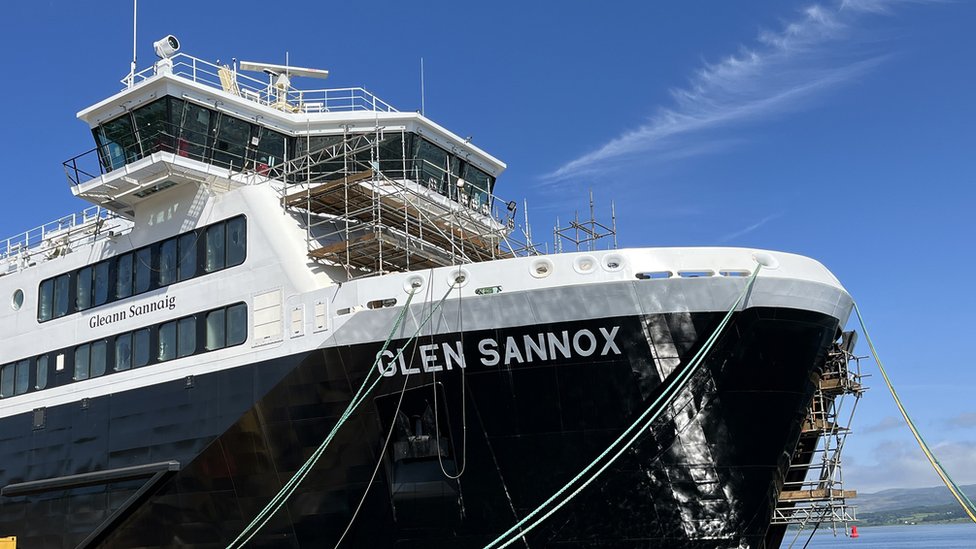
Ferguson Marine's Glen Sannox Ship Nearly Ready After Eight Years of Construction
Ferguson Marine's boss, David Tydeman, is confident that the company's flagship ship, Glen Sannox, is nearly ready after eight years of construction.
06 June 2023 · 11:28 UTC