LONDON DAILY ARCHIVE
European Leaders Hold Urgent Summit on Ukraine in Light of US-Russia Peace Negotiations
An emergency summit in Paris has been convened amid worries that US-led negotiations could marginalize European perspectives in addressing the Ukraine conflict.
16 February 2025 · 13:00 UTC
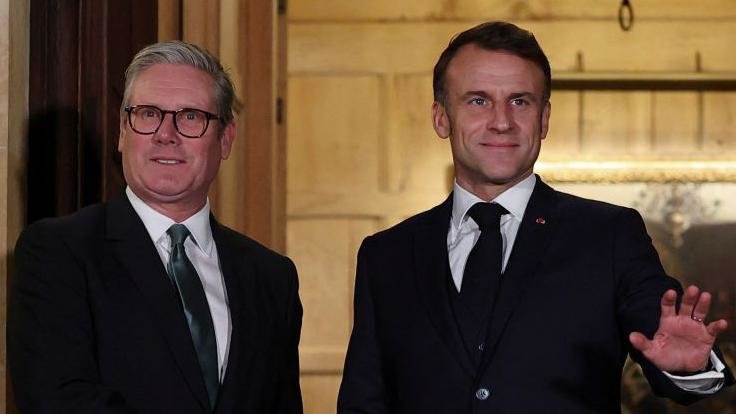
British Prime Minister Sir Keir Starmer is anticipated to participate, underscoring the importance of a cohesive European response to safeguard national security and strengthen NATO's position amid rising tensions.
Recent comments from Donald Trump's special envoy to Ukraine emphasized that while European leaders would be consulted, they would not be directly involved in upcoming negotiations between the US and Russia aimed at resolving the crisis.
Meanwhile, high-ranking officials from the White House, including US Secretary of State Marco Rubio, are expected to discuss matters with Russian and Ukrainian negotiators in Saudi Arabia in the coming days.
Keith Kellogg, the special envoy, indicated that past negotiations failed due to the high number of participants, suggesting that a more streamlined approach is required going forward.
These events unfold against the backdrop of the Minsk agreements, an unfruitful ceasefire arrangement established in 2015 through the mediation of France and Germany with the goal of ending hostilities in Eastern Ukraine's Donbas region.
Sir Keir Starmer believes his role is crucial in aligning US and European viewpoints on peace efforts related to Ukraine, intending to strengthen transatlantic relations during his visit to the White House later this month.
After his discussions in Washington, a subsequent meeting of European leaders with Ukrainian President Volodymyr Zelensky is expected.
Starmer emphasized the need for unity within the alliance, highlighting Europe's necessity to play a larger role in NATO in light of the perceived Russian threats.
Polish Foreign Minister Radoslaw Sikorski confirmed that French President Emmanuel Macron had initiated the call for the summit, although an official announcement from Macron is still awaited.
Amid growing concerns over US support, Zelensky called for the creation of an 'army of Europe' during the recent Munich Security Conference, hinting at potential shifts in traditional alliances.
Zelensky reiterated his opposition to any peace agreements reached without Ukraine's direct participation, stressing the significance of Ukrainian sovereignty in future discussions.
This view resonates with recent statements from President Trump regarding his plans to initiate negotiations with Russia, having spoken directly with Putin about ending what he described as the 'ridiculous war' in Ukraine.
Notably, talks between US and Russian officials have commenced following a lengthy phone conversation between Trump and Putin, with Zelensky being invited to join the forthcoming talks in Saudi Arabia aimed at bringing together the leaders of the US, Russia, and Ukraine.
The actions taken by the Trump administration have elicited mixed responses throughout Europe.
Secretary of State Marco Rubio's recent conversation with Russian Foreign Minister Sergey Lavrov signals a possible shift in US diplomatic approaches, while US Vice President JD Vance expressed ongoing concern over Europe's readiness for defense during the Munich Security Conference.
Vance's remarks imply that the main threats to Europe may stem from within, underscoring the necessity for increased European defense spending and self-sufficiency.
UK Foreign Secretary David Lammy echoed similar views, asserting that nations must enhance their military investments in response to the changing geopolitical climate, even in the face of potential peace talks in Ukraine.