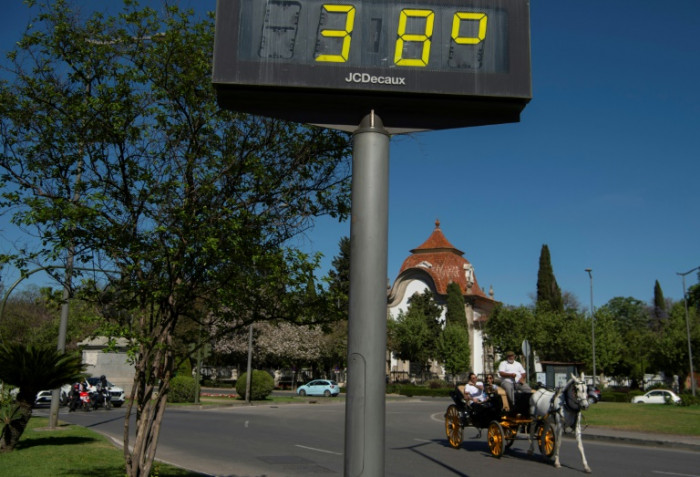
The report, titled "The State of the Climate in Europe 2022," indicates that Europe's average temperature has soared by an alarming 2.3 degrees Celsius since pre-industrial times, with a staggering 1.5-degree increase in the last three decades alone. This rate of warming is double the global average and highlights the continent's vulnerability to the rapidly changing climate.
A Wake-Up Call for Europe
The continent witnessed its warmest summer on record in 2022, with a domino effect of countries, including France, Germany, Italy, Portugal, Spain, and the United Kingdom, reporting their warmest years to date. This unprecedented surge in temperatures across Europe has not only exacerbated drought conditions but has also led to destructive wildfires, culminating in the second-largest burnt area on record.
WMO Secretary-General, Petteri Taalas, emphasized the immediate human cost of this climate upheaval, stating that thousands of deaths in 2022 were associated with the intense heat. “High temperatures fuelled violent wildfires and led to thousands of heat-associated excess deaths,” said Taalas.
The report further disclosed that over 16,000 fatalities occurred last year due to severe heat, with floods and storms contributing to an estimated $2 billion in damages.
Carlo Buontempo, Copernicus Director, warned that these events are not anomalies. "Our current understanding of the climate system and its evolution informs us that these kinds of events are part of a pattern that will make heat stress extremes more frequent and more intense across the region," he remarked.
Dire Impacts on Economies and Ecosystems
The increase in temperatures is taking a devastating toll on Europe's economies and ecosystems. The Alps, for example, experienced record glacier mass loss in 2022 due to reduced snow levels in the winter, a scorching summer, and deposits of Saharan dust.
Additionally, the report highlights that the North Atlantic experienced its hottest sea surface temperatures on record. The eastern Mediterranean Sea, Baltic and Black Seas, and the southern Arctic have been warming at more than triple the global average. These marine heatwaves, lasting up to five months in certain regions, have the potential to displace or even eradicate marine species.
The agricultural sector is also severely hit, with below-normal rainfall affecting agricultural production and water reserves, creating conditions conducive to wildfires. In Spain, water reserves dwindled to less than half their capacity, and farmers in France were unable to irrigate fields. Germany faced reduced cereal and grape harvests.
Notably, drought conditions have also impacted energy production, causing a decline in hydroelectric power and constraining output from nuclear power stations that rely on water for cooling.
Silver Lining: A Shift Towards Renewable Energy
Despite the grim scenario, the report signals a sliver of hope. In 2022, wind and solar power accounted for 22.3% of the European Union's electricity, surpassing fossil gas for the first time. The report attributes this to various factors, including a significant uptick in installed solar power.
As the continent faces the stark reality of an escalating climate crisis, this development in renewable energy offers a glimmer of hope for curbing the devastating impacts, thereby calling for a consolidated effort from European nations to ramp up their climate action plans.