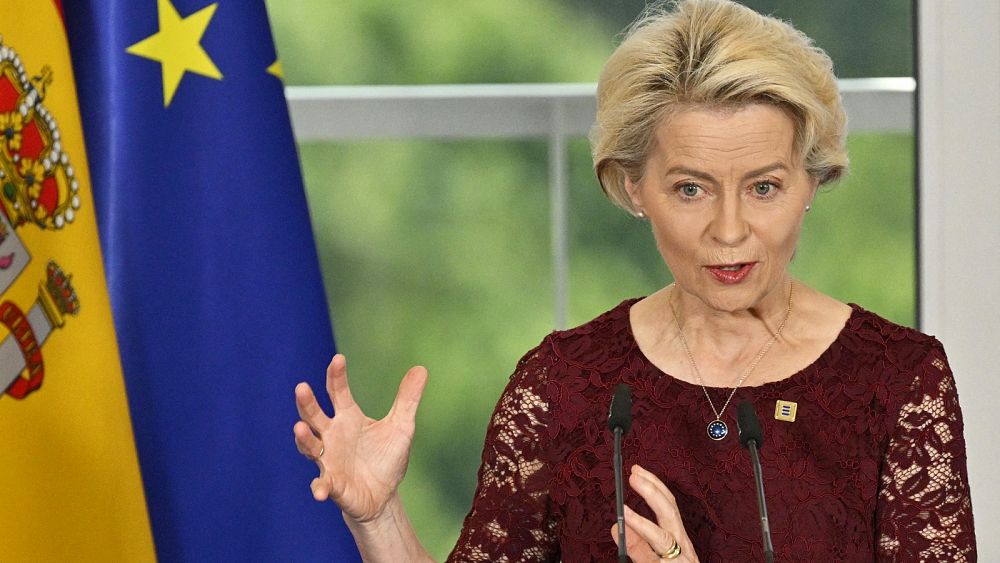
"That's what the treaties say and that's what we have delivered on," asserted von der Leyen, speaking in Madrid during an official visit.
Background of the Dispute
The contention emerged last month after home affairs ministers across the EU provisionally agreed on a transformative regulation. This proposed regulation aims to inaugurate a “mandatory solidarity” system, granting EU member states three alternatives to efficiently address the influx of new asylum seekers: welcome a fixed number of asylum seekers, contribute €20,000 for each rejected applicant, or offer operational support in the form of infrastructure and transportation.
While many European leaders lauded the agreement as a significant milestone, Hungary and Poland swiftly voiced their stern objections.
Hungary and Poland’s Grievances
Hungary and Poland have maintained stringent stances on migration matters. They contend that the resolution was attained through a qualified majority, which necessitates a minimum of 15 member states, representing at least 65% of the EU’s population, as opposed to unanimity which would have permitted them veto power.
Labeling the decision as possessing a “coup-like” character, Hungarian Prime Minister Viktor Orbán and Polish Prime Minister Mateusz Morawiecki are insisting that any subsequent steps concerning migration reform must be determined through consensus and strictly on a voluntary basis.
Von der Leyen Upholds Qualified Majority Voting
In her response, von der Leyen rejected Hungary and Poland’s proposition, emphasizing the importance of complying with the established voting protocols outlined in the EU’s founding treaties.
“The pact for migration and asylum: the first important parts have been decided like the (EU) treaty wants us to do, in qualified majority voting, and that goes all for the other packages,” von der Leyen elaborated, referring to the comprehensive reform that her administration has proposed.
She acknowledged that the EU is at a decisive juncture, and that an alteration in the political climate has made the enactment of migration reform more feasible than ever.
“We want to move forward together,” she affirmed.
Spanish Prime Minister’s Support
Von der Leyen’s stance was bolstered by Spanish Prime Minister Pedro Sánchez, who accompanied her during her trip to Madrid. This visit marked the commencement of Spain’s six-month tenure as president of the EU Council.
Emphasizing the importance of adhering to the EU’s treaties, Sánchez expressed optimism regarding the advancement of previously stalled reforms. He urged a “constructive approach” to negotiations between the Council and the European Parliament in pursuit of an agreement that balances responsibility and solidarity and benefits all parties involved.
Given Spain’s unique position as a front-line nation in dealing with migration, Sánchez considered finalizing the deal during Spain’s presidency as symbolic and highly significant.
“The most important thing is not to forget that the challenge of irregular migration must lead us to a common response, a European response, not a response that is an aggregate of national realities,” he stated.
The EU is now set on a path to advance migration reforms, as von der Leyen’s declarations cement the bloc's commitment to qualified majority voting, which is expected to expedite the decision-making process.