LONDON DAILY ARCHIVE
Endangered Darwin's Frogs Born at London Zoo After Rescue from Chile
A successful rescue mission has led to the birth of endangered Darwin’s frogs at London Zoo, following a fungal outbreak in Chile that threatened their survival.
03 February 2025 · 09:18 UTC
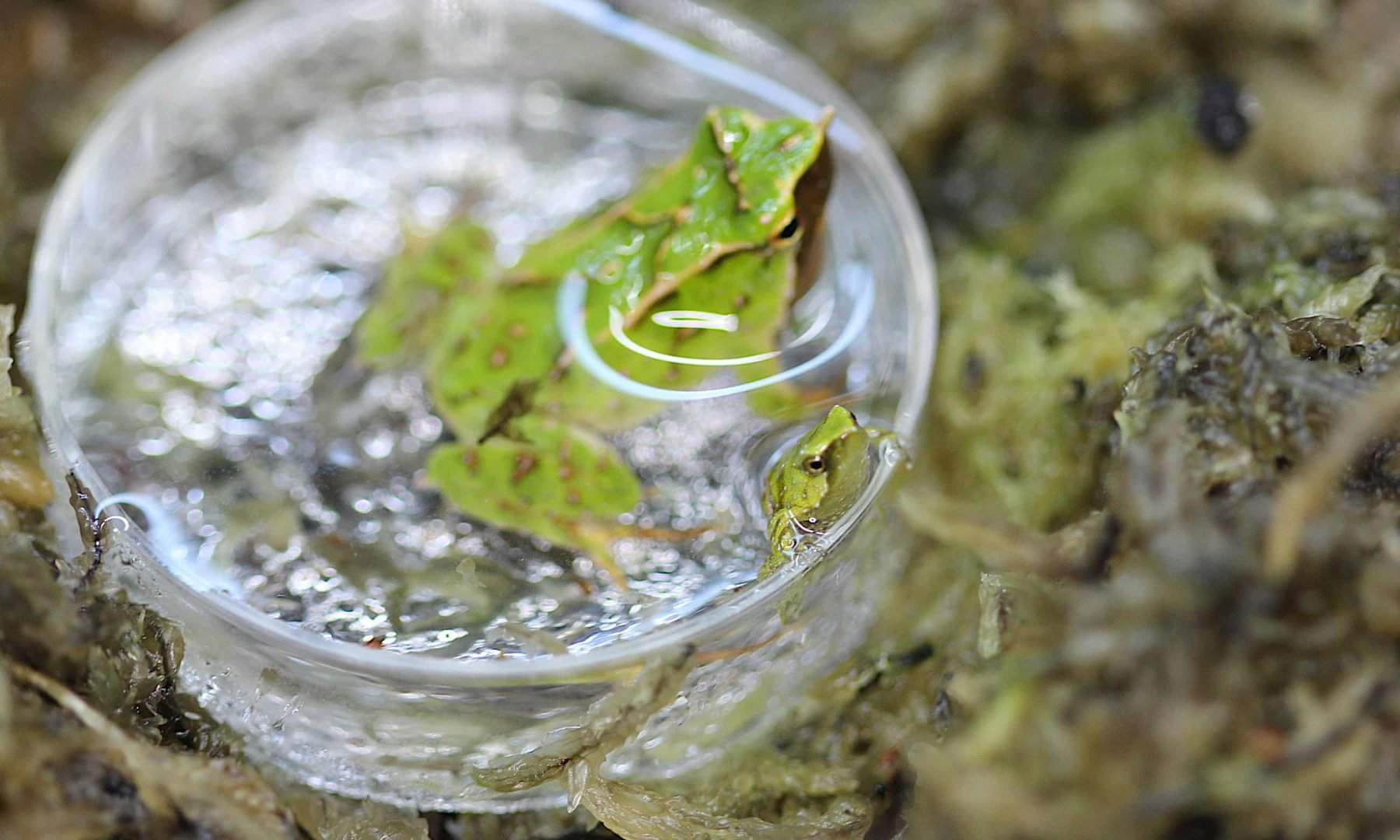
The mission, which took place in October 2023, was prompted by the detection of chytrid fungus, a deadly pathogen that has devastated amphibian populations worldwide.
Darwin's frogs, which are highly susceptible to the disease, had experienced a 90% decline in population at their sanctuary in Tantauco Park on Chiloé Island.
The team, led by Dr. Andrés Valenzuela-Sánchez, a research fellow at the Zoological Society of London (ZSL), collected 55 Darwin's frogs during a five-day expedition.
Remarkably, 11 of the male frogs were found to be carrying young, as part of the species’ unique reproductive process.
The frogs were transported to London Zoo in biosecure conditions after testing revealed two frogs were infected with the fungus.
The remaining frogs were cleared for the long journey to the UK.
Upon arrival at the zoo, the frogs were placed in a specially designed environment to replicate their natural habitat.
Soon after settling in, the males that had been carrying tadpoles in their mouths released 33 froglets, marking the first successful birth of the species in captivity at the zoo.
This achievement is seen as a crucial step in breeding efforts and in developing potential treatments for the chytrid fungus.
The mission, which has been documented by wildlife filmmaker Paul Glynn, will be featured in the documentary A Leap of Hope, set to premiere on YouTube.
The zoo’s successful breeding of the frogs is seen as a promising development in the ongoing battle to save the species from extinction.