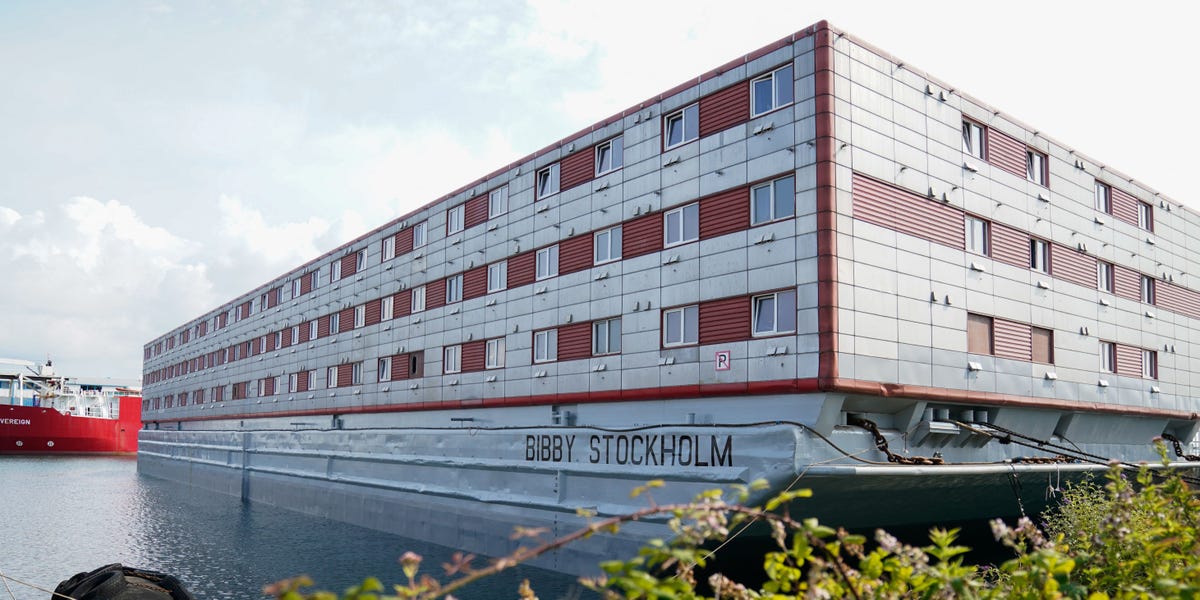
The barge, which has been likened to a floating prison, is equipped with narrow, windowless corridors and cramped cabins that have been compared to prison cells.
Each cabin will hold two men and will have an en-suite shower and toilet, as well as a television that may not work.
The barge, named the Bibby Stockholm, has been rented by the government to reduce the number of asylum seekers housed in hotels.
However, local residents have expressed concern that the barge will hurt tourism and strain health services in the area.
The government has budgeted $7.2 million per day to house asylum seekers in hotels, and estimates suggest that the barge will cost around $23 million per year.
Despite the criticism, the government has defended its decision, stating that the barge provides "basic and appropriate standards for small boats arrivals while their claims are determined." However, a 2008 Amnesty International report detailed the psychological trauma faced by some asylum seekers who had stayed on similar vessels, including overcrowding, frequent fights, and a lack of daylight.
The Bibby Stockholm was previously used by the Netherlands for housing asylum seekers and is described by Bibby Marine as offering "luxury living" with "natural ventilation." However, the limited space and lack of windows have raised concerns about the mental health of those living on the barge.
The Bibby Stockholm is expected to hold up to 500 men while their asylum claims are processed.
Despite the government's efforts to reduce the number of asylum seekers housed in hotels, critics argue that the barge is an inhumane way to treat vulnerable people seeking refuge in the UK.
LONDON DAILY ARCHIVE
Controversy Surrounds British Government's Use of Floating Barge to House Asylum Seekers
The British government is facing criticism for its decision to house hundreds of asylum seekers on a barge moored on the Dorset coast.
24 July 2023 · 02:56 UTC