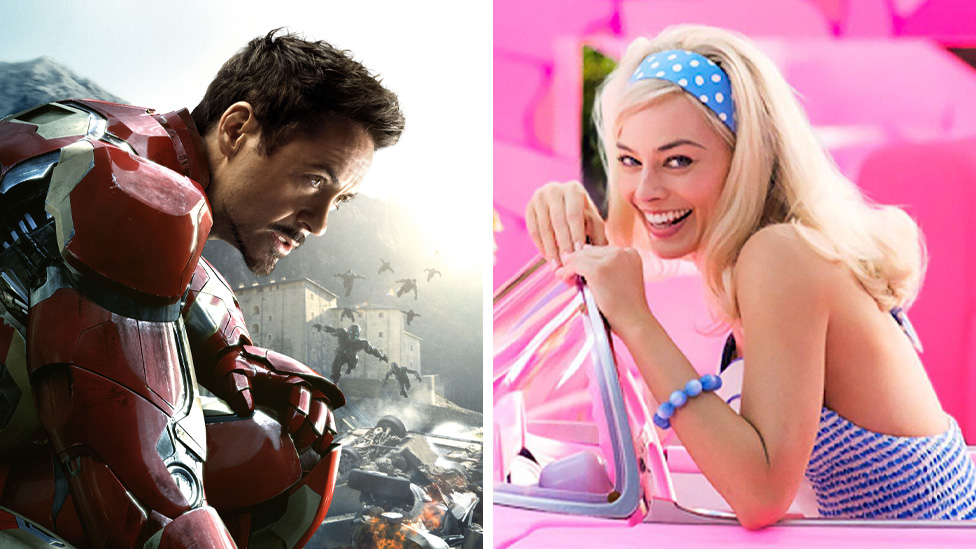
Mattel's chief executive, Ynon Kreiz, seems to have a grand vision for his company: to sculpt a "Mattel Universe" reminiscent of Marvel's vast cinematic cosmos. Drawing a comparison that might seem improbable to many, he aspires to mold Barbie into the franchise's leading figure, akin to Iron Man in the Marvel Universe.
The dream that fuels this ambitious strategy will be partially realized with the release of the Barbie movie on 21 July. Kreiz, who took over Mattel in 2018 and remains the executive producer, initiated the movie project as part of his vision to revolutionize the brand.
Hollywood A-listers Margot Robbie and Ryan Gosling breathe life into Barbie and Ken under the direction of Greta Gerwig. The stakes are high and risks are palpable as Barbie makes her Hollywood debut, tackling creative influences from directors and writers who infuse their unique flair into the iconic character.
Kreiz assures there's a healthy dose of humor and self-deprecation in the film. Echoing this sentiment, even his portrayal by Will Ferrell embodies a CEO who is slightly rigid and controlling. The film, judging by its trailer, pokes fun at Barbie, painting her as naive, innocent, or, less generously, as a superficial character engrossed in appearances and struggling to grapple with the intricacies of life beyond high heels and glamour.
This cinematic representation of Barbie's "Dreamland," a utopia imbued in pink and detached from reality, has been 64 years in the making, according to Kreiz. He believes the film mirrors today's cultural perception of Barbie.
The Barbie brand continues to serve as the golden goose for Mattel, earning over £1bn ($1.5bn) each year, outpacing other popular brands like Hot Wheels, Masters of the Universe, Monster High, Bob the Builder, and Thomas the Tank Engine. Kreiz posits that these brands too possess the potential to spawn successful spin-offs.
Mike Buonaiuto, marketing expert and author of Founder Therapy, lauds Barbie's marketing team's tireless efforts, but remains skeptical about replicating the Barbie approach for brands like Thomas the Tank Engine or Hot Wheels. He contends that the depth of world-building Mattel can pull off doesn't rival Marvel's.
Buonaiuto also reflects on the recent downfall of Toys R Us, stressing the necessity for toy manufacturers like Mattel to expand beyond the realm of physical products.
Barbie, conceived by Ruth Handler, co-founder of Mattel, in 1959, was a game-changer in the toy industry. The doll shifted children's role-play from emulating nurturing parents, typically with baby dolls, to envisaging their future selves as adolescents.
The cultural phenomenon faced criticisms concerning body image, with the doll's extreme slimness and controversial messaging raising concerns. Infamous instances include a dieting book advising, "Don't eat," and a talking Barbie claiming, "Math class is tough." Such controversies have marred Barbie's image and possibly contributed to a slump in popularity a decade ago.
However, Mattel has learned from its past mistakes, claims Kreiz. He asserts that Barbie now embodies diversity and inclusivity, with over 170 variations in body shape and skin color, and over 200 career-oriented dolls. The brand recently introduced dolls with disabilities, prosthetic limbs, and Down's Syndrome, with the "classic, traditional Barbie" now constituting less than half of the business.
The film echoes this progressive shift, and while the traditional Barbie remains at the heart of the narrative, she is also the subject of light-hearted mockery.
Kreiz also underscores that Mattel is reorganizing to move in tandem with societal shifts, categorizing its products into dolls, vehicles, and pre-school, rather than maintaining separate boys' and girls' divisions.
The Barbie film is an integral part of Kreiz's broader strategy to position Mattel as a "talent magnet," collaborating with industry professionals like film directors to reinvent its well-known brands.
Kreiz asserts that those who buy Mattel products are more than consumers—they are fans with an emotional connection to the toys. He states, "Kids touch, hug, and go to bed with our toys. We believe in the long-term opportunity for Barbie. But we need to evolve her, keep her relevant, and in the center of the cultural conversation."
LONDON DAILY ARCHIVE
Can Barbie Emerge as the Iron Man of Mattel’s Cinematic Landscape?
It may sound like an unlikely comparison, but the boss of toy company Mattel would like Barbie to be the next Iron Man. Mattel CEO, Ynon Kreiz, envisions a cinematic universe inspired by Marvel, with Barbie as its cornerstone. Is this the transformation the toy industry needs?
15 July 2023 · 23:35 UTC