London Daily

Focus on the big picture.
Friday, Jun 19, 2026

British Steel cuts 7% of workforce despite government funding talks

British Steel cuts 7% of workforce despite government funding talks

A union warns there could be industrial action unless the company lives up to its commitments but British Steel argues it has no choice but to cut costs.

British Steel has revealed it is to cut 260 jobs, almost 7% of its workforce, despite continuing government funding talks with its Chinese owners.

It was announced that the losses would be felt at its Scunthorpe plant through the closure of its coking ovens - used to turn coal into the high-temperature product needed to service its blast furnaces.

The Unite union responded by saying it would look to defend every job and did not rule out the prospect of industrial action.

The move was revealed after Sky News reported that officials from the Department for Business and Trade were due in China to meet executives from Jingye Group amid protracted talks about a £300m grant.

Sources said the talks were expected to focus on the value of an energy subsidy package, which could take the overall value of government support for British Steel to approximately £1bn.

The prospect of additional taxpayers' cash had been dependent on job guarantees.

Sky's City editor Mark Kleinman reported last month that Jingye was drawing up plans to cut around 800 jobs at British Steel.

The company placed no timeframe on its proposals but said it had entered talks with unions.

It placed an emphasis on cutting its environmental impact and energy bills.
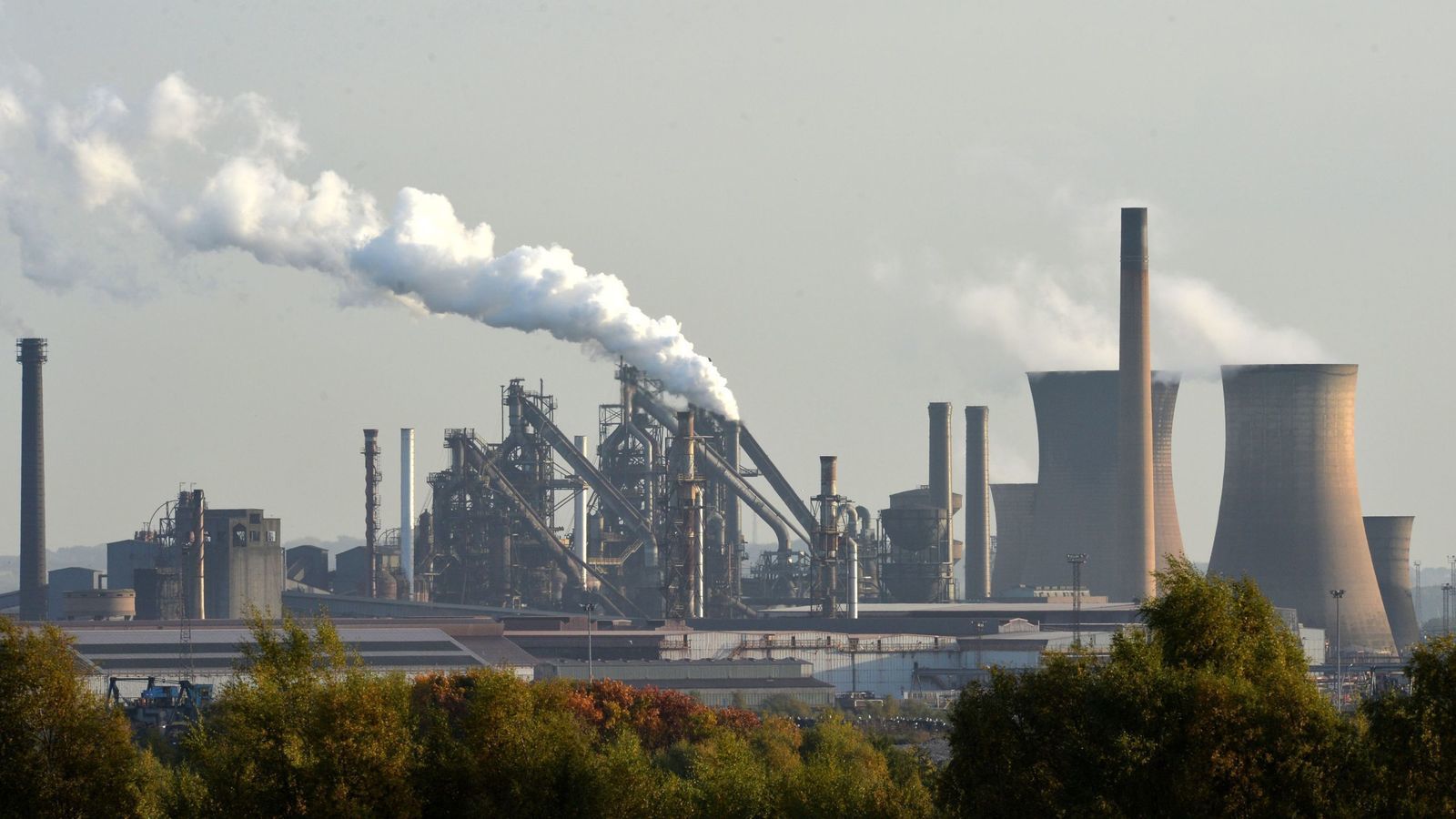
The Scunthorpe plant produces steel by blast furnaces as opposed to more modern electric arc furnaces

The company said its costs, on both fronts, rose by a combined £190m last year.

It declared in a statement that "decisive action is required because of the unprecedented rise in operating costs, surging inflation and the need to improve environmental performance."

British Steel chief executive Xifeng Han said: "Steel is vital to modern economies and with demand expected to grow over the coming decades, British Steel has a crucial role to play in ensuring the UK has its own supply of high-quality steel.

"To make sure we can deliver the steel Britain requires, we're undergoing the biggest transformation in our 130-year history."

He added: "We have taken action to reduce costs within our control; however, steelmaking in the UK remains uncompetitive when compared to other international steelmakers.

"Our energy costs, carbon costs and labour costs are some of the highest across the world, which are factors that we cannot influence directly.

"For the reasons outlined, we entered into talks with the UK government in summer 2022 and are extremely grateful for its support.

"It's important we have the correct policies and frameworks in place to back our drive to become a clean, green and successful company and we're continuing to discuss this with the government."

Unite general secretary Sharon Graham responded: "British Steel workers are faced with the toxic combination of a greedy employer that is reneging on investment promises and a shambolic UK government that has no serious plan for the industry.

"Unite's members in British Steel are clear that they will fight this and they will have the full support of their union.

Unite national officer Linda McCulloch said: "This union has not yet seen any financial justification for the closure of the coking ovens. British Steel needs to come clean and open its book in order to try to justify its decisions.

"Unite will pursue every avenue, including industrial action, to defend members' jobs at British Steel."

Newsletter

Related Articles

0:00
0:00
Close
Payment Fraud Losses Reach £1.28 Billion and Raise National Security Concerns
Lending to Small Businesses Climbs to Highest Level Since Late 2024
Middle East Conflict Clouds UK Economic Recovery Despite Strong First-Quarter Growth
Bank of England Moves to Simplify Capital Rules for Smaller Lenders
UK Government Fast-Tracks National Security and Cyber Resilience Legislation
Ofcom Investigates Telegram Over Alleged Role in Organising Arson Attacks
MPs Press Fujitsu to Speed Compensation for Post Office Horizon Victims
Bank of England Delays Final Basel III Implementation Changes to Support UK Banking Competitiveness
Pound Falls as Political Uncertainty and Bank of England Signals Weigh on Markets
0Andy Burnham Wins Makerfield By-Election and Emerges as Main Challenger to Keir Starmer
Dorset Council Tests AI Tools to Streamline Local Planning Applications
UK Researchers at Kew Gardens Use AI to Speed Up Identification of Threatened Plant Species
UK Gilt Yields Ease Toward 4.8% as Inflation and Labour Market Data Weigh on Bonds
Bank of England Data Shows Resilient SME Lending Despite Economic Slowdown
UK Finance Reports Weakening Services Activity as Business Confidence Softens
UK Introduces Mandatory Internal Complaints Process Under Data Use and Access Act
Bank of England Governor Andrew Bailey Flags Geopolitical Uncertainty as Key Risk to Inflation Outlook
Bank of England Holds Interest Rates at 3.75% as Policymakers Signal Cautious Stance on Inflation Risks
Cornwall Clergy Raise £40,000 for Church Repairs Through Everest-Themed Charity Challenge
UK Business and Social Landscape Reflects Strain From Geopolitical and Domestic Pressures
Tensions Grow in UK Over Sikh Kirpan and Religious Symbolism in Public Debate
Energy Price Cap Increase Set to Lift UK Household Bills by 13 Percent
University of Reading Ranked 196th in QS World University Rankings
UK Maritime Archaeologists Identify 17th-Century Dutch Shipwreck Off Devon Coast
Oxford Union Islam Debate Sparks Protest From Faith Leaders in UK
UK Social Cohesion Debate Intensifies After Religious Prejudice Survey Findings
UK SME Lending Rises Despite Geopolitical Uncertainty and Cautious Outlook
Foreign Demand for UK Gilts Remains Sensitive to Global Inflation Trends
Labour Party Faces Leadership Pressure After Weak Local Election Results in UK
Transport Costs Drive Inflation Pressure as Petrol Prices Push Up UK CPI
British Chambers of Commerce Cuts Growth Forecast as Middle East Conflict Weighs on Investment
UK Economy Grows 0.6 Percent in First Quarter but Outlook Remains Weak
Bank of England Holds Interest Rates at 3.75 Percent as Inflation Risks Persist
Energy Price Cap Rise Expected to Keep UK Inflation Above Target Through 2026
Health Authorities Warn of Rising Cases of Seasonal Respiratory Illnesses
BAE Systems and Rolls-Royce Advance Multi-Nation Fighter Aircraft Programme
National Archives Publish Declassified Documents on Cold War Energy Security Planning
British Retail Spending Rises Despite Continuing Cost-of-Living Pressures
Wales Launches Social Housing Pilot to Address Affordability Pressures
British Energy Companies Commit £5 Billion to Geothermal and Hydrogen Projects
Northern Ireland Debates Cross-Border Healthcare Partnership With the Republic of Ireland
UK Establishes National Artificial Intelligence Safety Centre With Leading Universities
UK Reports Decline in Small Boat Crossings After Expanding Intelligence Cooperation With France
Scottish Parliament Launches Inquiry Into Delays to Renewable Energy Projects
National Crime Agency Dismantles Alleged Multi-Million-Pound Money Laundering Network in London
Transport Strikes Disrupt Rail and Bus Services Across Northern England
United Kingdom and European Union Open New Security Dialogue on Defense and Border Cooperation
Bank of England Holds Interest Rates at 5% as Services Inflation Remains Elevated
UK Government Unveils Major National Health Service Reform Focused on Decentralization and Performance Funding
Government Advances New Airport Slot Rules to Ease Airline Operating Constraints
×