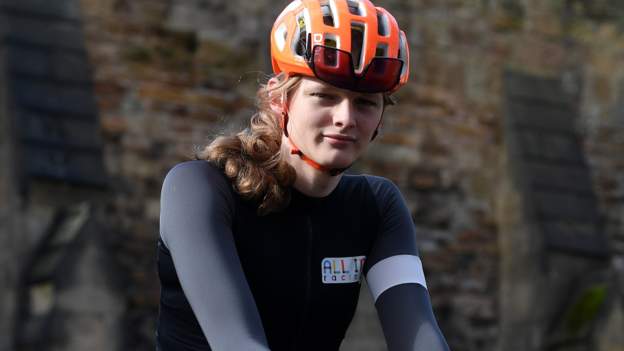
The new policy is based on "fairness" and aims to prevent athletes like Emily Bridges, who was previously a highly promising competitor in junior men's events but came out as transgender in 2020, from competing in elite women's events.
The policy will classify races as "for those whose sex was assigned female at birth" and allow riders with testosterone levels below a certain threshold to compete in an "open category" with men.
Bridges, the country's highest-profile transgender cyclist, reacted to the announcement with a statement on social media, calling the change a "violent act" and criticizing British Cycling for being "controlling" the conversation on transgender inclusion.
The new policies will be implemented by the end of the year and transgender women will be able to participate in non-competitive recreational and community cycling without restriction.
A group of elite female cyclists in the UK have called on the UCI (Union Cycliste Internationale) to "rescind" its rules around transgender participation, citing concerns about fairness in their sport.
They claim that female athletes are willing to boycott events over these rules.
The UCI initially suspended British Cycling's rules, but then toughened its regulations.
However, after a transgender woman won a UCI women's stage race, the UCI re-opened consultation on the issue and said it was "hearing the voices of female athletes." There is a lack of research in this area, but some argue that transgender women have a disproportionate advantage over their peers in some women's sports.
British Cycling's policy allows transgender women to participate in women-only events, but the UCI has implemented stricter regulations.
LONDON DAILY ARCHIVE
British Cycling Implements Controversial Transgender Participation Policy
British Cycling, the governing body for cycling in the UK, is implementing a new participation policy that will ban transgender women from competing in the female category of its events.
26 May 2023 · 21:01 UTC