LONDON DAILY ARCHIVE
Austria's Political Shift: Herbert Kickl’s Ascent Shakes Europe’s Anti-Populist Stronghold
The crumbling cordon sanitaire: Europe's changing stance on far-right politics as Austria braces for a populist chancellorship
15 January 2025 · 03:20 UTC
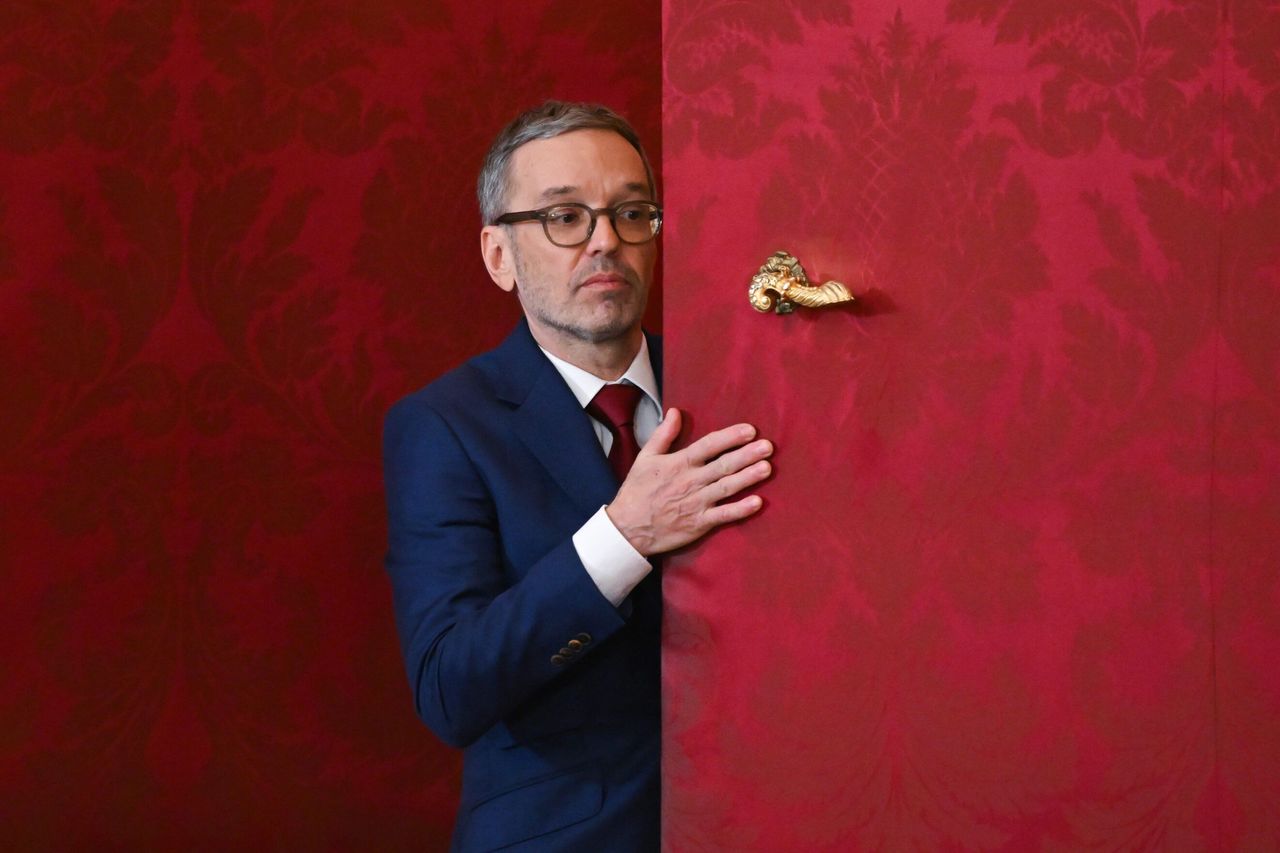
Kickl, a hard-line figure known for his uncompromising stance on immigration, particularly advocating for “remigration” policies, could become Austria’s next chancellor, altering the political dynamics of the EU.
In 2000, when Austria prepared to embrace Jörg Haider, another far-right leader, the EU responded with severe disapproval, turning the nation into a virtual pariah within the bloc.
The collective silence from EU leaders now, amid Kickl’s likely ascendancy, contrasts sharply with the past rigor and reflects a shift in strategy towards engaging with far-right leadership.
The EU’s previous attempts to protect centrist values involved tangible actions.
In 2017, the invocation of Article 7 proceedings against Poland marked a decisive move against perceived threats to EU principles.
Yet today, the reaction to Austria potentially led by Kickl appears more muted, reduced to potential social awkwardness and diplomatic coldness, rather than formal sanctions or protests.
Kickl’s Freedom Party is currently in coalition negotiations with Austria’s center-right People’s Party, suggesting mainstream politics might be softening its stance against aligning with far-right ideologies.
This collaboration effectively indicates the weakening of Europe's renowned _cordon sanitaire_, a metaphorical barrier that has long kept right-wing populists from governmental power across the continent.
Despite concerns about the ramifications of Kickl’s policy positions, EU leaders appear reluctant to deploy measures akin to those used against Hungary.
When Hungary’s Prime Minister Viktor Orbán faced criticism within the EU for cozying up to Russian President Vladimir Putin, the repercussions were largely symbolic.
A high-ranking EU source intimated that establishing precedents through punitive measures like Article 7 could deter similar movements in countries where the far-right is gaining electoral strength, such as France.
Nevertheless, the EU’s current trajectory suggests an inclination towards dialogue and integration, as captured by Rule-of-law Commissioner Michael McGrath’s sentiments urging diplomacy over ostracization.
This broader European context highlights the challenges posed by the increasing influence of right-wing populism, yet EU leaders, including Commission President Ursula von der Leyen, have expressed a readiness to engage with far-right Italian Prime Minister Giorgia Meloni, illustrating a pragmatic shift aligning with geopolitical and economic necessities.
The EU’s multifaceted engagement strategy is apparent across several institutions.
For instance, Raffaele Fitto, an Italian politician with ties to the right-wing ECR, holds a vice-presidential position at the European Commission.
Similarly, the European Parliament sees collaborations crossing traditional partisan lines.
Nationally, European countries are witnessing the dilution of barriers between mainstream and far-right politics, with coalition dynamics evolving in various states.
In France, despite Marine Le Pen’s party not holding governmental power, it exerts significant influence over the current administration.
In Germany, isolated incidences of cooperation with the far-right Alternative for Germany (AfD) illustrate the shifting political landscape.
The question now facing the EU is whether this pattern of engagement will solidify or if future challenges will prompt a reassessment of how the bloc manages its increasingly diverse political spectrum.
The integration of populist elements could redefine the EU’s approach, balancing practical governance with the foundational principles that have sustained its unity.