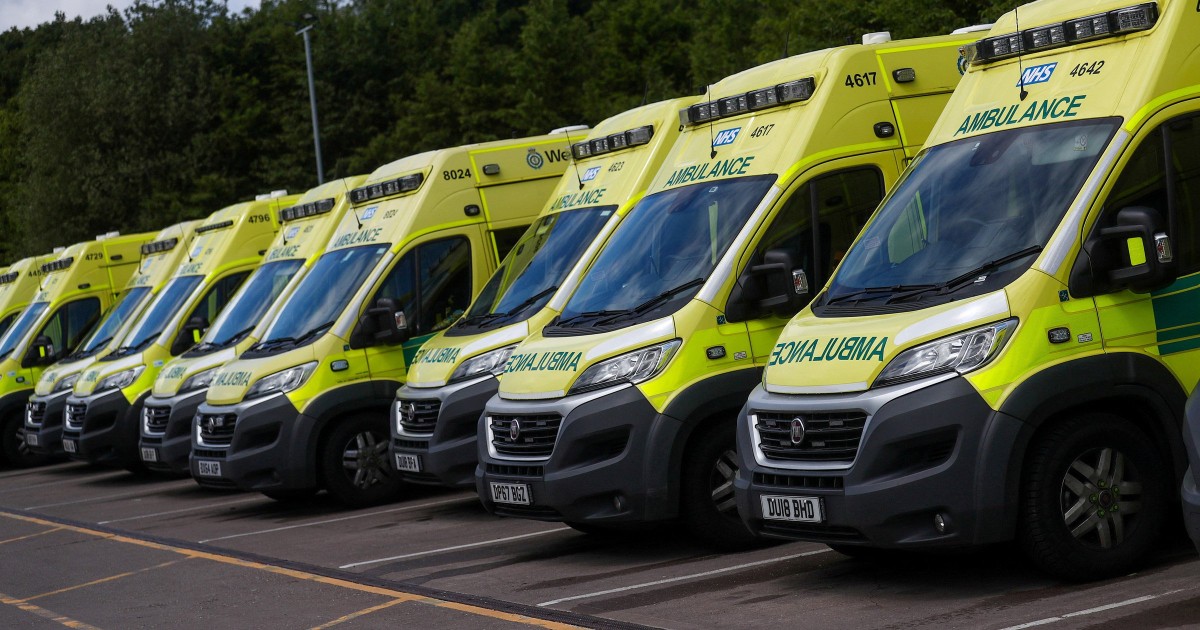
The call was initially listed as a medical emergency requiring an ambulance to arrive within an hour, but due to staffing issues, a review was not carried out until 10 hours later when Finch failed to answer a call back from the ambulance service.
The family of a great grandfather also experienced a long wait for an ambulance, which arrived two and a half hours after they called.
The coroner recorded a narrative conclusion at Finch's inquest, stating that she died from ketoacidosis due to insulin deprivation contributed to by neglect, and has issued a report calling for action to be taken by ambulance service chiefs to prevent similar deaths in the future.
The West Midlands Ambulance Service has introduced a Clinical Validation Team to assess category 3 ambulance calls, leading to significant patient benefits.
Almost 200,000 callers have received necessary care more quickly than they would have without the team.
The use of an assessment team with no time limit for assessments and no prioritization system will lead to further deaths resulting from delays.
The trust aims to contact category 3 and 4 patients for a clinical assessment within 60 minutes, with patients prioritized for call-back in time order.
Contact the news team at [webnews@metro.co.uk](mailto:webnews@metro.co.uk) for more stories like this.
LONDON DAILY ARCHIVE
Ambulance delays result in death and call for action to prevent future tragedies
A 44-year-old woman named Sandra Diane Finch called 999 for an ambulance due to high blood sugar levels, but it took 15 hours for an ambulance to arrive, by which time she had died.
24 June 2023 · 20:21 UTC